
Stop Guessing. Start Harvesting.
Stop Guessing. Start Harvesting.
Most beginners do not kill their balcony vegetables because of bad soil or cheap seeds. They kill them by drowning the roots in water or baking the leaves in harsh afternoon sun.
If you want supermarket-quality organic greens from your apartment balcony, you need a precise protocol. Balcony microclimates in North America are harsh—wind dries out pots faster than ground soil, and concrete walls reflect intense heat.
In this guide, we are translating the exact sunlight hours and watering frequencies required for the five most popular beginner crops: Cherry Radishes, Mesclun Mix, Arugula, Spinach, and Baby Bok Choy.
Standard seed packets assume you are planting in a massive backyard garden. On a balcony, everything is magnified. A pot sitting on a hot concrete slab in Texas will lose moisture five times faster than a raised bed in Ohio.
Because you are growing in isolated containers, you must manually control the exact amount of light and water your leafy greens receive to prevent them from turning bitter, bolting (going to seed), or rotting at the stem.
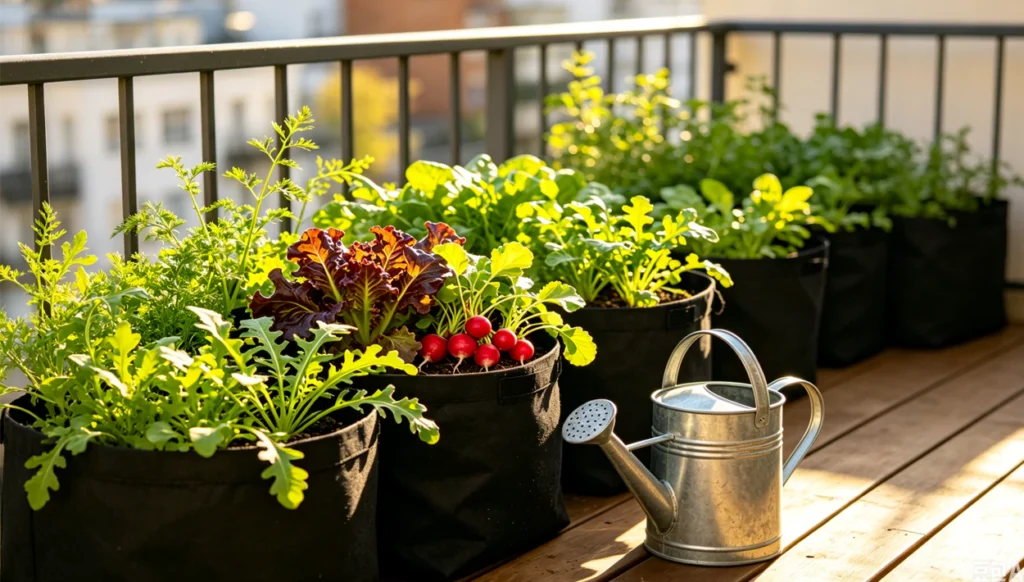
Stop guessing. Here is exactly how to treat the top five beginner-friendly crops.
1. Cherry Radishes
2. Mesclun Mix (Lettuce Blend)
3. Arugula
4. Spinach
5. Baby Bok Choy
If you live in Arizona, you might need to water twice a day. If you live in Seattle, you might water twice a week. Sticking to a rigid “water every 3 days” schedule is a guaranteed way to kill your plants.
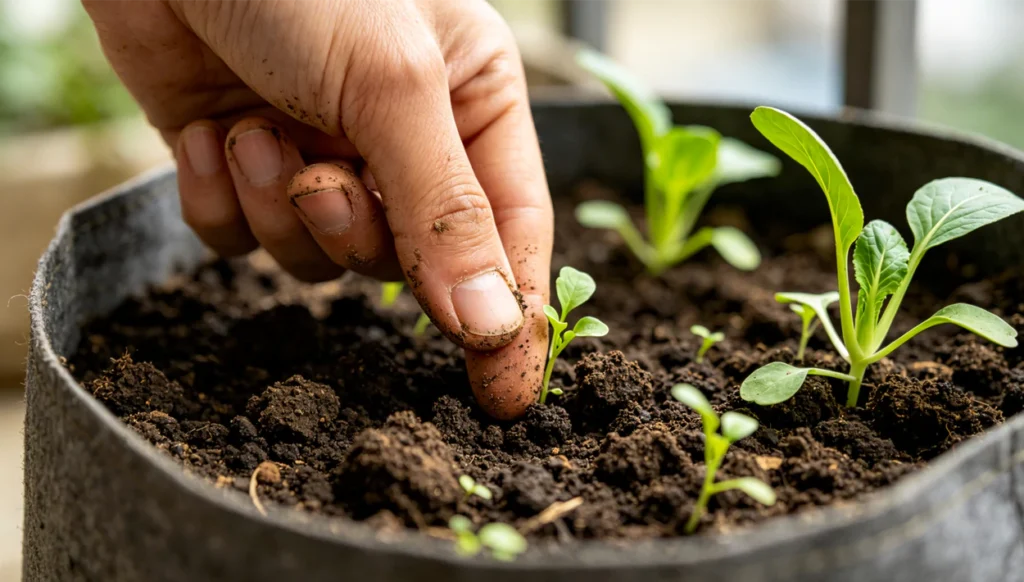
The only reliable way to measure moisture in container gardening is the “Knuckle Test.”
Do not look at the surface of the soil—it always looks dry. Plunge your index finger directly into the dirt up to your second knuckle (about 2 inches deep). If your fingertip feels cool and damp, walk away. Do not add water. If it feels completely dry like dust, it is time to soak the pot until water runs out the bottom drainage holes.
We have translated the North American balcony microclimate data into two quick-reference charts. Bookmark this page so you can check these before you water.
Table 1: Sunlight Requirements & Common Pitfalls
| Vegetable | Daily Light Requirement | The Big Pitfall (What to Avoid) |
| Cherry Radish | 6+ Hours Direct Sun | Too much shade causes massive leaves but tiny, undeveloped roots. |
| Mesclun Mix | 4-6 Hours Direct Sun | Afternoon sun burns leaves. Morning light (9 AM – 12 PM) is optimal. |
| Arugula | Full Sun (Spring) / Shade (Summer) | Must be shaded when temps exceed 77°F (25°C) to prevent wilting and bitterness. |
| Spinach | 4-6 Hours Indirect/Scattered | Harsh direct light forces the plant to bolt and ruins the flavor. |
| Baby Bok Choy | 4-6 Hours Direct Sun | Can survive partial shade, but extreme shade causes yellow, weak stems. |
Table 2: Watering Frequencies & Core Rules
| Vegetable | Average Frequency | Core Watering Rule |
| Cherry Radish | Every 2-3 Days (Daily in heat) | Keep moisture perfectly even. Fluctuations cause cracked, hollow radishes. |
| Mesclun Mix | Every 5-7 Days (Mature plants) | Wait for slight midday wilting before soaking. Always water in the morning. |
| Arugula | Every 1-2 Days | Never let it dry out completely. Dry soil invites spider mites. |
| Spinach | Every 2-3 Days | Water when topsoil is white/dry. In cold weather, water at noon to avoid freezing roots. |
| Baby Bok Choy | Every 2-3 Days (Twice daily in heat) | Heavy drinker. Keep soil consistently damp but never waterlogged to avoid rot. |
Q: What is the “Knuckle Test” for watering balcony plants?
A: The surface of potting soil dries out quickly, giving the illusion that the plant needs water. The knuckle test requires you to push your index finger into the soil up to the second knuckle. If it feels dry down there, water it. If it feels damp, wait another day.
Q: Should I water my balcony vegetables at night during the summer?
A: No. Always prioritize morning watering. Watering at night leaves the foliage and soil surface wet in cooler temperatures, which is the perfect breeding ground for fungal diseases and powdery mildew.
Q: Why are my balcony radishes producing huge leaves but no actual radishes?
A: This is usually a combination of two things: lack of direct sunlight (they need 6+ hours) or soil that is far too rich in nitrogen. Excess nitrogen forces the plant to grow green tops at the expense of root development.
Q: How do I protect cool-weather crops like arugula and spinach from hot afternoon sun?
A: On a balcony, you have mobility. You can either physically move the pots into a shaded corner by noon, or place smaller pots (like spinach) behind larger, sun-loving plants (like tomatoes) to utilize their shadow.
Q: My leafy greens are turning yellow. Am I watering them too much?
A: Usually, yes. Yellowing leaves, especially starting from the bottom of the plant, are a classic sign of root suffocation caused by overwatering or poor drainage. Ensure your pots have holes and do the knuckle test before watering.
Great urban gardening is just about observation. Stick your finger in the dirt, watch how the sun moves across your balcony floor, and use the cheat sheets above. You will be cutting your own fresh salads in no time.
About the Author: I specialize in urban agriculture and helping apartment dwellers maximize their tiny outdoor spaces. Stuck on a dying plant or need advice on your balcony setup? Email me directly at Info@yardveggie.com. I read and reply to every single message!