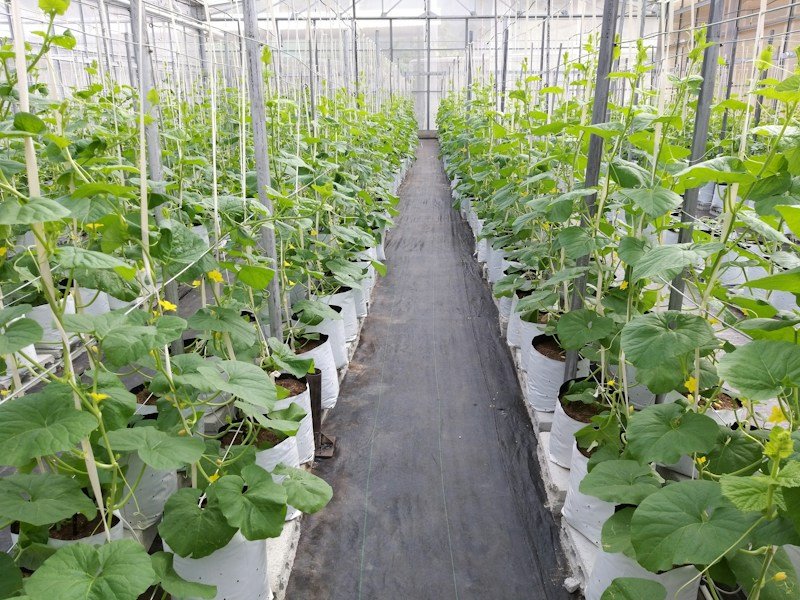
Stop Guessing. Start Harvesting.
A field-tested, operations-level guide to stretching the production calendar on container crops — structure selection, root-zone temperature control, irrigation chemistry, and the procurement specs that separate a profitable shoulder season from an expensive experiment.
Every commercial container operation runs the same arithmetic. The benches, the irrigation main, the media inventory, the delivery truck, the depreciation on your structures, and the crew you had to hire back in March — those costs land whether you harvest for 20 weeks or 32. When the calendar is short, fixed costs get spread across fewer saleable units, and gross margin per square foot collapses at both ends of the year. That is why learning how to extend container garden growing season performance is less a horticultural curiosity and more a direct lever on operating margin. On a typical Zone 5–6 container program, adding four to six usable weeks at each end of the calendar is realistic with modest capital, and it can lift annual production days by 25 to 40 percent without a single additional square foot of bench space.
The catch is that containers behave nothing like field soil. A five-gallon pot carries a fraction of the thermal mass of an equivalent soil volume, drains and freezes faster, and its root zone can swing 20°F or more between midday and 4 a.m. Growers who treat season extension as nothing more than throwing plastic over a bench usually get a two-week bump and a batch of root rot. Growers who treat it as a systems problem — structure, root-zone temperature, light, airflow, and irrigation chemistry, in that order — routinely double their shoulder-season revenue. This guide is written for the second group. High Yield Container Gardening Course: The Complete B2B Guide for Commercial Growers and Retailers
Extending a container garden growing season means deliberately modifying the microclimate around and inside the container — structure, root-zone heat, light, airflow, and irrigation — so the first saleable harvest lands earlier in spring and the last harvest runs later in fall than the local frost-free window would otherwise allow. In commercial terms, it is the practice of converting calendar risk into predictable supply: contracted ship dates in April instead of May, retail-ready color in October instead of September, and overwintered inventory that holds its value instead of becoming a write-off line on the P&L.
There are three mechanisms at work, and the programs that succeed run all three together:
Skip the third mechanism and the first two underperform. We have watched operations spend $60,000 on a high tunnel and give the gain back in three weeks to overwatered media and a Botrytis outbreak on tight spacing. The structure buys you a window; the culture is what you sell out of it.
The single most expensive mistake in season extension is buying structure before you have data. Spend two to four weeks logging the site: air temperature at canopy height, media temperature at two-thirds pot depth, in-canopy relative humidity, wind speed and direction, and light intensity. Inexpensive wireless sensor nodes will do this, and the logs will tell you which limiting factor you actually have. Year Round Vegetable Gardening on a Balcony: Commercial Systems, ROI, and Operations
Structure is a capital decision that has to be repaid by the crops underneath it. The working rule across most of the operations we work with is that the installed cost of a structure should be recoverable within two to three seasons of incremental revenue from that bench space. A $3 per square foot low tunnel raising $14 per square foot lettuce is a different proposition than a $25 per square foot heated greenhouse covering pansies.
Specify wind rating and snow load explicitly — 90 mph versus 110 mph and 10 psf versus 20 psf change the steel cost meaningfully, and the difference gets discovered the wrong way in February. Confirm poly film life (6-mil four-year versus 8-mil five-year), vent area of at least 20 percent of floor area, and roll-up sides if you plan to run summer crops in the same house. If you are a qualifying producer, check current cost-share programs before you finalize the design; the rules and funding levels change, but the application timeline almost always runs ahead of the build season.
Also plan for container handling. Rolling benches, pot-in-pot systems, or a simple gravel pad let you move inventory in and out of protection as the forecast dictates, which is often cheaper than heating a house you did not need to heat.
Air temperature gets the attention; media temperature determines whether the plant can function. Roots of most container crops slow dramatically below 50°F and stop taking up phosphorus and micronutrients well before that. A plant held at 34°F air temperature with 58°F media will outgrow the same plant at 42°F air with 44°F media, every time.
The irrigation schedule that worked in June will drown a crop in October. Cooler air, lower light, and higher humidity cut transpiration sharply, so volume comes down, timing moves earlier in the day, and foliage must be dry by evening. Review every zone, not just the ones you walk past. How to Start a Balcony Vegetable Garden: A Commercial Buyer's Guide
Sealed structures that hold heat also hold moisture, and moisture is where the margin goes. Vent to keep in-canopy humidity below the dew point, run horizontal airflow fans continuously during closed periods, and scout on a fixed schedule — twice weekly at minimum, with sticky cards and leaf undersides checked, not just a walk-through.
These are representative results from operations in the same size class as most of the buyers we work with. Your mileage depends on market, crop mix, and local energy prices, but the shape of the return is consistent.
The grower retrofitted a single 96 by 30 foot bay with double-layer inflated poly, added bench heating on the propagation half, and targeted a three-week-earlier shipping window on pansy, iberis, and heuchera liners. Total installed cost came in around $78,000 including controls. The house delivered roughly five additional saleable weeks in spring and cut overwintering losses on held stock from about 14 percent to under 5 percent. Incremental spring revenue ran near $61,000 in the first full season, putting simple payback at roughly 16 months — and the shrink reduction alone covered the annual energy bill.
No structure at all here. The operator used 6-mil low tunnels, 36-inch windbreak panels on the prevailing side, water barrels as passive thermal mass, and a pot-in-pot arrangement against the parapet. Capital came in under $9,000. The season moved from 22 weeks to 31, with roughly 15 percent more basil and 22 percent more cut greens per container. The lesson was wind, not cold: the low tunnels alone added almost nothing until the windbreaks went in, because rooftop wind was stripping heat faster than the plastic could hold it. Urban Gardening Video Tutorials: A B2B Buyer's Guide for Retailers and Suppliers
This operation uses a 30 by 60 foot high tunnel to receive rooted cuttings in February and finish 4-inch color three weeks ahead of local competitors. On roughly 12,000 units carrying a $0.65 early-season premium, that is about $7,800 of incremental margin, before counting the reduction in shrink on overwintered perennials. The tunnel paid for itself on the early premium and the shrink reduction together in under three seasons.
The pattern across all three: the structure sets the ceiling, but root-zone management and irrigation discipline determine how much of that ceiling you actually collect.
| Method | Typical Added Weeks | Installed Cost (per sq ft) | Best Fit | Key Limitation |
|---|---|---|---|---|
| Floating row cover (0.9–1.5 oz) | +2 to +4 | $0.10 – $0.25 | Leafy greens, overwintering nursery stock | Condensation, limited ventilation, wind abrasion |
| Hoop low tunnel, 6-mil poly | +4 to +6 | $1.50 – $3.00 | Lettuce, herbs, liners, retail color | Manual venting, snow load, summer heat build-up |
| Perimeter windbreak / shelter panels | +1 to +3 | $1 – $5 per linear ft | Exposed and rooftop container sites | Footprint, structural anchoring, wind rating |
| Passive thermal mass (water barrels, PCM panels) | +1 to +3 | $0.50 – $2.00 | Frost buffering in unheated houses | Weight load, floor space consumed |
| Root-zone heat mats / bench heating | +2 to +5 (root activity) | $2 – $6 | Propagation, tropicals, early spring starts | Electrical load, zoning controls required |
| Single-bay high tunnel (unheated) | +6 to +10 | $4 – $9 | Year-round hardy crops, nursery production | Permits, wind rating, summer ventilation |
| Double-layer inflated poly with heat | +8 to +12 | $7 – $14 | High-value crops, contracted ship dates | Fuel cost, controls complexity, condensation |
| Heated greenhouse with supplemental lighting | +12 or continuous | $18 – $45 | Transplants, premium herbs, year-round programs | Capital and kWh cost, light-quality management |
If you are new to season extension, do not start with a capital build. Log your microclimates for one month, pick the single highest-value bench on the property, and run a low tunnel plus root-zone heat on it through one shoulder season. Track media temperature, harvest date, and revenue per square foot against an unprotected control. That one comparison will tell you more about the return on a high tunnel than any vendor presentation. From there, the sequence is predictable: protect the root zone, control the moisture, manage the light, and only then scale the structure. Growers who work in that order get the extra weeks at both ends of the calendar — and keep the margin those weeks are worth. Learn How to Grow Vegetables in Pots: A Commercial Buyer's Guide