Stop Guessing. Start Harvesting.
Stop Guessing. Start Harvesting.
A bench-tested breakdown of the best fall vegetables to grow in pots for commercial production, including finish times, container sizing, per-pot yield benchmarks, and three grower case studies with real numbers.
If you supply a garden center, run a container nursery, or sell into restaurant accounts from a hoop house, the question of the best fall vegetables to grow in pots is no longer a hobbyist’s question. It is a scheduling question, a margin question, and a shrink-control question. Fall container production in the US has quietly moved from a novelty table at the back of the retail yard into a legitimate fourth-quarter revenue line, and the operations that do it well treat crop selection the way they treat a poinsettia program: fixed input cost per unit, a predictable finish date, and a defined sell-through window.
The short answer, drawn from three seasons of container trials across USDA Zones 5 through 9, is this. The best fall vegetables to grow in pots are leafy greens (kale, spinach, Swiss chard, leaf lettuce), quick brassicas (broccoli raab, dwarf cabbage), root crops (radish, beet, short carrot), and cool-season herbs (cilantro, flat-leaf parsley). Those crops share three commercial traits: short bench time, tolerance of root restriction, and a retail price point that comfortably supports a 2-gallon pot. Everything else in the seed catalog is a negotiation with your first frost date. Best Vegetables for Summer Container Garden: A Commercial Buyer's Guide
This guide is written for buyers and production managers, not backyard gardeners. You will find finish windows, container specifications, per-pot yield benchmarks, and three case studies with real unit counts. Use it to build a crop list you can defend to your sales team and your lender.
Definition: The best fall vegetables to grow in pots are cool-season edible crops that germinate reliably in warm late-summer soil, mature in 30 to 70 days under shortening daylight, tolerate root restriction in 1- to 5-gallon containers, and hold saleable quality through light frosts. In a commercial context, “best” is decided by three numbers: days to finish, units produced per square foot of bench, and shrink rate at retail.
Four criteria separate a commercial container crop from a hobby crop:
What gets cut, consistently: tomatoes, peppers, eggplant, corn, full-size cabbage, and cauliflower. All of them need a longer season than fall offers in most of the country, all of them carry high input cost per pot, and none of them finish cleanly in a container before first frost. Easiest Fruit to Grow in Pots on a Balcony: A Commercial Buyer's Guide
Start with the frost date, not the seed packet. In Zone 6b, the median first frost lands around October 10 to October 20. If your retail sell-through window peaks the last two weeks of September, you need plants in the pot by mid-July for a 50-day crop and mid-June for a 70-day crop. Add seven days of buffer for transplant shock on anything started from plugs. Growers who start their fall container schedule in August are not late in the garden sense, but they are late for retail, and they end up discounting a crop that should have carried full margin.
Container size is a pricing decision disguised as a horticulture decision. A 1-gallon pot supports radish, leaf lettuce, cilantro, and compact spinach, and it retails in the $4 to $6 range. A 2-gallon pot is the sweet spot for kale, chard, beet, and broccoli raab, retails at $6.50 to $9, and still fits four units per 18-inch bench run. A 3-gallon pot is reserved for dwarf cabbage, short carrots, and premium combination planters where the whole point is a finished look at $12 and up. Oversized containers look generous on the bench and ruin your per-square-foot return.
Use a well-drained peat or bark-based mix with 20 to 30 percent perlite by volume. Fall crops are slower than spring crops, which means they sit in wet media longer, which means root rot pressure is higher than most growers expect. Incorporate a controlled-release fertilizer at roughly half the labeled spring rate, then finish with one liquid nitrogen feed at 100 to 150 ppm about three weeks before ship. On irrigation, drip or ebb-and-flood with a strict dry-down cycle beats overhead every time. Overhead water in September and October is the single fastest way to produce a powdery mildew problem on kale and chard.
Shortening daylight is doing less work for you than you think. Fall crops still need full sun to size up, so do not bury the bench under shade cloth intended for summer annuals. Keep daytime temperatures moderate and avoid late-season heat pushes that trigger bolting in spinach and lettuce. If you are growing under cover, vent aggressively during the day and close up at night to hold the crop without forcing soft growth that collapses in a cold retail yard. How to Grow Lettuce in Pots on a Balcony: A Commercial Grower's Playbook
The last two weeks decide your shrink number. Harden plants for three to five days before shipping, ship on racks that will not crush foliage, and deliver a care tag that states the frost tolerance of the specific crop. Growers who provide that tag consistently report lower complaint rates and better re-order rates, because the retailer’s staff can answer customer questions without calling you.
A wholesale nursery in central Ohio ran 4,200 two-gallon pots of Lacinato kale, Red Russian kale, and Bright Lights Swiss chard in a 30-by-72-foot hoop house. Plugs were transplanted on July 8, finished in 48 days, and shipped between August 24 and September 20. Material cost per pot, including plug, media, container, and fertilizer, landed at $2.14. Wholesale averaged $7.40, giving a gross margin near 71 percent before labor. The operational detail that mattered most was spacing: they ran 4 pots per bench foot in the first three weeks, then dropped to 3 as plants bulked, which cut their powdery mildew incidence on chard by roughly half compared with the previous season at tighter spacing.
An urban farm in western Oregon built a fall program around 1-gallon cilantro, parsley, and radish for farmers market and restaurant accounts, totaling 2,800 units. The strategy was speed, not size. Radish finished in 28 days and was resown in the same pots for a second and third turn, producing three cash cycles off one container purchase. Cilantro was cut twice in the pot before sale, which added roughly $0.60 of value per unit at no additional container cost. Their constraint was irrigation uniformity, not crop selection, and they solved it by switching to ebb-and-flood, which reduced labor by about nine hours per week across the fall cycle.
A Minnesota garden center tested 900 three-gallon combination planters pairing dwarf cabbage with curly kale and a trailing ornament. The cost per unit was high at $3.85, but the retail price of $16.95 held through October because the plants stayed attractive after light frosts, extending their selling season nearly three weeks past peak mums. Sell-through was 87 percent, materially better than the 62 percent they achieved the prior year with single-crop pots. Their lesson: in cold-climate retail, a fall container’s value is not the vegetable, it is the frost tolerance that lets a customer keep buying into November. Most Profitable Vegetables to Grow in Small Spaces: Commercial Guide
The table below reflects US commercial production in 1- to 3-gallon containers. Prices are wholesale ranges for the 2024 season and will need to be adjusted for your region and channel.
| Crop | Days to Finish | Container Size | Saleable Yield per Pot | Frost Tolerance | Typical Wholesale Price | Bench Notes |
|---|---|---|---|---|---|---|
| Kale (Lacinato, Red Russian) | 45-55 | 2 gal | 8-12 harvestable leaves | 20°F | $6.50-$8.50 | Best all-around margin; holds up to 3 weeks at retail |
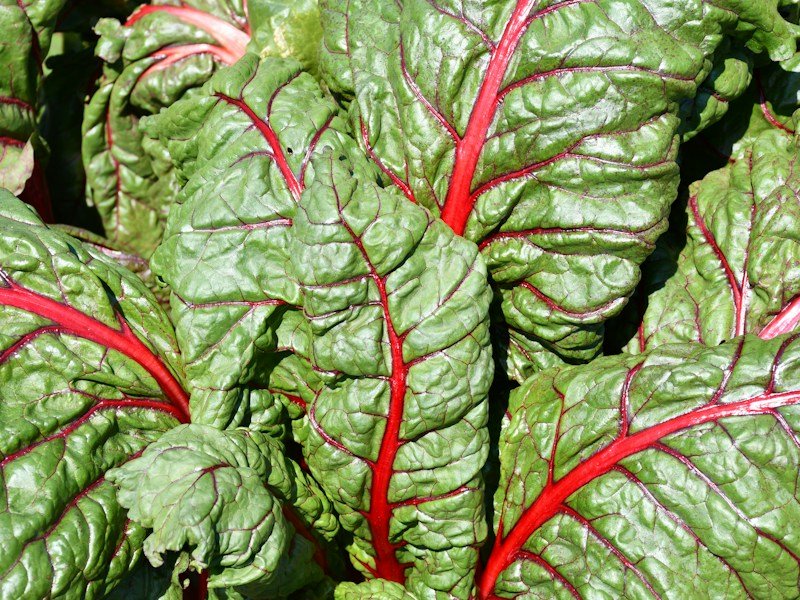
| Swiss chard | 50-60 | 2-3 gal | 6-8 stalks | 25°F | $7.00-$9.00 | Color drives sales; slowest of the leafy group to finish |
| Spinach (winter types) | 35-45 | 1-2 gal | 4-6 oz baby leaf | 15°F | $5.00-$6.50 | Bolt risk if sown before soil drops below 75°F |
| Leaf lettuce | 30-40 | 1 gal | 3-4 oz | 28°F | $3.50-$4.75 | Highest turns per bench; shortest retail shelf life |
| Broccoli raab | 40-45 | 1-2 gal | 1-2 flushes | 25°F | $4.50-$6.00 | Fast, but uniform finish is difficult to schedule |
| Dwarf cabbage | 60-70 | 3 gal | 1 head, 1.5-2 lb | 20°F | $8.00-$10.00 | Premium price; requires steady moisture |
| Radish | 25-30 | 1 gal | 6-9 roots | 25°F | $3.50-$5.00 | Fastest cash cycle; poor shipping tolerance |
| Beet | 50-60 | 2 gal | 5-7 roots | 20°F | $5.50-$7.00 | Greens add value; thinning labor is the constraint |
| Carrot (short types) | 60-70 | 3 gal deep | 10-14 roots | 25°F | $6.00-$8.00 | Needs 10 in. of depth; forking risk in shallow media |
| Cilantro / parsley | 45-55 | 1 gal | 2-3 cuts | 20°F | $3.75-$5.25 | Thin herb margin; strong add-on to vegetable orders |
Two things stand out in this data. First, the fastest crops are not the most profitable crops. Radish and leaf lettuce turn over in under 40 days but carry the lowest price per unit, which means they only work at volume or as add-on items in a mixed order. Second, the crops with the best margin per square foot of bench — kale, chard, and dwarf cabbage — are also the crops that tolerate the coldest shipping and retail conditions. Frost tolerance is a margin driver, not just a plant attribute.
After reviewing a few dozen of these programs, the failure points are remarkably consistent.
Whether you are producing in-house or sourcing finished fall containers from a regional grower, five questions will tell you whether the program is sound. What is the guaranteed finish date relative to my retail window? What container volume and media specification are you using? Which specific cultivars are frost tolerant to 25°F at finish? What per-unit cost and minimum order apply? And what happens if the order ships a week early or a week late? A supplier who can answer all five with specifics is running a program. A supplier who answers in generalities is selling you their surplus. Easiest Vegetables to Grow on a Balcony: A Commercial Buyer's Guide for U.S. Urban Markets