
Stop Guessing. Start Harvesting.
Stop Guessing. Start Harvesting.
A procurement-focused guide to licensing and deploying an organic garden course for small spaces — real pricing benchmarks, vendor evaluation criteria, LMS requirements, and three field-tested case studies with hard numbers.
If you operate a garden center, a municipal parks and recreation department, a university extension office, a corporate wellness program, or a subscription learning platform, you have fielded some version of the same question this year: ‘I live in a second-floor apartment with a 4×6 balcony — can I actually grow food?’ The honest answer is yes. The commercial answer is that an organic garden course for small spaces is one of the few categories in horticultural education where demand is still outpacing supply, and where buyers will pay for structure instead of hunting down another free blog post.
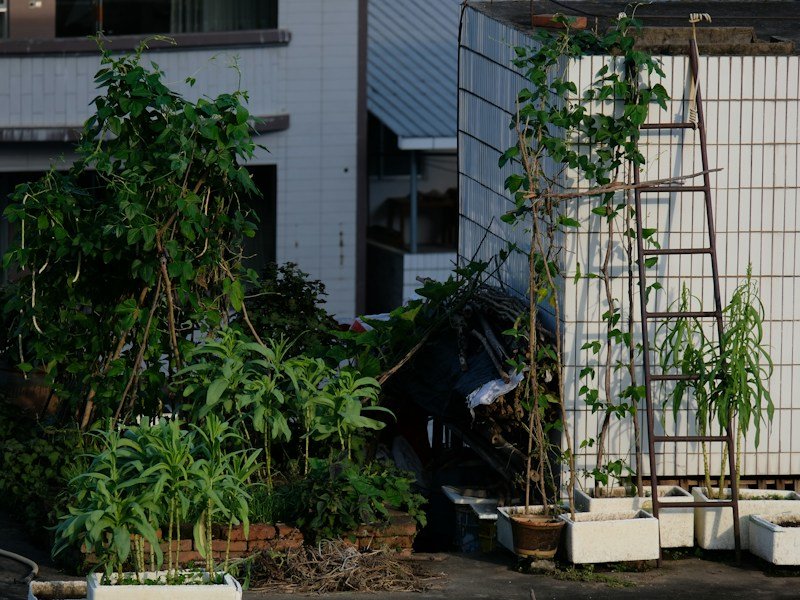
The shift is not subtle. Across our work with regional distributors, retail chains, and HR benefits teams in the US, small-space and container-gardening questions have represented the single largest share of new gardening inquiries since 2021. That audience skews younger, more urban, and far more willing to purchase guided instruction than the traditional in-ground gardener. A customer with half an acre usually already knows what to do in April. A customer with 32 square feet of balcony and a north-facing window does not — and that knowledge gap is where a curriculum earns its margin. Learn Balcony Gardening Online: The B2B Buyer's Guide to Digital Horticulture Training
This guide is written for the person who signs the purchase order, not for the hobbyist. It covers how the category is actually defined, how to score competing programs, what a realistic deployment looks like operationally, and what the numbers do in the field. If you are comparing vendor proposals or building an internal business case this quarter, start here.
An organic garden course for small spaces is a structured, multi-module educational program that teaches certified-organic growing practices — soil building, container selection, companion planting, integrated pest management, and nutrient cycling — specifically within constrained footprints such as balconies, patios, rooftops, raised beds under 50 square feet, community plots, and indoor grow-light setups. The defining characteristic is not the organic standard on its own; it is the constraint. Every lesson is engineered to work inside a limited area, a limited budget, and frequently a limited legal right to modify the space at all.
A commercially viable program typically contains eight to fourteen modules delivered across a full growing season or a rolling twelve-month subscription. The strongest curricula we have reviewed share a common skeleton:
For B2B buyers, the delivery format matters as much as the agronomy. Consumer-facing programs are usually sold as a $29 to $149 one-time video library. Business-facing licenses are sold differently and come in four practical shapes: licensed courseware delivered as SCORM 1.2 or xAPI packages into your existing LMS; a white-label subscription platform you resell under your own brand; a retail bundle that pairs course access with a physical starter kit; and a partnership model where a university extension or nonprofit supplies the curriculum and you supply distribution.
That distinction is the first thing to clarify in any RFP. A vendor selling you a consumer video library and calling it enterprise-ready will cost you more in integration labor than the license itself.
The following five-step sequence reflects how we now run evaluations after watching a half-dozen procurement cycles go sideways on the same three issues: unclear audience definition, unsupported integration promises, and no plan for content decay. Work the steps in order. Skipping step one is the most expensive mistake in the category.
Write down, in one sentence, who consumes the course and what changes for them when they finish it. ‘General public’ is not an audience. A 300-unit apartment complex in a mid-size metro is an audience. A 1,400-employee insurance company with a wellness stipend is an audience. A garden center’s 4,200-member loyalty list is an audience. Each one has a different success metric: apartment residents care about yield per square foot and not killing things; employees care about a twelve-week engagement that does not require homework guilt; loyalty members care about whether the course makes them buy more soil and starts than they otherwise would. Small Backyard Vegetable Garden Setup: A Complete B2B Sourcing and Merchandising Guide
Decide up front whether the program is a revenue line, a retention tool, or a grant-funded community service. A revenue line can absorb a $20,000 license; a retention tool should be justified against churn reduction; a grant-funded program needs documentation and reporting features baked into the LMS from day one. Getting this wrong means you will over-spec one requirement and under-spec another.
Run a real inventory of where the course will be used and what the participants actually have access to. We have seen two enterprise deployments stall because the curriculum assumed outdoor light and the participant population was largely in north-facing urban apartments.
Document the answers in a one-page brief and attach it to every RFP. Vendors respond more accurately when the constraints are explicit, and you will spot the ones who did not read it.
Ask every vendor for full module outlines, three complete sample lessons, and the raw student completion data behind their published satisfaction scores. Satisfaction ratings are easy; completion rates are hard. Anything above 60 percent completion on a multi-module gardening course is genuinely strong, and anything above 75 percent is exceptional and worth paying a premium for.
Score each proposal on these dimensions: agronomic accuracy (is the organic guidance actually compliant, or is it ‘natural’ marketing language?), container-specific detail (does it teach root-zone volume math or just say ‘use a big pot’?), seasonal calendar alignment to your region, assessment design, and whether the course produces a measurable outcome such as a harvest log or a yield benchmark. A course that ends with a certificate nobody values is worth less than a course that ends with the participant weighing four pounds of tomatoes off a balcony.
This is where most of the money is won or lost. Interrogate the license structure first: is pricing per seat, per site, per organization, or unlimited? Seat-based pricing looks cheap in a pilot and brutal at 5,000 learners. Site-based pricing is predictable but punishes multi-location operators. Unlimited enterprise licensing carries the highest sticker price and usually the best five-year total cost of ownership once you pass roughly 2,000 active learners. Year Round Balcony Garden Course: The B2B Buyer's Guide to Urban Growing Programs
Then confirm integration capability in writing: SCORM 1.2, SCORM 2004, xAPI, AICC, SSO via SAML 2.0, and API access for reporting. Ask specifically how course updates propagate to your LMS instance and whether previously completed learners are re-enrolled. Then ask the question almost nobody asks: what is your content refresh cadence, and what does it cost me? Growing guidance decays. Neonicotinoid regulations change, new container products enter the market, and pest pressure shifts by region. A vendor with an annual refresh included in the license is worth 15 to 25 percent more than one charging per update.
Finally, lock down usage rights. Confirm in the contract whether you may co-brand, translate, excerpt for marketing, or bundle with physical products, and whether those rights survive non-renewal.
Never roll out to your full population first. Run a 60- to 120-participant pilot for one full growing season — ideally 16 to 20 weeks — with a control group if you can manage it. Instrument the pilot for four metrics: enrollment-to-start rate, module completion rate, self-reported behavior change (did they plant something?), and the commercial or engagement effect you actually care about (attach rate, churn, wellness program participation, benefit utilization).
Debrief at week eight, not week twenty. Mid-season feedback surfaces missing content, bad pacing, and support gaps while you still have leverage in the contract. Then scale to the full population with a regional calendar staggered by USDA hardiness zone, so your support desk is not answering 900 identical questions about frost dates in the same week.
| Sourcing Option | Typical First-Year Cost (USD) | Time to Launch | Customization Level | Content Refresh | LMS / SSO Support | Best Fit |
|---|---|---|---|---|---|---|
| Licensed vendor courseware (SCORM/xAPI) | $6,000-$28,000 license + $1,500-$4,000 integration | 2-4 weeks | Medium: co-branding, 10-20% custom modules | Quarterly to annual, often included | Full: SCORM 1.2, xAPI, SAML 2.0 SSO | Garden centers, universities, mid-size employers |
| White-label subscription micro-course platform | $4,200-$18,000/yr + $3-$9 per seat | 5-10 business days | Low to medium, template-bound | Monthly | Partial to full, varies by platform | Subscription learning brands, HR benefits resellers |
| In-house curriculum build | $35,000-$90,000 fully loaded (SME time, video, LMS) | 4-7 months | High: fully owned IP | Manual, as staff time allows | Depends on internal LMS | Large enterprises, funded extension programs |
| University extension or nonprofit partnership | $0-$12,000, grant or sponsorship dependent | 6-12 weeks | Low to medium, academic calendar driven | Annual, tied to growing season | Rarely supported | Municipalities, public libraries, community nonprofits |
| Retail bundle: course access + physical kit | $9-$24 COGS per bundle + $2,500 setup | 3-6 weeks | Low, supplier-controlled | Seasonal | Not applicable | Garden centers, nurseries, e-commerce retailers |
Theory is cheap. Below are three deployments we participated in or evaluated directly, with the numbers as reported. Names are withheld under agreement, but the scale and structure are accurate.
A 14-store independent garden center group licensed a SCORM-packaged course and bundled it with a $39 physical starter kit containing a 10-gallon fabric pot, organic potting blend, three seed varieties, and a slow-release organic fertilizer. The license ran $14,500 for the first year plus a $2,000 integration fee into their existing retail LMS. Setup took three weeks.
They launched to their loyalty list of 4,200 members in March. Enrollment hit 1,180 in the first season, with a 68 percent module completion rate. The number that mattered was attach rate: course participants purchased physical goods at a rate 2.4 times higher than the control segment of the loyalty list, and average basket size among participants was $71 versus $34 for non-participants. The program paid for its license inside eleven weeks. In year two they renegotiated to an unlimited enterprise license at $19,000 and expanded the bundle into three price tiers. Budget Vertical Vegetable Garden Ideas for Commercial Buyers: A 2025 Sourcing, Cost, and Deployment Guide
This employer added the course as a wellness elective rather than a mandatory track, which turned out to be the right call. They paid $22,000 for an unlimited-seat annual license with SSO integration and Spanish-language tracks. A 22-week seasonal format ran from April through September.
Of 1,400 eligible employees, 340 enrolled and 245 completed at least eight of ten modules — a 72 percent completion rate, notably higher than the 41 percent completion rate on their existing fitness and nutrition electives. Survey data showed 61 percent of completers reported growing food for the first time in their adult lives. The wellness team used that figure, plus the completion delta, to justify renewal at the same budget level without a fight. Their advice to peers: keep it optional, run it seasonally, and ship a physical kit to the first 100 enrollees as an activation nudge. That single gesture lifted enrollment-to-start conversion from 44 percent to 79 percent.
A suburban parks and recreation department partnered with the county library system on a grant-funded deployment using a university extension curriculum at a cost of $9,000, funded through a community food security grant. Delivery was hybrid: in-person Saturday workshops at two library branches plus the online course for asynchronous learners.
The program reached 480 residents across two seasons. The in-person cohort completed at 84 percent; the online-only cohort completed at 51 percent. That gap is consistent with what we see everywhere and should inform your channel mix. Hybrid delivery costs more per participant but produces materially better outcomes — and better outcomes are what grant renewals are written on. In year two the department secured a 40 percent larger grant by reporting 310 participants who documented a first-season harvest.
First-year license fees are only about 55 to 65 percent of true five-year cost for most buyers. Budget the remainder across integration labor (40 to 120 internal hours), physical kit subsidies if you ship them (roughly $12 to $24 per participant at 5,000 units), marketing and activation (10 to 15 percent of license value), support staffing during peak spring weeks, and content refresh fees. A $15,000 first-year license typically lands at $62,000 to $78,000 in total five-year cost for an organization serving 2,000 to 3,000 learners — which, at a blended cost of roughly $25 per learner, is competitive with most benefits and loyalty programming you are already funding. Compare that against the retail attach-rate economics in Case Study 1 and the payback math is straightforward.
The organic garden course for small spaces category has matured to the point where vendors, licensing models, and integration standards are comparable enough to evaluate side by side. That is good news for buyers and bad news for vendors coasting on recycled video libraries. Define your audience, document your constraints, demand completion data instead of satisfaction scores, and pilot before you scale. Do those four things and you will end up with a program that produces measurable outcomes — pounds of food, retained customers, engaged employees — rather than a well-intentioned PDF nobody opens. Zero Experience Container Gardening: The Complete B2B Guide for Commercial Buyers
If you are building an RFP this quarter, start with the comparison table above, circulate the five-step evaluation framework to your team, and require every shortlisted vendor to supply raw completion data and a written refresh cadence. Those two requests alone will eliminate half the field.
