Stop Guessing. Start Harvesting.
Renters are now the fastest-growing slice of the home-grow market, and they buy differently. Here is how suppliers, retailers, and property managers should spec, source, and support seed starting in small space apartments without carrying dead inventory.
Seed starting in a small space apartment used to be a rounding error in the garden category, a few plug trays on a radiator and a lot of dead basil. That is not how it works anymore. Renter households now account for roughly a third of all U.S. housing, the typical new apartment is under 900 square feet, and the people living in those units are buying LED bar lights, self-watering trays, and starter kits at price points that rival what a suburban gardener spends on lumber for a raised bed.
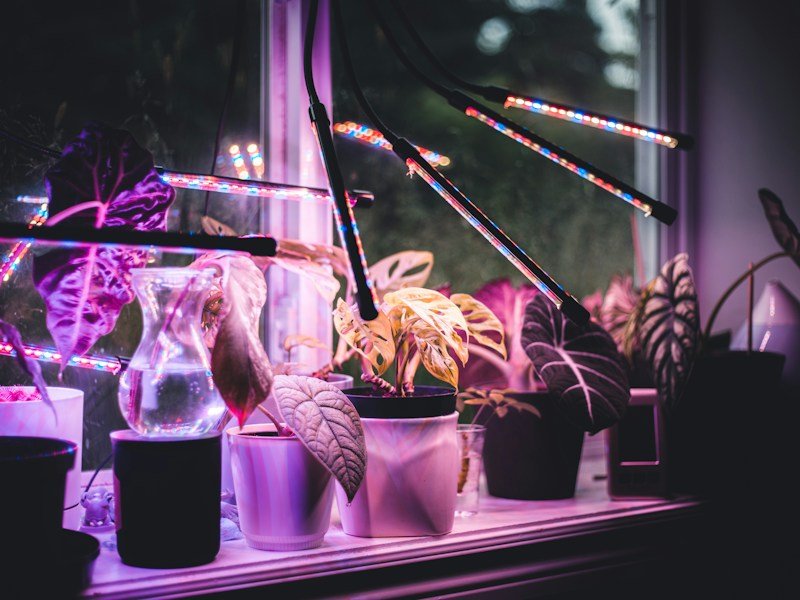
For buyers, distributors, private-label program managers, and property operators, seed starting in small space apartments is a specification problem before it is a marketing problem. Every variable changes when the end user cannot drill, cannot pull a dedicated circuit, cannot leave a mess on the counter, and might move out in eleven months. This guide covers how we spec, source, and support the category: the five steps we run with suppliers, the configurations that actually sell through, and the failure points that quietly eat margin. Apartment Container Gardening Tips for Multifamily Property Teams
Seed starting in small space apartments is the practice of germinating seed and raising seedlings to transplant size inside a rental unit with limited floor area, usually on a wire shelf, windowsill, or countertop, using compact trays or pods, supplemental LED lighting, and low-mess bottom watering. For the trade, the definition carries three additional constraints: the system must ship in a parcel-sized carton, install without tools or landlord approval, and survive a lease-end move.
A complete apartment kit that will hold up commercially usually contains six things:
The sequence below is the one we run with suppliers and retail category managers before a single purchase order goes out. Skipping step one is the most common and most expensive mistake.
Renters do not measure in square feet, they measure in shelf inches, outlet count, and window orientation. Get real numbers before you commit to a mold. In our surveys of apartment growers, the practical envelope is a 24 by 36 inch wire or steel shelf, one duplex outlet within six feet, and either a south or west window or no usable light at all.
Ask every supplier for four data points up front: assembled footprint, loaded weight, cord length from fixture to plug, and whether the unit breaks down flat. Then field-test with ten households in the target metro for two weeks. We have killed three SKUs at this stage because the dome did not fit under a standard 14 inch shelf gap, and one lighting bar because the cord was 4 feet, not 6, which put the plug on the wrong side of a galley kitchen.
Lighting is where apartment programs either earn credibility or lose it. The specification that works for seedlings is a full-spectrum white bar in the 3500K to 5000K range, delivering roughly 200 to 400 PPFD at canopy height over a 14 to 16 hour photoperiod. In practice, that means 20 to 30 watts of modern LED per 24 inch bar, two bars per 24 by 36 inch shelf for serious growers, one bar for windowsill supplement. Patio Vegetable Gardening Secrets: A B2B Sourcing Guide for Retailers and Growers
Three features matter more than raw output. Height adjustability from about 4 to 18 inches above the tray lets a customer manage stretch without buying a second fixture. Dimmability reduces heat complaints in closets and small bedrooms. Daisy chaining keeps the outlet count at one for a four-shelf rack, which is the difference between a sale and a safety objection from a property manager.
Do not put high-output T5 fluorescent in this category. In a closed closet, the heat load is a genuine fire and plant-stress problem, and the bulb breakage rate on parcel returns is punishing. Require UL or ETL listing on every fixture and FCC Part 15 compliance on anything with a driver or timer; several national retailers will not onboard a SKU without both documents in hand.
The container decision drives freight, damage, and repeat purchase at the same time. A 1020 tray with 72 cells nests well and fits a 12 by 20 by 6 inch carton, which keeps a single-unit parcel under dimensional weight thresholds with most carriers. A molded windowsill tray sells better on a peg but ships badly unless the saucer nests inside the tray footprint.
Media should be sealed and compressed. Loose 8 quart bags of potting mix generate a 15 to 22 percent complaint rate in apartment channels; compressed coir bricks and pre-filled peat or coir pellets run closer to 3 percent. Wet weight is the hidden cost. A fully watered 1020 tray weighs about 9 to 11 pounds, so any kit marketed with a reservoir needs a carton rated for that load or the corners crush in transit.
Keep the assortment narrow. One core configuration and one premium configuration is enough for a first season; our strongest retail accounts run eight to eleven SKUs total in the category, not thirty.
Water is the number one cause of apartment-grower complaints, and it is almost never about the plant. It is about a damaged floor or a leak into the unit below. Bottom watering through a wicking mat, capillary mat, or self-watering insert eliminates the overflow problem and reduces the frequency of customer intervention to roughly once every five to seven days. Container Vegetable Gardening for Beginners: A Commercial Buyer's Guide
Specify a saucer or reservoir with at least a half inch of freeboard, and test the assembly at a 15 degree tilt, because renters move trays to the sink. Humidity domes should vent and should sit inside the tray rim rather than on top of it. For the German chamomile and herb crowd that runs a fan, low-voltage USB fans are a better fit than anything requiring a wall adapter near a wet surface.
The cheapest return you will ever process is the one you prevent with a card. Every kit we ship includes a QR-linked five-step sheet covering light distance, watering cadence, when to remove the dome, when to fertilize, and what a normal germination window looks like for the species in the box.
Pair that with a clear policy: replace seed, not the kit, for germination shortfalls inside 30 days. Seed costs pennies against a full refund, and the gesture keeps the customer in the category for the fall crop. Track complaints by seed lot number; a single bad lot can drive a disproportionate share of your spring support volume, and your seed vendor should be absorbing that cost.
| Configuration | Typical Footprint | Retail Price Band (USD) | Lighting Draw | Best-Fit Buyer | Reorder Pattern |
|---|---|---|---|---|---|
| Windowsill plug tray with vented dome | 12 x 24 in | $8 – $14 | 0 W (ambient only) | Impulse and gift buyers in south or west facing units | High seasonal churn, low ticket |
| Countertop self-watering kit with coir pellets | 10 x 20 in | $34 – $59 | 0 W (ambient only) | First-time growers and property-manager programs | Medium, strong repeat next spring |
| Two-tier wire rack with 24 in LED bars | 24 x 36 in | $120 – $210 | 60 – 96 W | Committed renters with one usable shelf | Medium-high, accessory attach rate |
| Modular four-shelf LED stack | 24 x 24 in | $260 – $420 | 120 – 160 W | Small-space power users and subscription brands | High, strongest lifetime value |
| Enclosed cabinet with filter and fan | 24 x 36 in | $450 – $900 | 150 – 250 W | Odor-sensitive units and premium urban buyers | Low volume, highest margin per unit |
A regional chain we worked with had stocked 38 seed-starting SKUs for three seasons and could not explain why the category underperformed. The problem was not demand. It was that 22 of those SKUs were sized for backyard gardeners, and the stores sitting in dense rental districts were being handed the same planogram as the suburban flagships.
For the February through May program we cut the assortment to 11 SKUs in a $34 to $79 price band, moved to a 6-unit case pack, and added a shelf-ready display with a single sign reading, in effect, everything here fits on a two-foot shelf. Results across the chain: sell-through reached 78 percent by week five against 41 percent the prior year on the broad assortment; blended margin landed at 46.2 percent; average basket in the category climbed from $31 to $52; and the one store in a predominantly rental neighborhood ran 3.4 times the chain average. How to Grow Food on an Apartment Balcony: A Commercial Sourcing Guide
The biggest single improvement was unglamorous. Returns dropped from 9.1 percent to 2.7 percent after we replaced loose potting mix with coir pellets and added the QR care card. Same customer, same seeds, far fewer complaints.
A 212-unit building in Denver ran a lobby pop-up and pre-order program for two weeks in March. The manager sourced 90 kits at roughly $13 landed cost, sold them at $39, and moved 81 units, about 38 percent of households, for $3,159 in revenue on a $1,170 buy. The building renewed for a second season and now uses the program in spring leasing materials. What made it work was fit, not price: coir plugs, bottom trays, and a strict no-loose-soil rule so nothing ended up in a hallway or on a carpet.
A box program shipping about 1,800 units a month was running a 4.6 percent damage rate and absorbing replacements on nearly every tenth shipment. Two changes fixed it. The dome was redesigned to nest inside the tray rim instead of over it, and the tray stack was re-oriented to drop shipping weight by 0.9 pounds per box, saving $0.71 per shipment in freight. Damage fell to 0.8 percent within one quarter, and the savings paid for the mold tooling in under five months.
A distributor we advised shipped 4 inch pots and bagged mix into urban accounts for a March promotion. The product was fine agronomically and wrong commercially: 22 percent of buyers filed what amounted to mess complaints, and the retailer pulled the line the following season. The replacement assortment used plugs and a sealed media brick and ran at a third of the complaint rate.
Small-space seed starting looks low-risk from a merchandising standpoint. It is not low-risk from a paperwork standpoint, and a single missed requirement can hold a container at customs or pull a SKU off a retail shelf.
The apartment grower is a repeat buyer when the first season goes well and a lost customer when it does not. Build the assortment around the 24 inch shelf, the single outlet, and the moving truck, and the category performs like any other well-run program: predictable turns, defensible margin, and a customer who comes back in February. Online Urban Gardening Classes: A B2B Buyer's Guide for 2025