Stop Guessing. Start Harvesting.
Stop Guessing. Start Harvesting.
Patio vegetable gardening is easier than you think. Whether you have a tiny balcony or a spacious deck, these ideas will help you grow fresh, organic vegetables right outside your door.
I remember the first time I tried growing vegetables on my apartment patio. I had a tiny 4×6 foot space, a few pots, and a whole lot of hope. Three months later, I was picking cherry tomatoes for my lunch salad, and I felt like a gardening wizard. That’s the magic of patio vegetable gardening ideas—they turn any small outdoor space into a productive little farm.
You don’t need a sprawling backyard or fancy raised beds. All you need is some sunlight, containers, and a bit of know-how. In this guide, I’ll share the exact steps I’ve used to grow everything from lettuce to peppers on my patio. I’ll also cover common mistakes, real examples from my own experience, and a helpful comparison table to get you started.
By the end, you’ll have a clear plan to start your own patio vegetable garden—even if you’ve never grown a thing before.
Patio vegetable gardening is the practice of growing edible plants in containers, raised beds, or vertical structures on a patio, balcony, deck, or any small outdoor area. It’s a subset of container gardening, but specifically focused on vegetables, herbs, and sometimes small fruits.
The key difference from traditional gardening is that everything is portable and space-efficient. You use pots, grow bags, trellises, and hanging baskets to maximize every square inch. Patio vegetable gardening works because most vegetables don’t need deep soil—they just need consistent care, sunlight, and drainage.
According to the National Gardening Association, over 35% of U.S. households now grow some of their own food, and container gardening is the fastest-growing segment. That’s because people in apartments and condos are realizing they can still enjoy fresh, homegrown produce without a yard.
Here’s the exact process I follow every spring. It’s not complicated, but it works.
Follow these steps, and you’ll have a thriving patio garden in 6–8 weeks.
Let me walk you through a real example from my own experience. Two years ago, I moved to a new apartment with a west-facing patio. I got about 5 hours of direct afternoon sun. Not ideal, but I made it work.
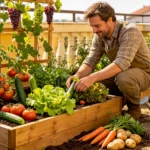
I planted three 5-gallon pots with ‘Sungold’ cherry tomatoes, one 3-gallon pot with ‘California Wonder’ bell peppers, and two 2-gallon pots with ‘Black Seeded Simpson’ lettuce. I also hung a strawberry jar on the railing.
By week three, the tomatoes were flowering. The lettuce was ready to harvest in just 28 days. The peppers took longer—about 70 days—but I got 8 beautiful peppers from one plant. The strawberries? They were a bit of a bust because of the limited sun, but I still got a handful of sweet berries.
Total yield from that 20-square-foot patio: about 12 pounds of tomatoes, 3 pounds of peppers, 4 pounds of lettuce, and a pint of strawberries. That’s enough for salads and cooking for two months. And the cost? Less than $50 in pots, soil, and seeds.
My biggest lesson: don’t overplant. I used to cram too many plants into small pots, and they’d struggle. Now I give each plant room to breathe. Also, vertical space is gold. I added a simple trellis for the tomatoes and saved floor space.
[TABLE_SECTION]
This table shows the most popular vegetables for patio gardening, along with key details to help you choose.
[FAQ_SECTION]
Patio vegetable gardening ideas aren’t just for people with green thumbs. They’re for anyone who wants fresh, organic produce without leaving home. I’ve seen friends who swore they’d kill a cactus grow beautiful basil and tomatoes on their first try.
Start small. Pick one or two vegetables from the table above, get a pot and some soil, and give it a shot. You’ll be amazed at what grows. And when you bite into that first homegrown tomato, you’ll understand why so many of us are hooked.
Do you have a patio garden? What’s your favorite vegetable to grow? Drop a comment below—I’d love to hear your stories. And if this guide helped, share it with a friend who needs some green in their life.
Why Our Video Course Is the Best Investment for Your Small Backyard
| Vegetable | Container Size | Sunlight Needed | Days to Harvest | Difficulty |
|---|---|---|---|---|
| Cherry Tomato | 5-gallon pot | 6–8 hours | 60–70 days | Easy |
| Bell Pepper | 3-gallon pot | 6–8 hours | 70–85 days | Moderate |
| Lettuce | 1-gallon pot | 4–6 hours | 30–45 days | Easy |
| Radish | 1-gallon pot | 4–6 hours | 25–30 days | Easy |
| Bush Beans | 2-gallon pot | 6–8 hours | 50–60 days | Easy |
| Basil | 1-gallon pot | 6–8 hours | 30–40 days | Easy |
| Strawberry | Hanging basket | 6–8 hours | 60–90 days | Moderate |
| Kale | 2-gallon pot | 4–6 hours | 50–70 days | Easy |
Space-Saving Balcony Vegetables Video Tutorial for Small Spaces
Fast-Growing Balcony Vegetables Video Tutorial for Beginners