Stop Guessing. Start Harvesting.
Stop Guessing. Start Harvesting.
Kelp meal earns its place in container production only when it is specified correctly and dosed by media volume. Here are the rates, product forms, delivery methods, and cost math commercial growers use to make it pay.
If you run container production, you already know that the margin on a potted crop is decided long before the plant ships. Media cost, fertigation passes, labor minutes per flat, and shrink all stack up, and every input has to justify its line on the spreadsheet. That is exactly the context in which how to use kelp meal for potted plants has become a legitimate procurement question rather than a garden-center curiosity. Kelp meal, correctly specified and correctly dosed, is not a fertilizer replacement. It is a low-analysis, biologically active amendment that earns its place when you treat it as a base-charge ingredient in your mix or as a scheduled drench, never as a substitute for your N-P-K program. The working answer for most commercial operations: blend 1 to 2 tablespoons of screened kelp meal per gallon of growing media before filling, or top-dress at roughly 1 teaspoon per 4-inch pot and water it in, then repeat on a 6 to 10 week cycle. Everything beyond that number is about particle size, rate discipline, and knowing what the product can and cannot do inside a limited root volume.

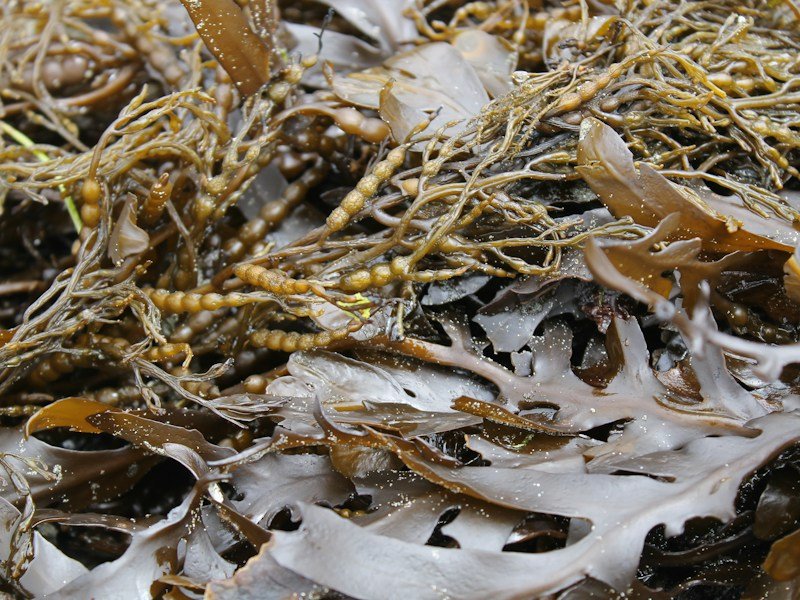
Kelp meal is dried, ground brown seaweed, most commonly Ascophyllum nodosum, sold as a dark, flaky meal with a typical analysis in the range of 1-0.5-2 to 1.5-0.5-5 (N-P-K). It delivers small amounts of slow-release nutrients plus cytokinins, auxins, mannitol, alginates, and trace minerals that act as a biostimulant in container media. That definition matters commercially, because it sets the expectation: you are buying a biological and hormonal input with a modest mineral load, not a bag of nitrogen. Potted Organic Onion Growing Guide: A Commercial Grower's Playbook
The agronomic case for the product rests on three mechanisms. First, the meal is a food source for the microbial population in your media. Fungi and bacteria break down the alginates and complex carbohydrates, and that activity improves aggregation and water-holding stability in peat and bark-based mixes that otherwise collapse late in the crop cycle. Second, the cytokinins and auxins present in cold-water North Atlantic kelp influence root initiation and lateral root development, which is why the response is most visible on transplanted liners and on crops coming out of stress. Third, the meal carries a broad trace-mineral profile, including boron, iron, manganese, and zinc, that buffers against the small micronutrient gaps that show up in alkaline irrigation water.
What a grower should read in a lab report is not just N-P-K. Ask for moisture, ash, alginate content, sodium, and heavy metals. Ash above roughly 25 percent usually signals a product harvested late in the season, sand contamination, or a species blend that is heavier on Macrocystis than Ascophyllum. Moisture above 12 percent invites caking and mold in storage, and it means you are paying freight for water.
It is not a nitrogen source you can budget against. At a 1 to 1.5 percent nitrogen content and a mineralization curve that stretches across 8 to 12 weeks, a 1-tablespoon-per-gallon charge contributes a fraction of the nitrogen that a single fertigation pass delivers. Growers who cut their liquid feed program assuming the kelp will cover the gap end up chasing pale, stretched crops in week six. The correct posture is additive: keep the soluble program intact, and let the meal improve rooting, media structure, and stress recovery.
It is also not a fungicide, a nematicide, or a substitute for a properly composted substrate. Supplier marketing occasionally drifts in that direction. Do not carry those claims into a spec sheet, and do not repeat them in a customer-facing catalog.
A field soil has a deep microbial reservoir and a large buffering volume. A #1 container holds roughly three-quarters of a gallon of media, gets irrigated heavily and frequently, and leaches. Organic meals mineralize slowly at cool media temperatures, so the practical release window in a spring greenhouse is closer to 8 to 10 weeks than the 12 to 16 weeks often quoted for field use. That compressed timeline is the single most important factor in setting your rate and your reapplication interval. It also explains why the same product that looks unremarkable in a garden trial can produce a measurable rooting response in a plug tray, where root volume is the entire crop. How to Grow Organic Grapes in Pots: A Commercial Grower's Guide
Kelp meal is a commodity with wide quality variance, and price per pound alone will mislead you. Build a one-page spec that names the species (Ascophyllum nodosum), the mesh size, maximum moisture, maximum ash, sodium level, heavy metal limits, and the documentation you require with each lot. Request a certificate of analysis and confirm third-party heavy metal testing, because seaweed bioaccumulates arsenic and cadmium from seawater and regulators increasingly ask for those numbers. If your crop is marketed as organic, confirm current OMRI listing on the exact product code you are buying, not on the brand’s flagship SKU.
Mesh size is the specification most often ignored and most often responsible for disappointment. A 20 to 40 mesh meal is forgiving in a bench mixer and appropriate for #1 and larger containers. A 100 mesh product blends more evenly at low rates in plug and liner mixes but generates dust and can mat on the surface if it is not watered in. Match the mesh to your mixing equipment and your container size, and buy from a supplier who will hold that mesh lot to lot.
Rates belong on a volumetric basis because pot sizes are nominal and vary by manufacturer. The working commercial range for incorporation is 1 to 2 tablespoons of screened kelp meal per gallon of finished media, which lands at roughly 5 to 10 pounds per cubic yard. For conversion, a #1 nursery container holds about 0.75 gallons of media, a #3 holds about 2.4 gallons, and a #5 holds about 3.9 gallons.
For top-dressing established pots, use 0.5 to 1 teaspoon per 4-inch pot, 1 tablespoon per #1 container, and 2 to 3 tablespoons per #3 container, then irrigate immediately so the material moves off the surface. For liquid applications, soak 1 pound of meal in 10 gallons of water for 24 hours with aeration, strain through 100 mesh, and apply the strained liquor at a 1:2 dilution. Start at the low end of every range on a new crop, run one bench as a control, and increase only after you have a root rating and a color score to compare against.
There are four practical delivery routes in container production, and they are not interchangeable. Incorporation at mixing is the most efficient per unit of labor and the only route that distributes the material through the entire root zone. Top-dressing is a rescue and maintenance tool for crops already in the house, but it puts organic matter at the surface where fungus gnats and algae find it, so cover heavy top-dresses with a thin vermiculite or bark mulch layer. Steeped drenches deliver the soluble fraction quickly and suit transplant recovery and finishing crops. Foliar application is the least predictable and carries a real risk of phytotoxicity when tank-mixed with oils or applied under high light and heat. Growing Organic Strawberries in Containers: A Commercial Grower's and Buyer's Guide
One hard rule: never send raw meal slurry through drip tape, micro-sprinklers, or injectors. Particles and alginates will gel and plug emitters, and the cleanup cost dwarfs any input savings. If you want kelp in a fertigation program, use a fully soluble extract powder or a filtered liquid concentrate and keep the stock tank agitated.
| Product Form | Typical Rate | Release Window | Best Fit in Container Programs | Relative Cost | Handling and Equipment Notes |
|---|---|---|---|---|---|
| Raw kelp meal, 20-40 mesh | 1-2 tbsp per gallon of media (5-10 lb per cu yd) | 8-12 weeks, microbial | Base charge for nursery stock, perennials, and shrubs in #1 to #7 containers | $ | Incorporate in a paddle or ribbon mixer; add dust suppression; never inject through drip |
| Fine-milled kelp meal, 100 mesh | 1-1.5 tbsp per gallon of media (3-7 lb per cu yd) | 6-10 weeks | Plug and liner trays, seed-starting mixes, greenhouse bench crops | $$ | Blends evenly at low rates; use a dust mask; avoid surface matting under overhead mist |
| Soluble kelp extract powder | 0.125-0.25 tsp per gallon of water | Immediate (days) | Fertigation through drip, weekly drench program, foliar where labeled | $$$ | Fully soluble; keep stock tank agitated; not interchangeable with raw meal |
| Liquid kelp concentrate | 0.5-1 fl oz per gallon of water | Immediate | Finishing crops, transplant recovery, retail-ready plants | $$$ | Dilute before injection; check EC contribution; protect from freezing |
| Kelp meal blended with humates or compost | Per supplier label | 8-12 weeks | Premium bagged potting soils and retail mixes | $$ | Labeling and state registration requirements vary; confirm claim language |
Once the meal is in the mix, the temptation is to reduce the fertigation schedule. Resist the urge for the first crop cycle. What the meal does allow, over time, is a modest reduction in the frequency of liquid passes on long-cycle crops, because better root architecture improves uptake efficiency. In practice that looks like eliminating one pass out of four or five on a 14-week perennial crop, not cutting the program in half. Monitor substrate EC and pH on the same schedule you already use, and watch for the opposite failure mode: growers who stack kelp meal on top of a heavy compost charge and push media EC higher than the crop wants. Kelp meal contributes little soluble salt at recommended rates, typically a few tenths of a dS/m in saturated paste terms, but the cumulative organic load in a reused or heavily amended mix deserves a regular check.
Containers do not carry a residual from one crop to the next, because the media is dumped, reused, or sold with the plant. Treat kelp meal as a per-cycle input with a 6 to 10 week functional window. Write the lot number, rate, mesh size, and incorporation date on the bench tag. Score root quality on your existing 1-to-5 scale at two points: four weeks after transplant and at ship date. Two or three cycles of that discipline will tell you more about whether the product is paying for itself than any supplier trial report ever will, and it gives you the data to defend the line item when the purchasing review comes around.
A perennial operation running daylily, salvia, and nepeta in a bark-and-peat mix with 20 percent perlite asked us to look at transplant shock losses that were running near 4 percent on spring benches. We specified a 30-mesh Ascophyllum meal at 1.5 pounds per cubic yard, incorporated in a 1-cubic-yard paddle mixer, which added roughly five minutes of mixing time per batch. Over the following 14 weeks the grower dropped one liquid feed pass from a four-pass program, held substrate EC steady, and reported root ratings improved by roughly one point on their internal scale, with shrink at the benches dropping toward 2 percent. Nobody called it a silver bullet, and the operation still runs a full soluble program. But the input cost, at that rate, was about four cents per gallon of media, and the labor saved on one eliminated feed pass covered it several times over. Organically Fixing Tomato Blossom End Rot: A Commercial Grower's Field Guide
A plug producer trialing a fine-milled 100-mesh meal at 0.75 pounds per cubic yard in a peat-based plug mix saw tray-ready timing move up by three to four days on their own bench scoring, with tighter root plugs and less washout at transplant. The caution from that trial is worth repeating: at higher rates in a small cell with overhead mist, the fine meal can mat on the surface and create a favorable layer for algae and fungus gnat larvae. Their fix was to reduce the rate, incorporate rather than top-dress, and cover trays with a light vermiculite top coat during germination.
A foliage finisher shipping 6-inch and 10-inch tropicals to box stores uses no meal in the mix at all. Instead they run a filtered liquid kelp concentrate at 0.5 fluid ounces per gallon as a drench 14 days before ship date, primarily to even out color and reduce the stress marking that shows up after the retail truck ride. Material cost per pot is under two cents. The lesson is that the delivery form should follow the objective: if the goal is media biology and long-term root architecture, buy meal; if the goal is a finishing response in the last two weeks, buy a soluble extract and keep the meal out of your irrigation lines.
At current bulk pricing in the range of $1.80 to $2.60 per pound for screened, documented meal, a 1-tablespoon-per-gallon charge of roughly 0.3 ounces costs about 3 to 5 cents per gallon of media; at the 2-tablespoon rate, 7 to 9 cents. Multiply by your annual media volume and compare that figure against the labor value of removing one fertigation pass, the shrink you avoid on transplants, and the price premium you can defend on a crop with a visible root system at retail. That comparison, not the per-pound quote, is the number your controller needs.
On quality control, hold each inbound lot against your spec before it goes into the mixer. Moisture by oven test, a visual screen check for mesh consistency and foreign material, a smell check for fermentation or off-odors that indicate a wet lot, and a retained sample from every pallet. Storage is straightforward but unforgiving: keep pallets off concrete, keep bags sealed, keep the room below 70 degrees Fahrenheit and under 60 percent relative humidity, and rotate on a first-in, first-out basis. Sealed, dry meal holds quality for about 24 months; opened bags in a humid house will cake within weeks and lose flowability in a meter or auger.
Handled with that level of discipline, kelp meal is one of the few inputs in a container program that improves root quality and media performance at a cost measured in pennies per pot. Handled casually, it becomes another bag on the shelf that nobody can quite justify. The difference is specification, rate, and record-keeping. Growing Garlic in Deep Balcony Containers: Commercial Operations Guide