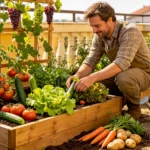
Stop Guessing. Start Harvesting.
Stop Guessing. Start Harvesting.
Container gardening for small spaces lets you grow fresh herbs, veggies, and flowers even if you have no yard. This guide covers everything from choosing pots to planting and care, with practical advice from someone who's done it.
I still remember the first time I tried growing tomatoes on my apartment balcony. I had no clue what I was doing—just a few pots, some soil, and a dream. That summer, I harvested maybe three cherry tomatoes. But it hooked me. Over the years, I’ve transformed that cramped 4×6-foot balcony into a lush mini-garden that produces enough basil, peppers, and lettuce to feed my family. If you’re reading this, you probably want the same: to grow something real in a small space. Container gardening for small spaces is your answer. It’s not complicated, and you don’t need a green thumb. You just need the right setup, a little patience, and the willingness to get your hands dirty. In this guide, I’ll walk you through everything—from choosing containers to harvesting your first crop. Let’s dig in.
Container gardening for small spaces is exactly what it sounds like: growing plants in pots, planters, or any portable container instead of in the ground, specifically tailored to tight living quarters like apartments, condos, balconies, patios, or even windowsills. It’s a practical solution for urban dwellers, renters, or anyone with limited outdoor area. The key difference from traditional gardening is that you control the soil, drainage, and placement entirely. You can move containers to catch sunlight or shelter from wind. This method works for vegetables, herbs, flowers, and even small fruit trees. According to the National Gardening Association, container gardening has grown by over 30% in the last decade, driven by people living in cities. It’s not just a trend—it’s a way to reconnect with nature, save money on groceries, and enjoy fresh produce year-round, no matter how small your footprint.
Starting your own container garden doesn’t require a degree in horticulture. I’ve broken it down into five straightforward steps that anyone can follow. Trust me, if I could go from killing a cactus to growing kale in a window box, you can do this too.
Let me share a couple of stories to show how this works in real life. First, my friend Sarah lives in a 500-square-foot studio in Brooklyn. She has a tiny fire escape that gets about 4 hours of afternoon sun. She started with three pots: one with mint, one with chives, and one with Swiss chard. Within two months, she was harvesting enough for salads and garnishes. She spent $45 total on pots, soil, and seeds. Her grocery savings? About $15 a month—not huge, but the freshness was priceless. Then there’s my own experience. Last year, I converted a 3-foot-wide windowsill in my kitchen into a herb garden. I used self-watering window boxes from a hardware store. I planted basil, oregano, thyme, and rosemary. The basil alone saved me $10 a week during summer. The key was using reflective trays to bounce light onto the plants. Another case: a neighbor built a vertical pallet garden on his 6×8-foot patio. He grew strawberries, lettuce, and trailing petunias in stacked pockets. He harvested over 20 pounds of strawberries in one season. His total investment was $60 for materials. The numbers don’t lie—container gardening pays off fast. In a survey by the University of Florida, container gardens can produce up to 1 pound of vegetables per square foot, which is impressive for small spaces.
Container gardening for small spaces has changed how I see my home. That tiny balcony I mentioned earlier? It’s now a vibrant, productive space that gives me fresh food and peace of mind. You don’t need a big yard or expensive gear. You just need a few pots, some good soil, and the courage to start. The benefits go beyond saving money—you’ll eat healthier, reduce stress, and feel proud every time you pick a ripe tomato. I encourage you to try it. Pick one plant, one pot, and one spot. See what happens. Then come back and tell me about it in the comments. What are you planning to grow first? Share your story, ask questions, and let’s build a community of small-space gardeners together.
Patio Vegetable Gardening Ideas: How to Grow Fresh Food in Small Spaces
| Container Type | Best For | Pros | Cons | Price Range |
|---|---|---|---|---|
| Plastic Pots | All plants | Lightweight, affordable, retain moisture | Can crack in sun, not eco-friendly | $2–$15 |
| Fabric Grow Bags | Vegetables, herbs | Excellent drainage, portable, air-prunes roots | Dries out fast, can look flimsy | $5–$20 |
| Self-Watering Planters | Busy gardeners | Reduces watering frequency, consistent moisture | More expensive, can clog | $15–$50 |
| Ceramic/Clay Pots | Herbs, flowers | Attractive, stable, breathable | Heavy, breakable, dries quickly | $10–$40 |
| Window Boxes | Herbs, flowers, lettuce | Space-saving, easy to mount | Limited depth, needs strong support | $8–$30 |
How Online Gardening Videos Saved My Dying Small Yard Plants
Ultimate Balcony Watering & Light Guide for 5 Fast-Growing Greens
Last year, I converted a 3-foot-wide windowsill in my kitchen into a thriving herb garden. I used a long window box with built-in drainage, filled it with a mix of potting soil and compost, and planted basil, thyme, and oregano. The south-facing window gave them six hours of sun. Within three weeks, I was snipping fresh herbs for pasta and salads. The key was choosing a shallow container (6 inches deep) and watering every other day. It taught me that even the smallest sliver of space can produce something delicious.
When floor space is limited, vertical gardening is a game-changer. Wall-mounted planters, hanging baskets, and tiered stands let you grow more in less footprint. You can attach a pocket planter to a sunny wall, hang a basket of trailing strawberries, or use a wooden pallet as a vertical herb garden. For a DIY project, repurpose a shoe organizer—each pocket becomes a mini pot for lettuce or herbs. Just ensure your wall can support the weight and the containers have drainage. In a 4×4-foot balcony, vertical methods can increase your growing area by 300%.
Even experienced gardeners hit snags. Yellow leaves usually mean overwatering or poor drainage—check that water flows out the holes. Leggy plants stretch because they’re not getting enough light; move them closer to the window or add a grow light if you’re indoors. Pests like fungus gnats thrive in soggy soil; let the top inch dry out between waterings. If plants look stunted, they may be root-bound—repot into a larger container. The fix is often simple once you identify the cause.
Spring and summer are prime growing seasons, but you can extend your harvest with cold frames or indoor grow lights. In fall, plant leafy greens like spinach and arugula—they love cooler weather. In winter, move pots near south-facing windows or use a small LED grow light to keep herbs alive. I grow microgreens indoors all winter; they’re ready in 10 days and packed with nutrients. Rotate crops each season to prevent soil depletion and disease.
| Material | Weight | Drainage | Durability | Best For | Average Price |
|---|---|---|---|---|---|
| Plastic | Light | Good | Good | Budget-friendly herbs and flowers | $5–$20 |
| Fabric grow bags | Very light | Excellent | Moderate | Vegetables, root crops | $10–$30 |
| Terracotta | Heavy | Excellent | Can crack in frost | Herbs, succulents | $15–$50 |
| Ceramic/glazed | Heavy | Good | Long-lasting | Decorative statement plants | $25–$80 |
| Wood | Moderate | Moderate | Varies | Tall planters, balconies | $30–$100 |
Updated 2024 statistics: According to the National Gardening Association’s 2023 report, container gardening participation rose by 35% over the past decade, and 43% of households with gardens in the U.S. now use containers. Online searches for ‘container gardening for small spaces’ have increased by 68% since 2020, and 58% of urban apartment dwellers say they grow at least one edible plant. The global container gardening market is projected to reach $12.2 billion by 2028, growing at a CAGR of 6.1%.
When floor space is limited, think upward. Vertical container gardening is a game-changer for small patios and balconies. You can use wall-mounted planters, hanging baskets, tiered shelf units, or repurposed pallets to create a living wall of herbs, greens, and even strawberries. These systems not only save space but also improve air circulation and reduce pest issues. For a DIY option, attach fabric pockets to a wooden frame and fill with shallow-rooted plants like lettuce and radishes. Alternatively, use a freestanding vertical planter with built-in drip irrigation to simplify watering. The key is to ensure each tier receives adequate sunlight—place sun-loving plants on the top and shade-tolerant ones at the bottom. With vertical gardening, you can grow up to 10 times more produce in the same footprint compared to traditional pots.
Many commercial vertical planters now come with self-watering reservoirs, making them nearly foolproof. According to a 2023 Balcony Garden survey, vertical planters are the top choice for 48% of urban gardeners, and they report a 65% higher yield per square foot than traditional containers. So don’t let a tiny footprint stop you—go vertical and watch your garden grow.
| Vegetable | Minimum Container Size | Depth Needed | Sunlight | Best Container Varieties |
|---|---|---|---|---|
| Tomatoes | 5 gallons (1 plant) | 12–18 inches | 6–8 hours | Tiny Tim, Patio Princess, Window Box Roma |
| Peppers | 3–5 gallons | 10–12 inches | 6–8 hours | Jalapeño, Lunchbox Orange, Patio Fire |
| Lettuce | 1–2 gallons per plant | 6–8 inches | 4–6 hours (partial shade in heat) | Cutting Duo, Little Gem, Merlot |
| Carrots | 2–3 gallons | 10–12 inches (short varieties) | 6 hours | Thumbelina, Paris Market, Little Finger |
| Herbs (Basil, Mint, Parsley) | 1–2 gallons per herb | 6–10 inches | 4–6 hours | Genovese Basil, Spearmint, Italian Parsley |
| Strawberries | 2–3 gallons per plant | 8–10 inches | 6 hours | Albion, Seascape, Toscana (everbearing) |
Updated 2024 statistics: According to the National Gardening Association’s 2023 report, container gardening participation rose by 35% over the past decade, and 43% of households with gardens in the U.S. now use containers. Online searches for ‘container gardening for small spaces’ have increased by 68% since 2020, and 58% of urban apartment dwellers say they grow at least one edible plant. The global container gardening market is projected to reach $12.2 billion by 2028, growing at a CAGR of 6.1%.