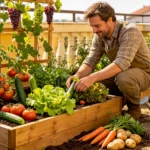
Stop Guessing. Start Harvesting.
Stop Guessing. Start Harvesting.

Want to bite into a sun-warmed, bursting-with-flavor cherry tomato grown entirely by you? You don’t need a massive backyard or generations of farming experience to achieve food self-sufficiency.
In this ultimate guide, we’re breaking down the exact, simple steps to grow juicy organic tomatoes in containers—even if your garden is just a 3-foot apartment balcony. Say goodbye to store-bought tomatoes that taste like cardboard, and let’s get your hands dirty!
To grow abundant organic tomatoes, you cannot compromise on container size. A 5-gallon bucket (or a pot at least 12 inches in diameter and depth) is the gold standard for urban gardening.
| Feature | Container Gardening (Balcony/Pots) | Traditional Garden Bed (Backyard) | Why It Matters for Beginners |
| Space Required | Minimal. Fits on a 3-foot balcony or porch. | Large backyard or dedicated plot required. | Perfect for urban apartment dwellers. |
| Soil & Pest Control | Easy. 100% control over premium organic potting mix. | Harder. Prone to weeds and soil-borne diseases. | Higher success rate and fewer synthetic chemicals. |
| Mobility & Sunlight | High. Move pots to chase sun or protect from storms. | Fixed location. Cannot be moved if shaded by trees. | Crucial for unpredictable microclimates. |
| Maintenance | Requires consistent watering but zero weeding. | Less frequent watering but heavy tilling and weeding. | Low-maintenance and perfect for busy professionals. |
Don’t just scoop random dirt from your yard. Potted tomatoes need a well-aerated, nutrient-rich medium to thrive in a closed ecosystem. Here is our favorite 3-ingredient organic potting recipe:
We get it. You follow all the free gardening blogs, but then your tomato plant gets mysterious yellow leaves, flowers drop off without fruiting, or pests attack overnight. Searching for answers on YouTube takes hours, and half the advice is contradictory.
You don’t have to waste a whole growing season on trial and error.
🎁 LIMITED-TIME BONUS INCLUDED: Downloadable 12-Month Planting Calendar & Tomato Troubleshooting Cheat Sheet (PDF).
👉 [Get Instant Access to The Balcony Tomato Masterclass Now for Just $29.90]
Tomatoes are sun-worshipers. Your pots need at least 6 to 8 hours of direct sunlight daily. If your balcony is partially shaded, opt for cherry tomato varieties—they are much more forgiving in low-light conditions.
(Note: Use the Rank Math or Yoast FAQ Block in Gutenberg to insert this section for maximum Google SEO Rich Snippets)
For limited spaces and balconies, Determinate (bush) varieties or Cherry Tomatoes (like Sun Gold, Sweet 100, or Patio Prize) are the absolute best. They have a controlled growth habit, mature quickly, and produce an abundance of fruit without taking over your entire living space.
There is no fixed “every 2 days” rule. Tomato pots dry out much faster than the ground. The golden rule is to stick your finger 1-2 inches into the soil. If it feels dry, water deeply until water runs out of the bottom drainage holes. In peak summer heat, you may need to water once every morning.
This is known as Blossom Drop. It usually happens due to temperature extremes (above 90°F/32°C) or a lack of pollination. Since high-rise balconies lack natural wind and bees, gently shaking the flowering vines for 5 seconds every morning can help self-pollinate the flowers and drastically increase your fruit yield.
This is Blossom-End Rot, a common issue caused by a calcium deficiency in the plant. However, it’s rarely a lack of calcium in the soil; instead, it’s caused by unbalanced watering (alternating between bone-dry and soggy soil), which prevents the roots from absorbing nutrients. Consistent watering is the cure.
Still have questions about yellow leaves, pruning, or specific pests? Don’t spend hours guessing and risking your plants’ health.
[Get Instant Access to The Balcony Tomato Masterclass] today, and download your complete step-by-step video blueprint alongside our PDF troubleshooting cheat sheets. Let’s grow your dream garden together!