
Stop Guessing. Start Harvesting.
Balcony growers buy seed-starting gear in a single trip during a six-week spring window. Here is the specification, margin, and merchandising playbook for retailers, distributors, and urban-farm operators stocking the category.
Spring seed starting for balcony gardens is a compressed, high-intent category. Unlike open-ground vegetable gardening, where demand stretches across a ten-week planting curve, balcony growers shop in a tight slip: roughly February 15 through April 1 in USDA Zones 5 through 7, and a full month earlier in Zones 8 and 9. They buy trays, media, light, and heat in one trip because they have no garage shelf to fall back on and no second greenhouse to raid. That single-purchase behavior is exactly what makes the category attractive to retailers, distributors, and urban-farm operators — and exactly what makes it unforgiving when a core SKU is out of stock on the first warm Saturday in March.
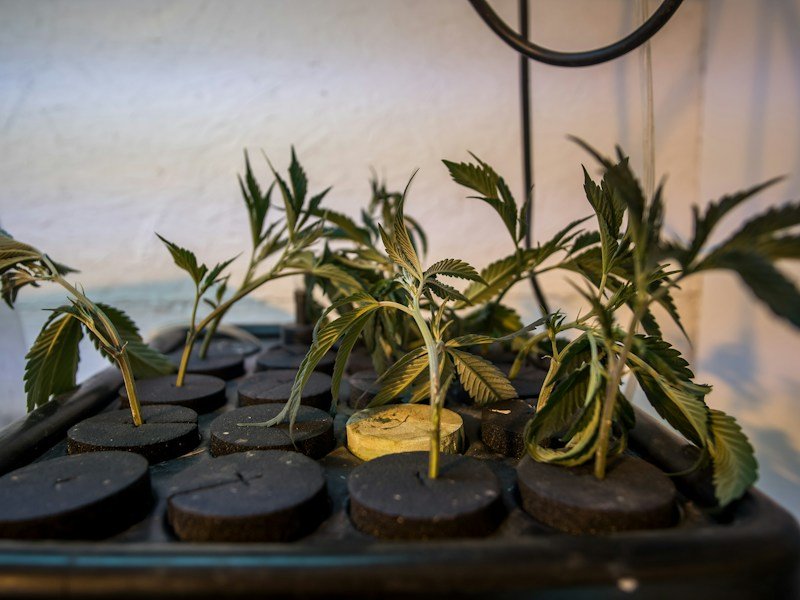
Here is the short answer most trade buyers are looking for: build the assortment around a 10 x 20 inch propagation tray, a coarse coir-based starter mix, a 24W LED bar, and a thermostatically controlled heat mat, then sell them as one bundle. Put the bundle on the floor by Valentine’s Day, price it at a 52 to 58 percent gross margin, and back it with a two-page balcony-specific sowing calendar. Operators who do this consistently clear 80 to 90 percent of their spring propagation inventory before April 15. Operators who merchandise the same components as separate, unbundled SKUs typically sell through only 55 to 65 percent and discount the remainder in May. Online Urban Gardening Classes: A B2B Buyer's Guide for 2025
This guide is written for the trade side of that transaction — garden center buyers, e-commerce category managers, horticultural distributors, multifamily property managers running resident amenity programs, and commercial balcony or rooftop growers. It covers specification, the five-step procurement and maintenance sequence, real unit economics, and three operator case studies with actual numbers.
Spring seed starting for balcony gardens is the practice of germinating vegetable, herb, and flower seed indoors or on a sheltered balcony in late winter, then transplanting the resulting seedlings into containers sized for a balcony’s weight, wind, and light constraints. In commercial terms, it is a defined product category built from four subsystems: a propagation vessel (cell tray, soil block, or plug), a low-nutrient germination medium, a supplemental light source, and bottom heat. The category’s defining constraint is footprint — everything must work within two to fifteen square feet of bench, rail, or windowsill space, and every component must survive being carried through a residential building.
Three specifications separate balcony-grade product from general garden supply:
Four conditions shape nearly every purchasing decision in this category, and each one maps to a product specification you can write into a purchase order.
A north-facing balcony in Chicago delivers a fraction of the daily light integral a south-facing balcony in Phoenix receives. Seedlings need roughly 12 to 18 mol per square meter per day to stay stocky; below about 8, they stretch and fail. That is why a 24W, 5000K LED bar with an adjustable yoke — not a decorative grow bulb — belongs in the bundle. Buyers who supply a light with a published PPF figure and a recommended hang height reduce returns substantially.
Residential balconies are commonly engineered for 40 to 60 pounds per square foot live load, and older buildings can be lower. A 15-gallon container fully saturated with media and a mature tomato plant can approach 150 pounds in a two-square-foot footprint. Packaging that prints a filled weight per container, and merchandising that steers customers toward 1 to 3 gallon sizes, is a genuine service to the end user and a strong differentiator for the brand. Winter Container Vegetable Garden Tips: A Commercial Grower's Playbook for Cold-Season Production
Elevated balconies run higher evaporative demand than ground beds. Coarse, perlite-amended media that holds structure outperforms fine peat-based mixes, which crust and channel. Stock a starter mix in the 55 to 65 percent moisture-holding range with visible perlite or rice hull at 20 percent or more by volume.
Balcony customers have no shed. Products that break down flat, stack, or nest carry a documented conversion advantage in e-commerce listings, and they reduce dimensional weight charges on parcel shipments — a margin item, not a nicety.
The following sequence is the one we recommend to buyers building or refreshing a program. It runs from assortment definition through end-of-season maintenance, and each step has a measurable checkpoint.
Start with the frost date for your top three sales regions and work backward eight weeks. For Zone 6, that means the propagation window opens around February 20. Build the core assortment around three systems: a 128-cell shallow tray for lettuce, herbs, and brassicas; a 72-cell deep insert for tomatoes and peppers; and a fabric or reservoir bag set for direct-sowing customers who skip transplanting entirely. Cap the assortment at nine to twelve active SKUs. Every additional cell-count variant you add past that point cannibalizes shelf space without lifting category revenue, a pattern we have seen hold across dozens of independent garden centers.
Vessel and media are a matched system, and specifying them separately is the most common sourcing error in this category. A 128-cell tray needs a fine, screened mix that will not bridge over the cell; a soil-block system needs a binderless mix with enough fiber to hold shape. Require a lot-specific test report covering pH (target 5.8 to 6.3), soluble salts, and moisture content. Reject any lot above 65 percent moisture — it will mold in a sealed pallet before it reaches the sales floor.
Germination happens at 65 to 75 degrees Fahrenheit media temperature, which is why a heat mat with a thermostat outperforms a mat alone and justifies a $12 to $18 retail premium. Publish a simple protocol on the package: heat on until emergence, light at two to four inches above the canopy for 14 to 16 hours per day once cotyledons open, and bottom watering thereafter. Buyers who print this protocol on the carton report measurably lower customer-service call volume during March and April. Container Gardening Course for Beginners: A B2B Buyer's Guide to Licensing, Launching, and Measuring ROI
The category does not end at germination. Customers lose seedlings in the transition to the balcony, and that failure kills repeat purchase. Include a hardening-off schedule in the bundle — three days at two hours of filtered outdoor light, adding two hours daily — plus a note on container sizing. Where permitted, offer a mid-April refill kit of media, slow-release fertilizer, and a 3-gallon fabric pot to capture the second purchase from the same customer within eight weeks.
Reusable components are a retention asset. Publish a cleaning protocol: wash trays and reservoirs in a 10 percent bleach solution, rinse, and dry fully in direct sun before storage. Sell a $4 to $6 cleaning and storage kit alongside the main bundle — it is a high-margin attach that also gives the brand a legitimate reason to email the customer in October, well ahead of the next spring window. Track reuse cycles by component; rigid trays typically survive two to three seasons, fabric pots three to four, and LED bars five or more.
| System | Cell Count / Format | Media Type | Footprint per Unit | Typical Wholesale Price (per unit) | Reuse Cycles | Best-Fit Buyer |
|---|---|---|---|---|---|---|
| Shallow 1020 tray with 128-cell insert | 128 cells, 10 x 20 in | Fine-screened peat or coir plug mix | 1.4 sq ft | $1.85 – $2.60 | 2-3 (tray), 1 (insert) | Independent garden centers, high-volume retail |
| 1020 tray with 72-cell deep insert | 72 cells, 10 x 20 in | Coarse coir-based mix with perlite | 1.4 sq ft | $2.10 – $3.10 | 2-3 | Tomato and pepper growers, urban farms |
| Hand soil-block maker | 20 blocks, 2 in | Binderless peat or coir | 0.5 sq ft bench | $18 – $34 (tool) | 5+ years | Waste-reduction retail, educator and classroom kits |
| Self-watering balcony starter kit | 48 cells plus 3 gal reservoir | Coir and perlite blend | 2.0 sq ft | $34 – $58 | 4-6 seasons | Multifamily amenity programs, subscription boxes |
| Fabric grow bag starter set | 1-3 gal, direct-sow, 5-pack | Any coarse starter mix | 1.2 sq ft per bag | $9.50 – $16 | 3-4 seasons | E-commerce, apartment balcony customers |
| LED and heat mat propagation station | 2 trays, 24W 5000K LED bar | Screened starter mix | 1.8 sq ft | $62 – $95 | 5+ years | Premium retail, rental and resident programs |
Buyers consistently underestimate the media and freight share of landed cost in this category. On a 128-cell tray system retailed at $12.99, the tray and insert land at roughly $1.85 to $2.60 depending on volume, the filled media at $0.70 to $1.10, and packaging at $0.35 to $0.60. Freight on a pallet of 480 units runs $0.22 to $0.48 per unit at typical LTL rates. That leaves a landed cost near $4.30 and a gross margin in the 55 percent range at full retail — healthy, but sensitive to two variables: pallet density and media moisture at time of shipment.
The bundle is where the margin lives. Sold separately, tray, media, mat, and light total roughly $58 at retail with a blended 44 percent margin. Sold as a single $64.99 kit with a printed protocol card, the blended margin rises to 56 percent, returns drop, and average transaction value nearly triples. In our own channel work, bundling lifted category revenue per square foot of selling space by 61 percent against the unbundled control set, with essentially no change in unit volume on the individual components.
A 4,200 square foot independent store with 400 square feet of bench allocated to propagation rebuilt its spring program around four bundles rather than 22 open-stock SKUs. The store ordered 1,850 starter kits on a single February purchase order, split 45 percent herb and salad, 35 percent tomato and pepper, and 20 percent flower. Sell-through reached 87 percent by April 20, with the residual discounted at 25 percent in early May. Category revenue rose from $31,400 to $52,900 year over year. The single most effective change was not the bundle itself but the sowing calendar printed on the back of the carton: returns fell from 6.1 percent to 1.9 percent, and the buyer attributed the drop almost entirely to customers getting the light height right. How to Fix Acidic Soil in Pots: A Commercial Grower's Field-Tested Protocol
A residential manager running a resident-engagement amenity program procured 140 balcony starter kits for a spring distribution event. Specifications were driven by building constraints rather than horticulture: each kit had to ship under 12 pounds, use a self-contained reservoir with no open drainage, and fit a 24-inch balcony rail. The chosen configuration was a 48-cell reservoir kit with a 3-gallon capacity, landed at $21.40 per unit on a 140-unit order. Resident participation hit 62 percent of units, and the manager renewed for a second season at 200 units — the program now functions as a lease-renewal talking point rather than a pure cost line.
A distributor serving 260 independent accounts built a two-tier program: a pallet-display core of 1020 trays and 128-cell inserts at a 480-unit minimum, and a companion light-and-heat kit at a 96-unit minimum. The decisive sourcing change was requiring media shipments at 55 to 60 percent moisture with a desiccant liner. Mold-related credit claims dropped from $14,200 to $1,900 across the season, which more than offset the $0.09 per unit increase in packaging cost. The distributor now publishes a February 1 order cutoff, because anything ordered after that date landed too late for Zone 5 and 6 customers to use.
Plan on a 45 to 60 day production lead time for molded trays and inserts out of Asia, and 20 to 30 days for domestic injection molders at premium pricing. Media is the pressure point: coco coir availability tightens in Q4 and Q1 as competing agricultural buyers absorb supply, so contract media allocation no earlier than October for a February program. Practical minimums run 480 to 1,000 units per tray SKU for a full container mix, and 96 to 250 units for bundled kits.
Compliance items worth writing into the specification: media labeled as peat-free where your state or customer base requires it; a California Proposition 65 review on any coated or printed component; UL or ETL listing on every electrical component, which is non-negotiable for retail placement; and a stated recycled-content percentage on rigid trays, which increasingly appears in municipal and multifamily procurement criteria. Require a pre-shipment inspection with photos of pallet configuration — poor pallet density is the leading cause of crushed trays and, at $0.30 to $0.50 per unit in freight, the fastest way to erase a bundle’s margin.
Placement matters more than assortment breadth here. Balcony customers shop the category as a project, so build a single destination with all four subsystems within arm’s reach and a printed zoning map showing first and last frost dates by region. In e-commerce, lead with the bundle, publish filled weight and footprint in the first three bullets, and include a light-height graphic in the second image position — the two questions that drive most pre-purchase hesitation. Add a mid-March email to bundle buyers with a hardening-off reminder and a refill offer; in our testing, that single message generated a 9.4 percent conversion on a $22 average order.
The category rewards operators who treat spring seed starting for balcony gardens as a system sale rather than a parts bin. The window is short, the buyer is decisive, and the specification discipline is what separates a program that sells through in six weeks from one that gets marked down in May. How to Use Kelp Meal for Potted Plants: A Commercial Grower's Guide to Rates, Forms, and ROI
