Stop Guessing. Start Harvesting.
Stop Guessing. Start Harvesting.
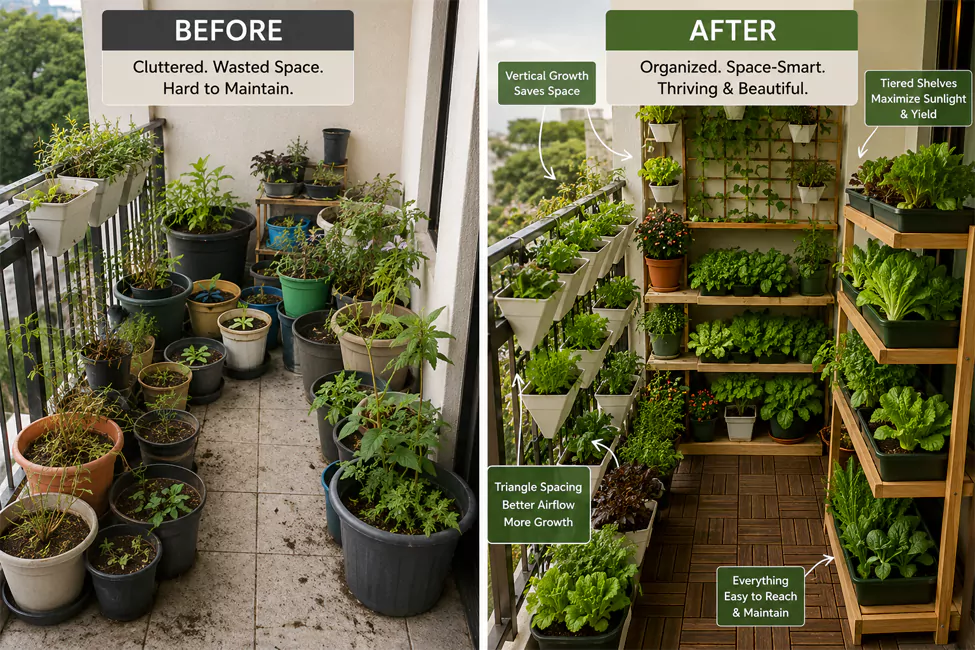
Do you look at your small apartment balcony or patio and wish you could harvest baskets of fresh produce instead of just a few sparse leaves?
Many beginner urban farmers assume that the only way to get a larger harvest is to add more pots. However, packing an apartment space with endless containers quickly leads to a cluttered footprint and stunted, root-bound plants. The real secret to maximizing your food production has nothing to do with the size of your layout—it is all about mastering intentional vegetable spacing tricks designed specifically for container ecosystems.
By understanding how to arrange your plants efficiently, you can optimize every cubic inch of soil and significantly increase your seasonal yield.
To double your harvest in an apartment, use intensive staggering (triangular spacing patterns) instead of traditional straight rows, implement vertical stacking to lift smaller containers off the floor, and practice companion planting (combining deep-rooted, tall crops with shallow, fast-growing leafy greens in a single pot).
Traditional seed packets are printed with commercial farming instructions, advising growers to space plants in long, wide rows. Attempting to apply these open-field rules to a limited container setup is a major operational misstep.
The five most common spacing errors made in apartment gardens include:
Implement these space-saving parameters to unlock the full production potential of your apartment garden.
When planting in wide rectangular planters or fabric raised beds, ditch straight rows entirely. Instead, place your seeds or seedlings in a staggered, diagonal triangular pattern. This geometric configuration allows you to fit up to 10–14% more plants in the exact same footprint while ensuring every leaf receives an equal distribution of sunlight.
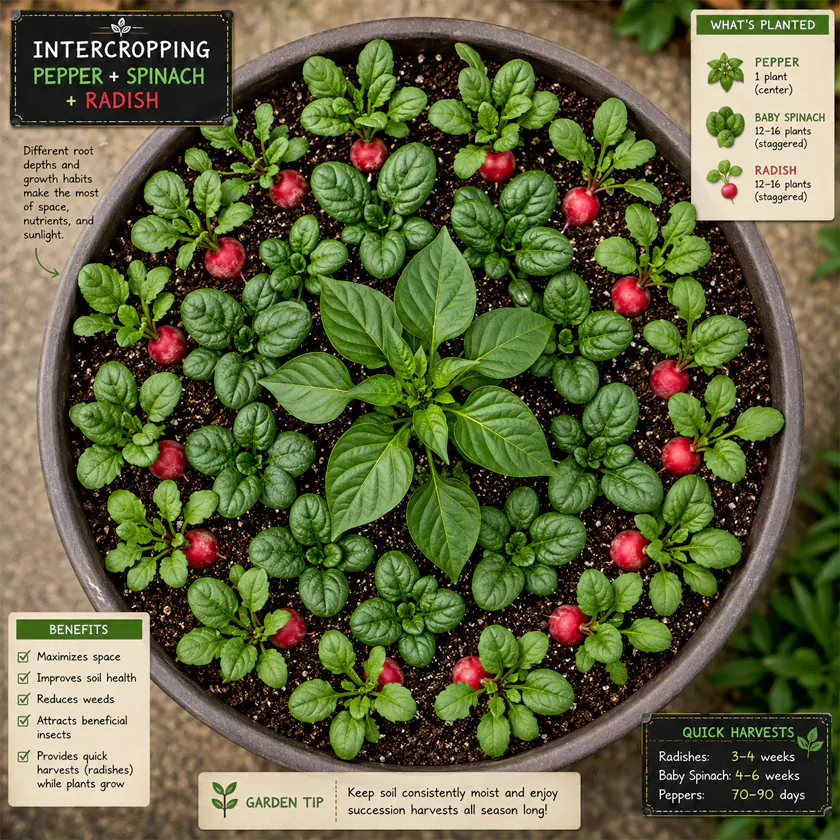
Maximize large pots by pairing a tall, slow-growing primary vegetable with a fast-growing, shallow-rooted companion. For example, plant a single patio tomato in the center of a 5-gallon grow bag, and surround the base with radishes or loose-leaf lettuce. By the time the tomato grows large enough to shade the container, the radishes and lettuce will already be harvested and on your dinner plate.
Do not let your balcony floor space dictate your harvest limits. Utilize multi-tiered plant shelves, vertical pocket towers, or railing planters to stack your garden vertically. Place sun-loving, cascading crops (like strawberries or thyme) in top tiers, and shade-tolerant greens (like spinach) underneath them to create a self-shading, high-volume microclimate.
To avoid root competition, match your crop spacing to the actual volume of your pots. Use this quick reference framework for optimal development:
Mount secure, heavy-duty planter brackets along the outer side of your balcony railings. Moving shallow-root crops like salad greens, chives, and globose radishes to the perimeter completely clears your floor space for larger, high-yield container guide variations like our popular High-Yield Container Gardening setups.
Keep these critical small-space boundaries in mind to protect your apartment yields:
Vegetable Spacing Tricks:Using specialized, space-saving gear makes managing an intensive container garden simple, organized, and clean.
| Tool | Why It Helps |
| Tiered Vertical Plant Stands | Lifts containers upward to triple your available growing footprint. |
| Rectangular Railing Boxes | Utilizes empty perimeter space for high-density salad crop cultivation. |
| 5-Gallon Fabric Grow Bags | Ensures healthy root separation and excellent drainage for multi-crop planting. |
| Flexible Soft Plant Ties | Secures vertical vining branches to trellises, keeping them from encroaching on nearby pots. |
Sophia, an accountant living in a high-rise downtown studio, wanted to grow fresh food on her tiny 24-square-foot concrete balcony but kept running out of floor space.
When vegetables are overcrowded inside a container, their roots become tangled and bound, locking them out from absorbing water and nutrients. This intense competition results in stunted growth, pale or yellowing leaves, and a significant reduction in your overall harvest yield.
Yes, this is called companion planting or intercropping. The key parameter is pairing plants with complementary root structures and growth rates. Always combine deep-rooted, tall crops (like peppers) with shallow-rooted, fast crops (like lettuce or radishes). Avoid pairing heavy feeders together in small spaces, as detailed in our How To Start A Balcony Vegetable Garden For Beginners setup blueprint.
Using traditional row spacing, you could only fit two lettuce plants. However, by utilizing a staggered triangular configuration, you can safely cultivate three to four loose-leaf lettuce plants in a standard 12-inch box, provided you harvest the outer leaves regularly using the cut-and-come-again method.
Yes. High-density vertical arrangements demand a highly aerated, lightweight structural medium. Never use dense yard soil. Always fill your tiers with a premium commercial mix blend, a subject thoroughly explored in our comprehensive Container Gardening Guide.
Compact herbs like chives, parsley, and thyme can be spaced roughly 4 to 6 inches apart in a shared planter. However, aggressive, spreading varieties like mint or oregano should always be given their own individual containers to prevent them from taking over the soil, a common error noted in our Balcony Gardening Mistakes reference sheet.
Stop wasting valuable apartment square footage. Download our free high-density spacing blueprint and discover how to organize your layout for maximum crop production.
Download our free resource today and receive:
[ info@yardveggie.com ]
👉 [ DOWNLOAD YOUR FREE STARTER KIT NOW ]
If you want to skip the frustrating trial-and-error phase and discover the exact visual layouts used to maximize food production in tight urban spaces, take a look at our structured video series. Our comprehensive Balcony Harvest Masterclass offers an interactive, step-by-step roadmap designed specifically for small-footprint living.
Avoid the guesswork with high-definition, practical tutorials covering: