Stop Guessing. Start Harvesting.
Stop Guessing. Start Harvesting.
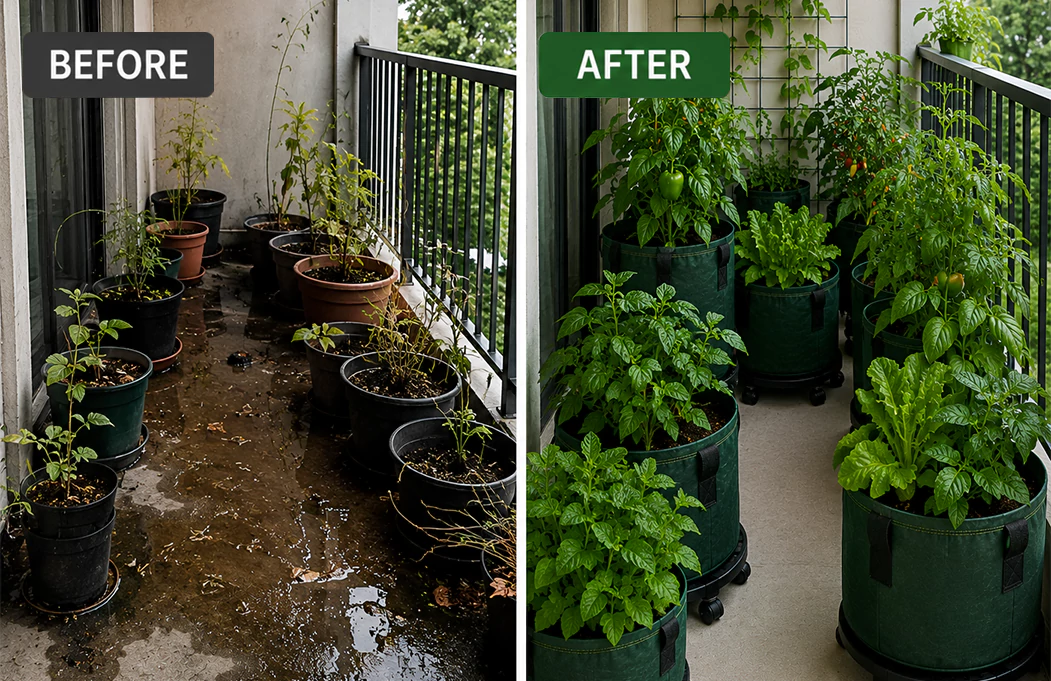
Do you want to grow your own fresh, organic groceries but feel restricted because you only have a small patio, balcony, or paved courtyard?
Many beginners believe that producing a substantial amount of food requires rows of traditional backyard garden beds or a large plot of land. In reality, you can grow an incredibly abundant harvest using nothing but pots. The secret lies in switching from traditional gardening methods to high-yield container gardening—a system focused on maximizing vertical space, selecting high-productivity plant varieties, and optimizing soil nutrients.
With the right setup, a collection of strategic pots can yield dozens of pounds of fresh produce throughout the growing season.
To achieve high-yield container gardening, utilize vertical space with trellises and multi-tiered stands, select specific “determinate” or dwarf crop varieties, use heavy-feeding organic fertilizers regularly, and plant in breathable fabric grow bags. These combined strategies maximize production per square foot while maintaining optimal root health.
When your goal is high-yield production in a confined space, traditional gardening rules change. Containers are distinct micro-ecosystems that require active management to maintain peak performance.
The five most frequent roadblocks to a high-yield harvest include:
Implement these strategic parameters to optimize your containers and maximize your food production per square foot.
When floor space is limited, look up. Use A-frame trellises, vertical pocket planters, or wall-mounted shelving units to stack your crops. Vining plants like pole beans, peas, and small vining cucumbers can be trained upward on strings or nets, leaving your valuable balcony or patio floor clear for heavy bottom pots.
To get tons of food from a small space, prioritize crops that offer a high return on investment. Focus on “cut-and-come-again” leafy greens (like Swiss chard and loose-leaf lettuce) and continuous-fruiting varieties (like bush zucchini and patio cherry tomatoes). Instead of harvesting the entire plant at once, you harvest small amounts continuously all season long.
Traditional plastic pots can cause plant roots to circle the edges, becoming root-bound and stunted. Fabric grow bags solve this issue through “air-pruning.” When roots reach the breathable fabric edge, they are exposed to air and naturally stop growing, prompting the plant to generate a highly branched network of feeder roots that absorb water and nutrients much faster.
High-yield production demands an abundance of nutrients. Because container plants are isolated from natural ground earth, frequent watering naturally flushes vital minerals out of the bottom drainage holes. Mix a slow-release organic fertilizer into your Container Gardening Guide potting mix at planting time, and follow up with a liquid kelp or fish emulsion supplement every two weeks.
Fruiting crops require steady moisture to develop heavy yields. If the soil swings wildly between bone-dry and waterlogged, fruits like tomatoes will split or develop blossom end rot. Check your containers every morning using the “finger test”—inserting your finger two inches into the soil—or use a dedicated moisture meter to keep conditions consistently damp but not muddy.
Protect your hard work by steering clear of these common small-space operational traps:
Maximizing your harvest requires specialized tools designed to keep container ecosystems stable, balanced, and productive.
| Tool | Why It Helps |
| 5-Gallon Fabric Grow Bags | Optimizes root structure via air-pruning and prevents overwatering root rot. |
| Liquid Fish Emulsion | Provides immediate, easily absorbed nitrogen to keep high-production foliage vibrant. |
| Modular Vertical Trellis | Directs sprawling vining crops upward, expanding your total growing footprint. |
| Self-Watering Reservoirs | Delivers a steady, automatic supply of water straight to the root zone to prevent split fruits. |
David, a home cook living in a suburban townhouse with a small 8×10 concrete back patio, wanted to reduce his grocery bill by growing his own salad ingredients and salsa vegetables.
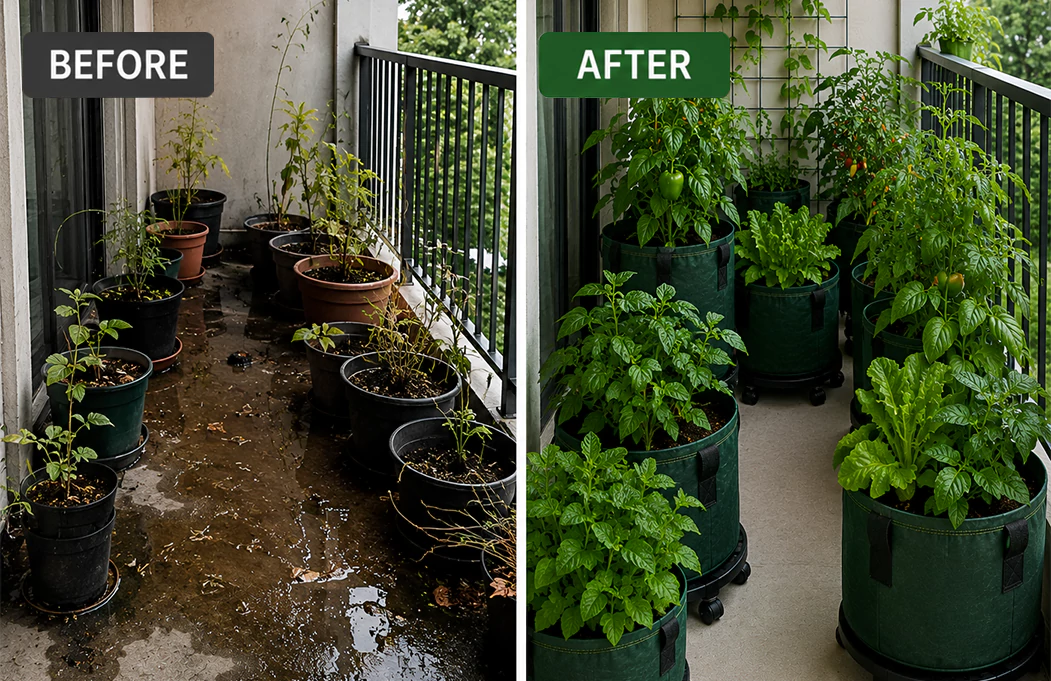
Cherry tomatoes (specifically compact, determinate patio varieties) generally offer the highest yield per square foot. A single well-managed plant in a 5-gallon container can produce hundreds of sweet fruits over a summer season. Loose-leaf lettuce and bush zucchini are also exceptionally high producers in small spaces.
Do not fertilize multiple times a week, as this can cause fertilizer burn and damage plant roots. The optimal routine is using a slow-release granular organic fertilizer mixed into the potting mix at the start of the season, supplemented with a mild, water-soluble organic liquid fertilizer once every 10 to 14 days.
You cannot grow high-yield fruiting crops (tomatoes, peppers, cucumbers) in deep shade because they require substantial solar energy to produce fruit. However, you can achieve excellent, high-volume yields of leafy greens (spinach, kale, arugula) on a shaded balcony, as detailed in our Best Vegetables For Small Balconies guide.
Yes. Because fabric pots are breathable, water evaporates through the sides as well as the top. While this aeration is highly beneficial for root health, it means you will need to monitor moisture levels more closely, especially during peak summer heat waves, a topic covered in our Balcony Gardening Mistakes guide.
To get maximum yields, indeterminate tomatoes require a minimum of a 5-to-10-gallon container to accommodate their extensive root networks. Compact, determinate dwarf varieties can produce excellent yields in a slightly smaller 3-to-5-gallon container, provided they receive consistent watering and nutrients.
Maximize your limited space. Download our free high-yield container blueprint and start growing a massive amount of fresh food at home.
Download our free resource today and receive:
[ info@yardveggie.com ]
👉 [ DOWNLOAD YOUR FREE STARTER KIT NOW ]
If you want to skip the frustrating trial-and-error phase and discover the exact visual systems used to build a beautiful, high-yielding container homestead, take a look at our structured video series. Our comprehensive Balcony Harvest Masterclass offers an interactive, step-by-step roadmap built specifically for small-footprint urban living.
Bypass the guesswork with high-definition, practical tutorials covering: