
Stop Guessing. Start Harvesting.
Stop Guessing. Start Harvesting.
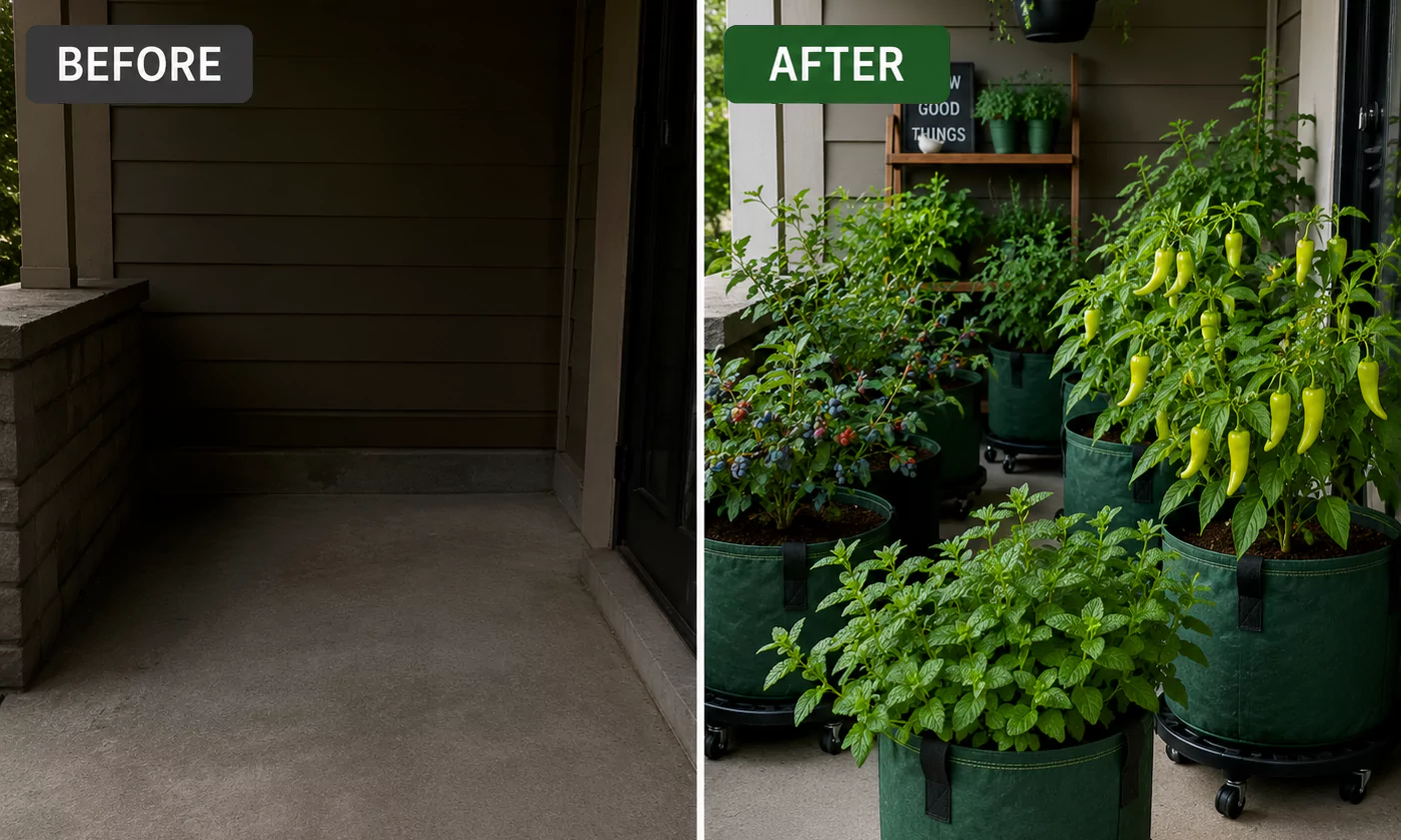
Many beginners assume that without a plot of deep, fertile earth, growing substantial food or vibrant plants is impossible. In reality, a porch, patio, windowsill, or concrete step is all the space you need to cultivate a thriving edible landscape. Growing in pots gives you absolute control over the soil, positioning, and environment—meaning you can create optimal growing conditions from scratch.
Do you look at beautiful, lush gardens on social media and wish you could have one, but lack access to a traditional backyard plot?
This comprehensive container gardening guide will walk you through everything you need to know to establish a successful potted garden on your very first try.
To master container gardening, always select a pot with adequate drainage holes that matches the mature size of your plant. Fill it with a premium, lightweight commercial potting mix rather than heavy garden soil. Water consistently by checking the top two inches of soil daily, and supplement with organic fertilizers, as nutrients leach out of containers rapidly over time.
While container gardening offers unparalleled flexibility, it is a completely different ecosystem than growing plants directly in the ground. Because the plant’s roots are confined to a limited space, the margin for error is smaller.
The five most frequent missteps that lead to failing container gardens include:
Follow this fundamental framework to set up your pots for long-term health and maximum yield.
Size matters. A container must accommodate your plant when it reaches full maturity. As a general benchmark, herbs and salad greens can thrive in shallow 1-to-2-gallon pots. Larger, heavy-fruiting crops like eggplants, peppers, or dwarf fruit trees require a minimum of a 5-to-10-gallon container to properly anchor their roots.
Never compromise on drainage. If you fall in love with a decorative ceramic or plastic pot that lacks holes, you must drill them yourself or use it strictly as an outer cover for a cheap, well-draining plastic liner. To prevent messy runoff on your patio or deck, pair every pot with a matching saucer or tray.
[Suggested Image: An infographic showing a cross-section of a healthy container setup: showing drainage holes at the bottom, a saucer underneath, a layer of premium potting mix, and a well-spaced root system.]
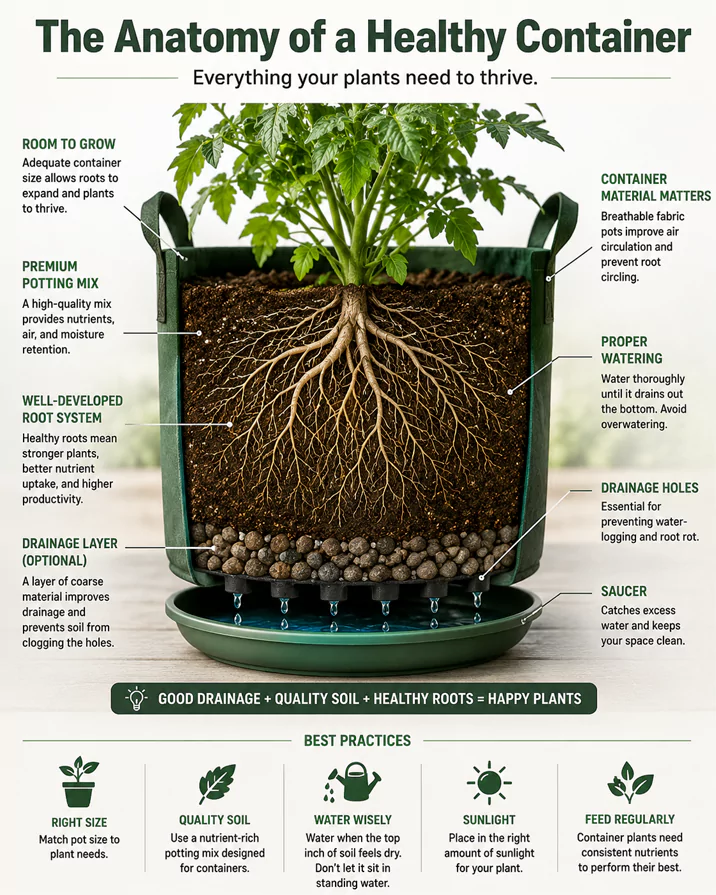
Your choice of soil is the single most important factor in your success. Always look for bags explicitly labeled as “Potting Mix” or “Container Mix.” These are engineered from lightweight ingredients like peat moss, coco coir, and perlite. For an added boost, read our How To Start A Balcony Vegetable Garden For Beginners tutorial to see how soil management changes in tight spaces.
Pots dry out rapidly because their sides are exposed to warm air and wind. Get into the habit of lifted testing: get familiar with how heavy your pot feels when it is fully watered versus when it is bone dry. When watering, apply water slowly until it streams freely from the drainage holes, ensuring the entire root ball is saturated.
Every time you water your container, a small amount of essential nutrients leaches out of the bottom. While a standard potting mix usually contains enough food for the first 4 to 6 weeks, you must supplement afterward. Apply a mild, water-soluble organic fertilizer every two weeks during the peak growing season to keep foliage lush and production high.
Avoid these common operational traps to keep your container oasis thriving:
Having the right gear makes maintaining a container garden effortless, saving you time and preventing messy cleanups.
| Tool | Why It Helps |
| Fabric Pots (Grow Bags) | Automatically “air-prunes” roots to prevent tangling while ensuring exceptional drainage. |
| Pot Moisture Meter | Takes the guesswork out of watering by measuring moisture deep within the root zone. |
| Slow-Release Organic Fertilizer | Provides a steady, safe release of nutrients over several months without burning delicate roots. |
| Plant Caddies (Wheeled Trays) | Allows you to easily glide heavy 5-gallon pots around to follow the sun or protect them from storms. |
Marcus, a software engineer with a small 6×8 concrete front porch, wanted to grow his own fresh ingredients for cooking but had zero access to open dirt.
Fabric grow bags are highly recommended for beginners because they prevent root binding and make overwatering almost impossible. Terracotta is excellent for drought-loving plants like succulents and rosemary, while high-quality plastic or resin pots are best for moisture-loving plants because they retain water longer.
Yes, but you cannot use it straight out of the old pot. Over a season, old soil loses its structural integrity and nutrients. Empty the old soil into a wheelbarrow or large bin, break up any hard clumps, remove old root networks, and mix it 50/50 with fresh potting mix and organic compost to revitalize it.
Because containers are isolated, keeping them pest-free is often easier than managing a backyard plot. Inspect your leaves daily for early warning signs. If you notice aphids or spider mites, treat them immediately with an organic insecticidal soap or neem oil spray. Avoid dense crowding to minimize risk, as outlined in our Best Vegetables For Small Balconies guide.
Yes. Ground plants can extend their root networks deep into the surrounding earth to hunt for trace minerals. Container roots are locked inside a fixed volume of soil, and frequent watering continuously flushes nutrients out of the bottom. Regular, gentle feeding is required for consistent growth.
If you notice water running straight through the pot without soaking in, see roots growing out of the bottom drainage holes, or notice the plant’s growth stalling entirely during spring, it is likely “root-bound.” Carefully slide the plant out and move it to a container that is at least 2–4 inches wider in diameter. For more placement tips, review our Balcony Gardening Mistakes reference sheet.
Don’t let simple mistakes ruin your investment. Download our complete container companion kit and configure your potted garden like a seasoned pro.
Download our free resource today and receive:
[ info@yardveggie.com/ ]
👉 [ DOWNLOAD YOUR FREE STARTER KIT NOW ]
If you want to skip the frustrating trial-and-error phase and build a beautiful, high-yielding garden on your porch or patio, check out our structured video program. Our comprehensive Balcony Harvest Masterclass gives you an interactive, visual roadmap to container success.
Avoid the guesswork with step-by-step, cinematic tutorials that cover: