Stop Guessing. Start Harvesting.
Stop Guessing. Start Harvesting.
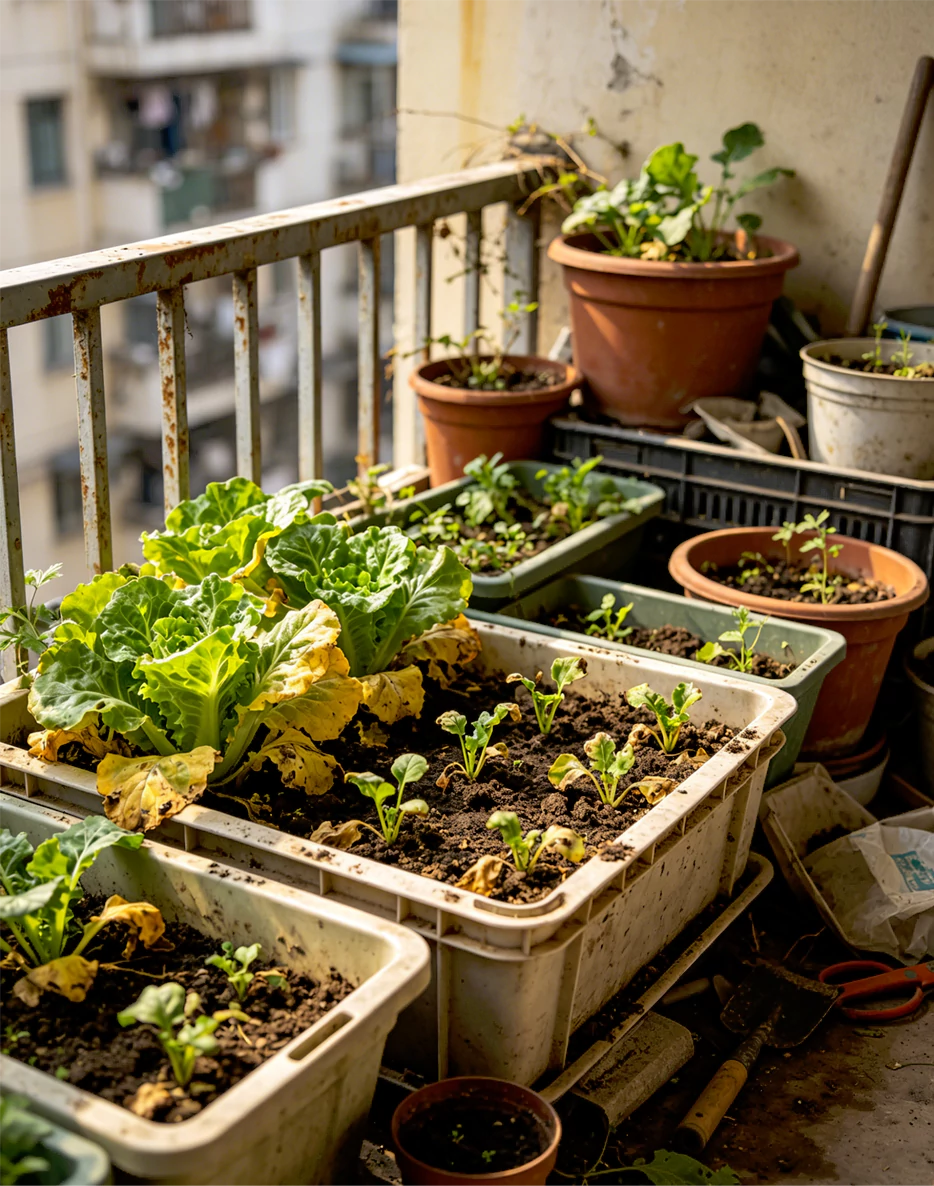
Many beginner balcony gardeners struggle because they choose the wrong plants, underestimate sunlight requirements, use containers that are too small, or water inconsistently. By avoiding these common mistakes and following proven growing practices, even a small balcony can become a productive source of fresh vegetables, herbs, and fruit.
Starting a balcony garden seems simple. Buy a few containers, add soil, and plant your favorite vegetables.
Unfortunately, most gardening failures happen before the first seed even sprouts. Poor planning, incorrect plant selection, and unrealistic expectations often lead to disappointing results.
The good news is that nearly every common balcony gardening problem can be avoided.
| Gardening Practice | Success Rate |
|---|---|
| Random Plant Selection | Low |
| Matching Plants To Sunlight | High |
| Small Containers | Low |
| Proper Container Sizes | High |
| Inconsistent Watering | Low |
| Moisture-Based Watering | High |
| No Vertical Growing System | Medium |
| Vertical Space Utilization | High |
The biggest mistake beginners make is planting vegetables without understanding how much sunlight their balcony receives.
Many popular vegetables such as tomatoes, peppers, cucumbers, and strawberries need at least 6 to 8 hours of direct sunlight each day. Without enough light, plants may survive but produce very little food.
Before buying plants, spend several days observing your balcony at different times. Record how many hours of direct sunlight the area receives.
| Crop | Daily Sunlight Needed |
|---|---|
| Tomatoes | 6-8+ Hours |
| Peppers | 6-8+ Hours |
| Cucumbers | 6-8+ Hours |
| Strawberries | 6+ Hours |
| Lettuce | 4-6 Hours |
| Spinach | 4-6 Hours |
| Kale | 4-6 Hours |
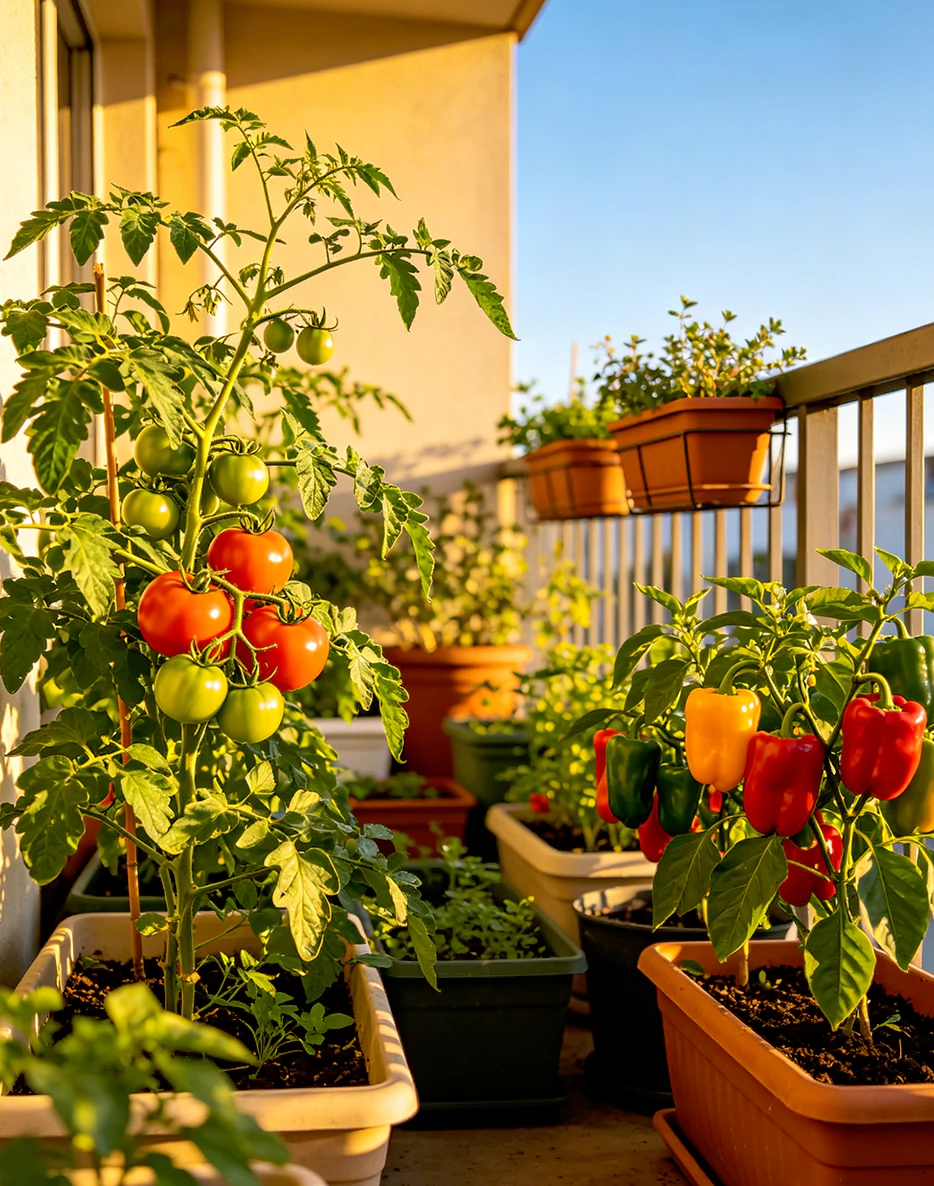
Many gardeners attempt to grow crops that simply do not fit small balcony spaces.
Large pumpkins, sprawling squash plants, corn, and oversized watermelon varieties quickly become unmanageable.
Instead, focus on compact, container-friendly varieties bred specifically for small spaces.
| Avoid | Grow Instead |
|---|---|
| Large Beefsteak Tomatoes | Patio Tomatoes |
| Pumpkin | Bush Cucumbers |
| Corn | Peppers |
| Large Watermelon | Mini Watermelon Varieties |
Choosing the right plants often has a bigger impact than buying expensive gardening equipment.
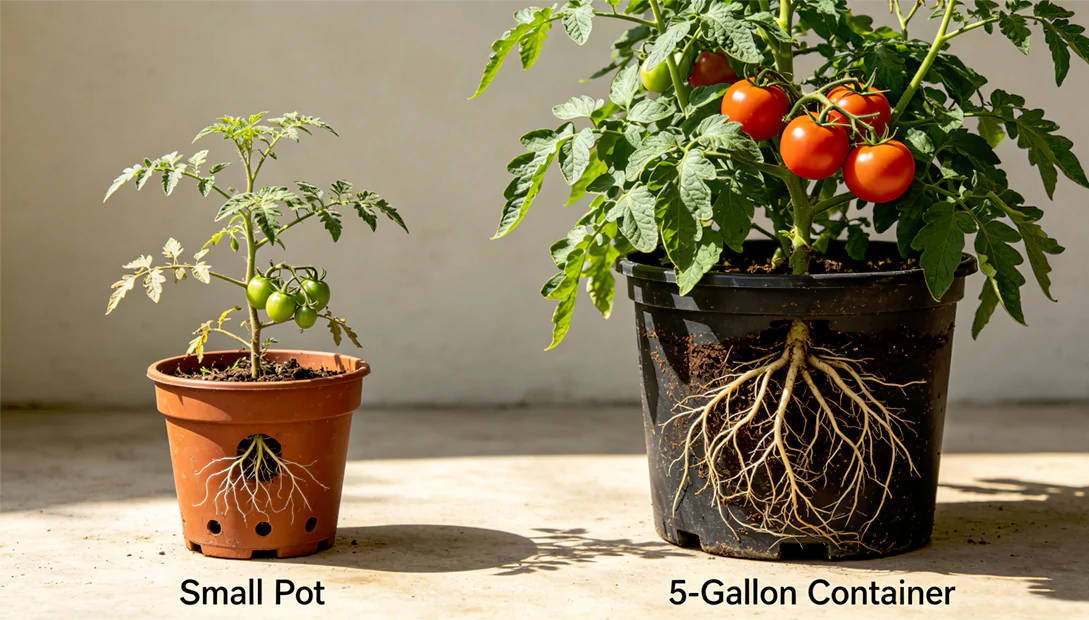
Roots need room to grow.
Small containers dry out quickly, limit root development, and reduce harvest size.
Many beginners try to save space by using undersized pots, but this usually results in weaker plants.
| Vegetable | Minimum Container Size |
|---|---|
| Lettuce | 1–2 Gallons |
| Strawberries | 2 Gallons |
| Peppers | 3–5 Gallons |
| Tomatoes | 5 Gallons |
| Cucumbers | 5 Gallons |
| Grapes | 15+ Gallons |
Garden soil is designed for garden beds, not containers.
When used in pots, it often becomes compacted and restricts airflow around roots.
Container gardens perform best with lightweight potting mixes that balance moisture retention and drainage.
| Ingredient | Purpose |
|---|---|
| Compost | Nutrients |
| Coco Coir | Moisture Retention |
| Perlite | Drainage |
| Worm Castings | Root Development |
Using quality potting mix is one of the easiest ways to improve plant health immediately.
A common beginner mindset is:
“If one plant is good, ten plants must be better.”
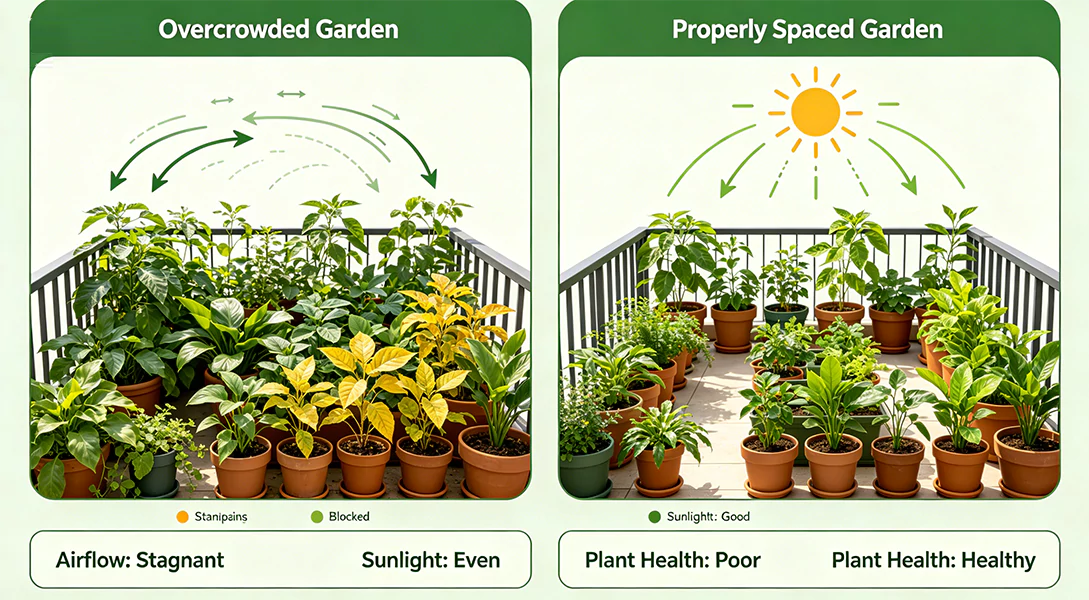
Unfortunately, overcrowded plants compete for water, nutrients, sunlight, and airflow.
The result is often smaller harvests and increased disease problems.
Leave enough space between containers and follow recommended plant spacing guidelines whenever possible.
Plants do not care what day it is.
Watering every day simply because a calendar says so often causes more problems than it solves.
Instead, check soil moisture before watering.
| Soil Condition | Action |
|---|---|
| Wet | Do Not Water |
| Slightly Moist | Wait |
| Top Inch Dry | Water Deeply |
| Completely Dry | Water Immediately |
Weather, container size, wind, and plant maturity all affect water requirements.
Most balconies have limited floor space but plenty of vertical space.
Trellises, shelves, hanging baskets, and wall planters can dramatically increase growing capacity.
Cucumbers, strawberries, herbs, and leafy greens perform particularly well in vertical systems.
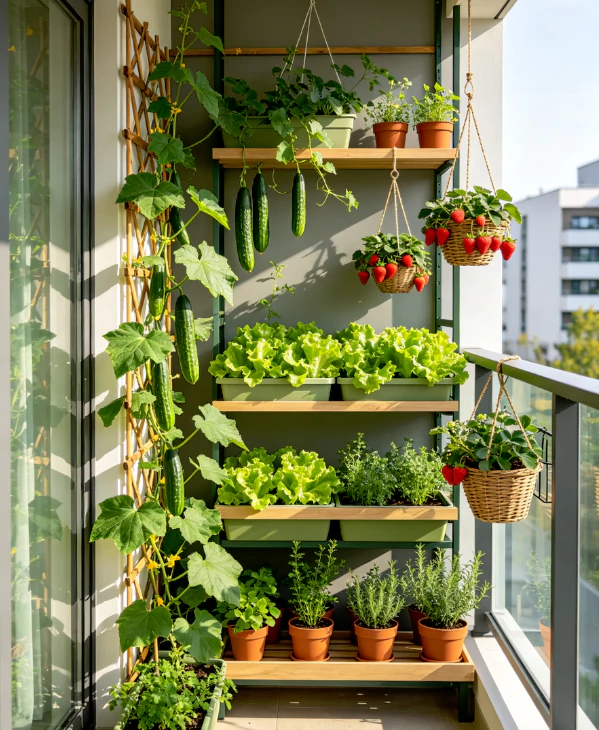
Using vertical gardening methods can often double or triple production without requiring additional floor area.
Planting at the wrong time is a major reason crops fail.
Understanding your USDA Plant Hardiness Zone helps determine the best planting dates and crop selection.
| USDA Zone | Growing Season | Recommended Crops |
|---|---|---|
| 3-4 | Short | Lettuce, Kale |
| 5-6 | Moderate | Tomatoes, Peppers |
| 7-8 | Long | Most Vegetables |
| 9-11 | Very Long | Tomatoes, Peppers, Cucumbers |
Knowing your zone allows you to maximize harvests and avoid unnecessary setbacks.
Every gardener loses plants.
Even experienced growers occasionally struggle with pests, weather, disease, or poor yields.
The difference is persistence.
Successful gardeners treat mistakes as learning opportunities rather than failures.
Most productive balcony gardens are the result of several seasons of experimentation and improvement.
Many beginners focus on planting instead of harvesting.
Before choosing crops, ask yourself:
| Vegetable | Typical Yield Per Plant |
|---|---|
| Cherry Tomato | 10–20 lbs |
| Pepper | 20–50 Fruits |
| Cucumber | 10–20 Fruits |
| Lettuce | Multiple Harvests |
| Kale | Continuous Harvest |
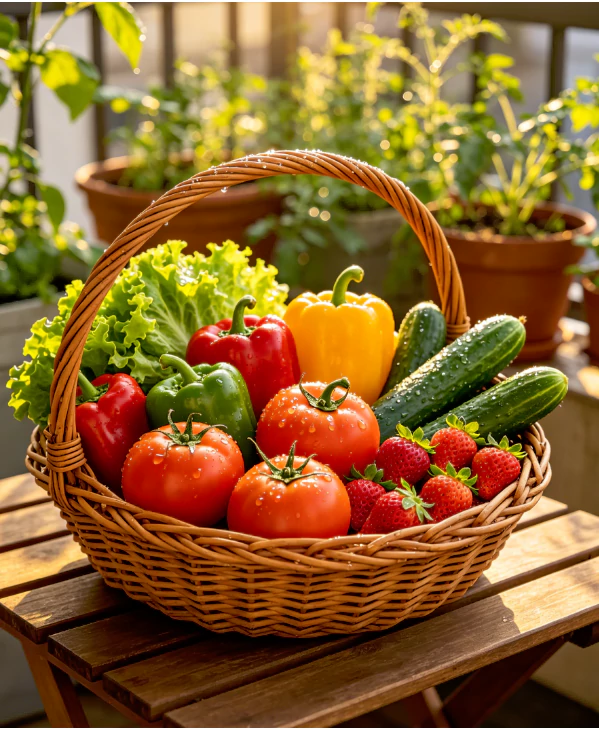
Growing crops you regularly use provides the greatest value from limited space.
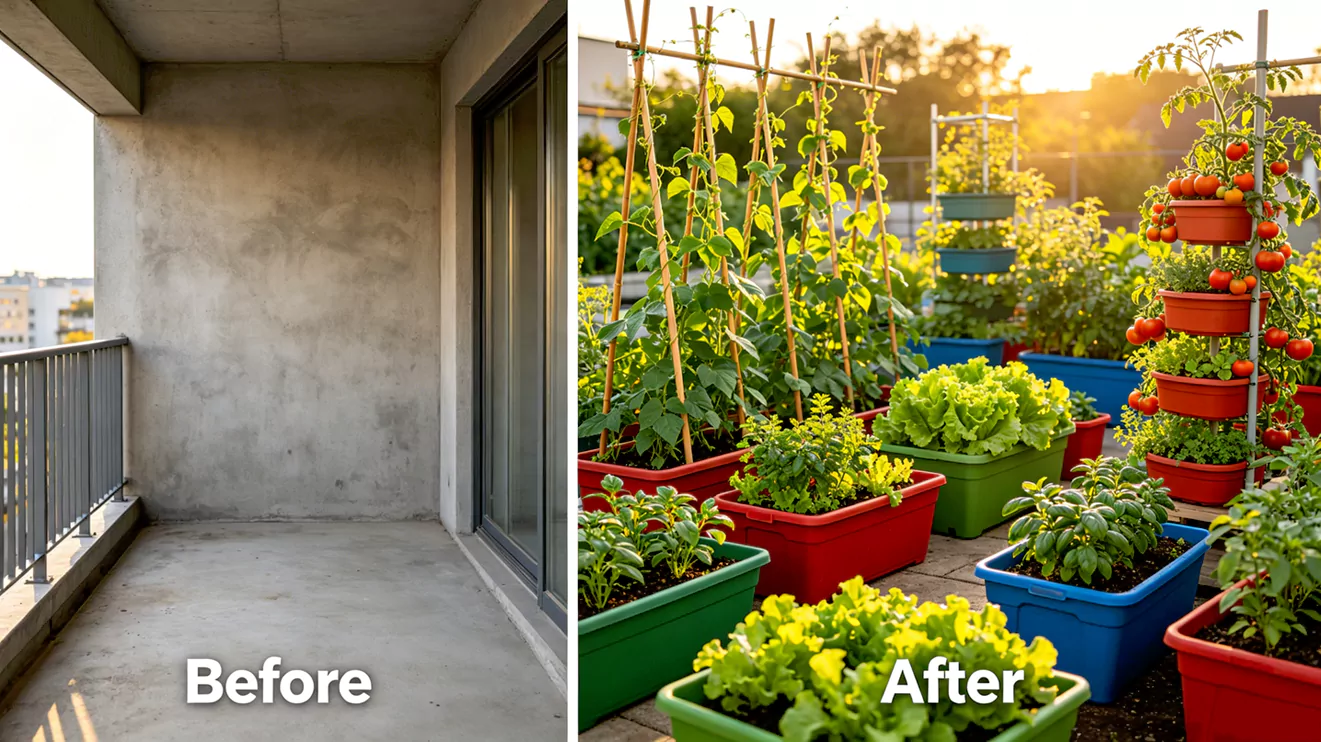
Sarah lives in a small apartment with a 60-square-foot balcony.
Initially, she planted oversized tomato varieties in small containers, overcrowded her space, and watered daily regardless of weather conditions.
After switching to patio tomatoes, larger containers, vertical growing systems, and moisture-based watering, her harvest increased dramatically.
| Before | After |
|---|---|
| 4 lbs Tomatoes | 18 lbs Tomatoes |
| Frequent Plant Stress | Healthy Growth |
| Constant Watering | Reduced Maintenance |
| Limited Harvests | Continuous Production |
This demonstrates how avoiding common mistakes can significantly improve results.
Ignoring sunlight conditions before selecting plants.
Yes. Lettuce, spinach, kale, and green onions perform well with partial sunlight.
A 50-square-foot balcony can comfortably support 10 to 20 containers depending on layout and vertical growing methods.
Lettuce, radishes, green onions, kale, and peppers are excellent beginner-friendly crops.
No. Quality containers, potting mix, and proper plant selection are usually enough to get started.
Download our free guide and get:
✅ Balcony Garden Setup Checklist
✅ USDA Zone Planting Calendar
✅ Container Size Cheat Sheet
✅ Beginner Mistakes Guide
✅ Balcony Watering Schedule
If you’d like a complete step-by-step system, our Balcony Vegetable Gardening Masterclass teaches:
✅ Balcony garden design
✅ Container growing systems
✅ High-yield vegetable production
✅ Space-saving layouts
✅ Year-round harvesting strategies
You can also explore our specialized courses:
At YardVeggie, we help apartment dwellers and small-space gardeners grow more food using containers, balcony systems, and space-saving gardening techniques.
Our mission is to simplify urban food gardening and help beginners harvest fresh, homegrown produce—even in the smallest spaces.