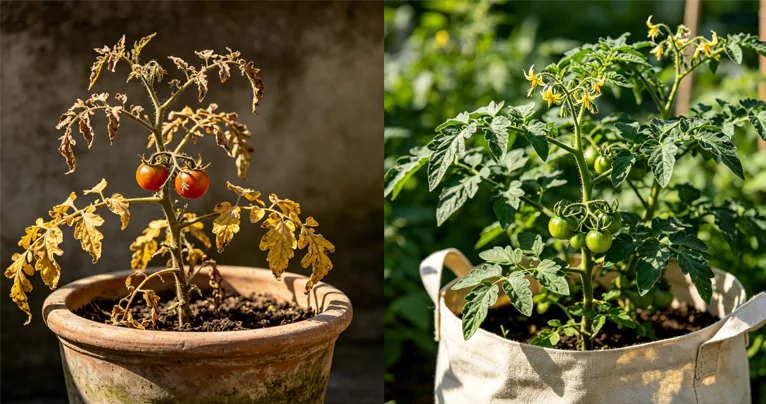
Stop Guessing. Start Harvesting.
Stop Guessing. Start Harvesting.
Hey there, speedy gardeners! Want to skip the long months of waiting and start harvesting your own homegrown food in just a few short weeks?
If you are short on time, low on patience, or just want to see immediate results on your apartment patio, focusing on high-speed container crops is the ultimate way to go. Growing fast-maturing crops on an elevated balcony gives you a massive natural advantage: it completely cuts out ground-level yard pests like slugs and snails that love to chew up young, tender seedlings overnight. By matching high-speed varieties with a smart vertical layout, you can easily go from seed to plate faster than you ever thought possible.
This guide is your quick-start companion and video script guide to building an ultra-fast balcony harvest.
To get the absolute fastest harvest on an apartment patio, watch a specialized fast-growing balcony vegetables video tutorial that highlights short-season crops. Your absolute fastest winners are radishes (ready in 21–25 days), baby spinach (ready in 30 days), and pea shoots (ready in 14 days). Plant them in shallow containers filled with a lightweight potting mix for immediate, high-speed success.
To keep your plants growing at maximum velocity without stalling out, our video tutorial breaks down three core environmental factors you have to manage:
Fast-growing plants need a continuous supply of energy to build leaves and roots quickly. Most speedy crops do best with 5 to 6+ hours of direct sunlight. If your balcony is partially shaded or faces north, you can still get amazing results by sticking to fast leafy greens and baby root crops, which are highly efficient at processing indirect light.
Because fast-growing crops have tender, shallow root systems, they cannot handle severe drought stress. Elevated balconies face constant wind currents that dry out container soil rapidly. To keep your speed-growing setup on track, shield your small planters from harsh winds by placing them near your building wall or using a mesh privacy screen on your railing.
Never use heavy dirt or clay from a backyard or park for fast crops. Dense yard soil packs down tight like concrete inside a container, making it impossible for tiny, fast-growing roots to push through and expand. Always use a premium, soil-less potting mix blended with peat moss or coco coir and plenty of white perlite aggregates, as recommended in our Best Soil For Container Vegetables reference guide.
To maximize your limited footprint using the structural layout principles from our Advanced Geometric Spacing Layouts and Tier Design manual, organize your quick-harvest containers using this simple reference guide:
| Crop Category | Top Fast Variety | Days to Harvest | Minimum Pot Depth | Best Tier Shelf Placement | Harvesting Style |
| Pea Shoots | Sugar Snap (Greens Only) | 14 Days | 4 Inches (Shallow Tray) | Middle / Bottom Tier | Cut the top 3 inches once; one-time harvest. |
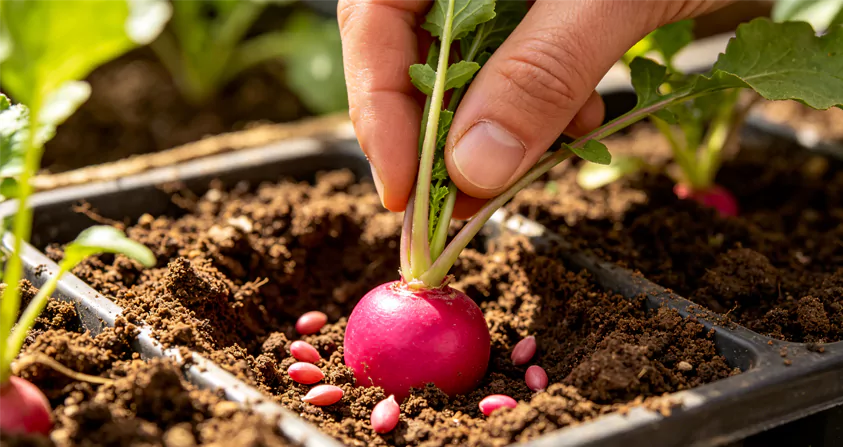
| Crisp Roots | Cherry Belle Radish | 21–25 Days | 6–8 Inches | Middle Tier | Pull the entire plant as soon as the root shoulders pop up. |
| Baby Greens | Arugula / Rocket | 28–30 Days | 6 Inches (Window Box) | Bottom Tier (Prefers cool shade) | Snip the outer leaves continuously as they grow. |
| Baby Spinach | Bloomsdale Long Standing | 30–35 Days | 6 Inches (Window Box) | Bottom Tier | Cut-and-come-again; leaves grow back fast. |
Follow this straightforward, step-by-step sequence from our video blueprint to launch your high-speed container garden cleanly:
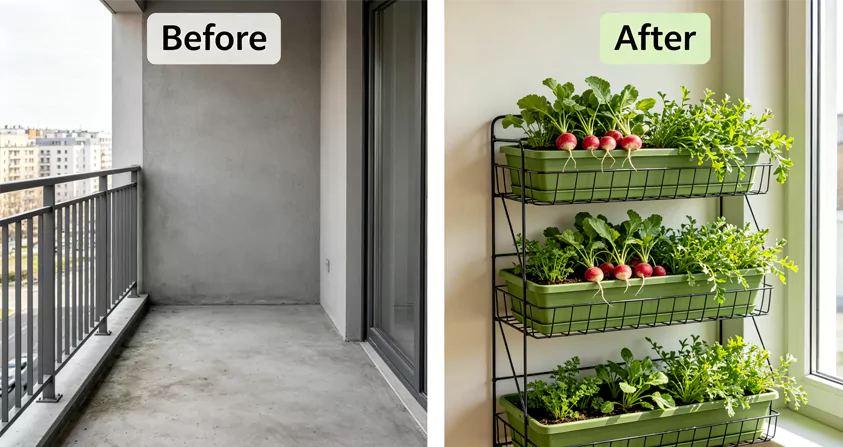
Set up a sturdy, weather-resistant tiered plant ladder or shelf. Utilizing a vertical stand lets you pack multiple shallow salad troughs into a tiny 1-foot footprint, creating a dense, high-yielding green wall.
Ensure every container you buy has functional drainage holes at the base to prevent waterlogging and root rot, an essential step detailed in our How To Start A Balcony Vegetable Garden roadmap. Always place deep saucers under your pots to catch wastewater. This simple layout trick prevents muddy runoff from dripping over your patio edge onto your downstairs neighbors, a major oversight highlighted in our Balcony Gardening Mistakes warning list.
Fill your shallow planters within an inch of the rim with your loose potting mix. If the mix is bone-dry right out of the bag, add water and mix it thoroughly with your hands before sowing your seeds. Pre-moistening ensures the soil absorbs water evenly rather than letting it slide right out of the bottom.
Because speed-crops have small seeds, never bury them deeply. Sow them just a quarter-inch deep, press the soil down very lightly, and use a spray bottle or a watering can with a fine rose nozzle to mist the surface. Heavy watering from a cup will wash your tiny seeds out of place, a detailed caution tracked in our How Often Should You Water Container Vegetables? control log.
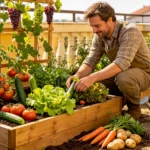
Tom, a busy software engineer with a tight apartment schedule, wanted to grow his own fresh snacks but only had a small 3×4 shaded balcony.
The absolute speed champion is pea shoots. By sowing standard sugar snap pea seeds densely in a shallow 4-inch tray, the seeds will sprout massive amounts of green growth in just 10 to 14 days. Once the shoots hit 6 inches tall, you simply snip off the top 3 inches to throw into salads or stir-fries for a delicious, sweet pea flavor!
This is almost always caused by overcrowding or lack of sunlight. If radish seeds are sown too close together, they feel crowded and shift all their energy into growing tall, skinny leaves to compete for light, completely forgetting to swell into round root bulbs. Always thin your young radish seedlings to at least 1.5 inches apart.
Fast root crops like radishes usually do fine without heavy feeding if you use a high-quality, fresh potting mix that already contains a little organic compost. However, fast-growing baby greens (like spinach and arugula) will produce much faster and tender leaves if you give them a diluted dose of organic liquid nitrogen fertilizer once a week.
Fast-growing crops like spinach, arugula, and radishes are naturally frost-hardy, cool-season plants. They thrive in chilly spring and autumn weather (50°F to 65°F / 10°C to 18°C). If your winters are mild and don’t experience deep, freezing blizzards, you can easily grow them all winter long on a sunny patio!
Yes! If you use the “cut-and-come-again” harvesting style, you only snip off the largest outer leaves of your baby spinach or arugula, leaving the tiny center crown completely untouched. The plant will use its central crown to push out a brand-new flush of leaves, allowing you to harvest the same container 3 to 4 times!
Bypass the waiting game and start harvesting fresh food in under a month. Download our free small-space high-speed design blueprint today.
Download your free kit to access:
[ Info@Yardveggie.com ]
👉 [ DOWNLOAD YOUR FREE FAST-HARVEST BALCONY KIT NOW ]
If you want to skip the frustrating trial-and-error cycle and discover the exact visual layouts used to maximize food production in tight urban footprints, check out our structured video training series. Our comprehensive Balcony Harvest Masterclass delivers an interactive, step-by-step roadmap built specifically for small-footprint living.
Bypass the guesswork with high-definition, practical tutorials covering:
[ Learn More About The Masterclass → ]