Stop Guessing. Start Harvesting.
Stop Guessing. Start Harvesting.
Hey there, absolute beginners! Want to skip the grocery store lines and pluck fresh, organic ingredients right outside your window, but worried you don’t have a green thumb?
Let’s bust a major myth right now: you do not need a massive backyard or years of farming experience to grow your own food. Setting up an easy edible garden on an apartment balcony actually gives you an awesome natural advantage. Because your plants are high off the ground, they are completely safe from stubborn garden pests like moles, rabbits, and destructive ground bugs. By choosing low-maintenance, bulletproof plant varieties and following a simple video layout, anybody can grow a successful harvest on their first try.
This guide is your ultimate shortcut and video walkthrough companion to setting up a thriving balcony garden the easy way.
The easiest way to start balcony gardening is to watch a clear easy balcony vegetables video tutorial that focuses on “set-and-forget” crops. Your best options are loose-leaf cut-and-come-again lettuce, bush green beans, and dwarf patio cherry tomatoes. Put them in lightweight, breathable fabric grow bags filled with a pre-moistened potting mix, and you’re ready to grow!
To keep your balcony garden truly easy and stress-free, our video tutorial highlights three basic environmental factors you need to check before planting:
Different plants need different amounts of fuel from the sun. If your balcony gets blasted with 6 to 8 hours of direct sunlight, you can easily grow fruiting plants like dwarf tomatoes and peppers. If your patio sits in the shade of other buildings and only gets about 4 hours of morning light, don’t worry—just stick to easy leafy greens like spinach, kale, and lettuce, which actually prefer a break from intense heat!
Because balconies are elevated, they catch a lot of wind currents that can dry out soil quickly or knock over tall plants. To make your life easy, anchor any vertical plant stands or shelving units directly to your balcony railing using thick plastic zip ties. Also, choose wide-bottomed containers that naturally stay glued to the ground when the wind picks up.
The biggest rookie mistake is digging up dirt from a local park or yard and shoving it into a pot. Natural ground soil is full of heavy clay that packs down tight like concrete when wet, suffocating your plant’s roots and causing them to rot. Plus, it’s incredibly heavy! Always use a bag of lightweight, fluffy commercial potting mix (usually made from peat moss or coco coir blended with white perlite aggregates), as recommended in our Best Soil For Container Vegetables reference manual.
To get the most out of your small footprint using the design layouts from our Advanced Geometric Spacing Layouts and Tier Design framework, organize your easy crops using this simple arrangement guide:
| Crop Category | Best Beginner Variety | Minimum Pot Size | Sunlight Needed | Best Tier Shelf Placement | Effort Level |
| Leafy Greens | Salad Bowl / Tom Thumb | Shallow Window Box | 4–5 Hours | Bottom Tier (Stays cool in the shade) | Super Easy (Snip outer leaves for months) |
| Bush Beans | Blue Lake Bush / Provider | 3-Gallon Fabric Bag | 6 Hours | Middle Tier | Easy (No trellising or climbing stakes needed) |
| Patio Tomato | Tiny Tim | 5-Gallon Fabric Bag | 6–8+ Hours | Top Tier (Gotta soak up that hot sun) | Medium (Needs a gentle shake to pollinate) |
| Crisp Roots | French Breakfast Radish | 8″ Deep Planter | 5 Hours | Middle / Bottom Tier | Super Easy (Ready to harvest in just 25 days!) |
Follow this straightforward production動线 to get your first containers set up cleanly and successfully:
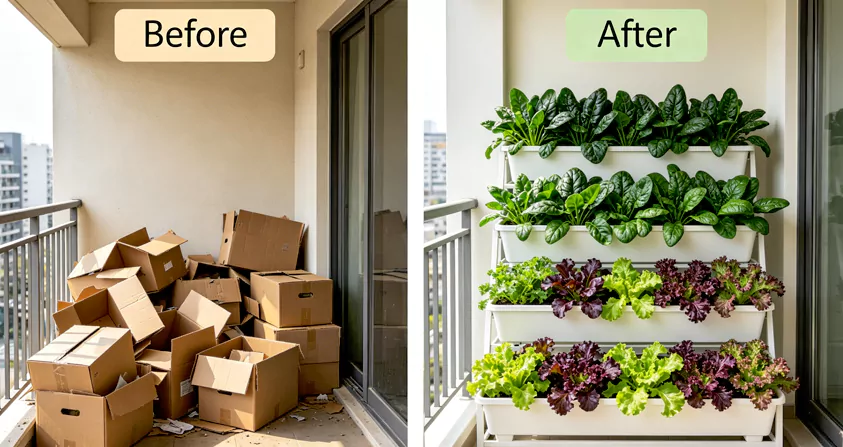
Set up a sturdy, weather-proof tiered plant ladder or shelf. Going vertical lets you expand your garden footprint by 300% without taking up your entire balcony floor, leaving plenty of room for an outdoor chair.
Make sure every pot you buy has drainage holes at the bottom so water doesn’t pool and drown your roots, a baseline rule from our How To Start A Balcony Vegetable Garden blueprint. Pro tip: Always place a deep saucer under each container. This catches excess water and prevents muddy, fertilized runoff from spilling over your balcony edge onto your downstairs neighbors—a major headache highlighted in our Balcony Gardening Mistakes warning list.
Fill your containers within an inch of the top rim with your soil-less potting mix. If the mix is bone-dry right out of the bag, pour a little water into it and mix it around with your hands before planting your seeds. This ensures the medium can actually absorb moisture instead of letting it run straight through.
Because containers hold a limited amount of soil, regular watering slowly washes out natural nutrients. To keep your plants growing strong without daily feeding, mix a handful of organic, slow-release granular fertilizer into the top layer of your soil at planting time to feed your crops automatically for up to two months.
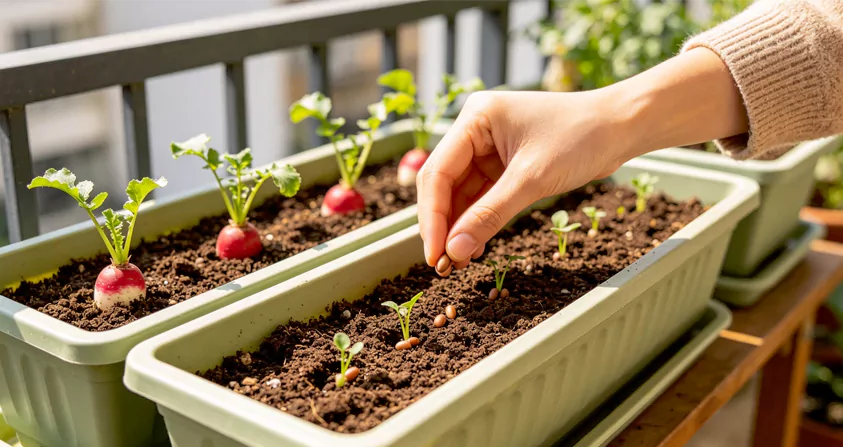
Chloe, a college student with a busy schedule, wanted to grow fresh food but only had a tiny 3×5 shaded concrete balcony.
Hands down, loose-leaf lettuce (like Black Seeded Simpson or Salad Bowl varieties). Unlike head lettuce (like Iceberg) which takes months to form a single head, loose-leaf lettuce grows incredibly fast and uses the “cut-and-come-again” method. You just snip the outer leaves whenever you want a snack, and the center keeps growing fresh leaves for months!
This is almost always caused by overwatering. When you keep the soil constantly wet and soggy, you block oxygen from reaching the root zone. The roots literally suffocate, stall out, and can develop a fungal disease called root rot. Always let the top two inches of soil dry out completely before you add more water.
For fast-growing crops like radishes, loose-leaf lettuce, and bush green beans, sowing seeds directly into your containers is incredibly easy and much cheaper. For slower-growing, sun-loving crops like cherry tomatoes or sweet peppers, buying pre-grown baby plants (transplants) from a local nursery gives you a major head start.
Yes, especially for beginners! Fabric grow bags are made from a woven material that allows excess water to seep out of the sides effortlessly, making it almost impossible to accidentally overwater and drown your plants. They also allow air to enter the root zone from all angles, creating a much stronger, healthier root system.
Because balconies are off the ground, you won’t deal with many pests. If you do spot tiny bugs like aphids, simply spray them off your plants using a sharp blast of water from a spray bottle, or wipe down the leaves with a mild mix of water and a few drops of organic Castile soap.
Bypass the trial-and-error phase and start harvesting fresh food right away. Download our free beginner-friendly small-space design blueprint.
Download your free kit to get:
[ Info@Yardveggie.com ]
👉 [ DOWNLOAD YOUR FREE EASY BALCONY GARDEN KIT NOW ]
If you want to skip the frustrating trial-and-error cycle and discover the exact visual layouts used to maximize food production in tight urban footprints, check out our structured video training series. Our comprehensive Balcony Harvest Masterclass delivers an interactive, step-by-step roadmap built specifically for small-footprint living.
Bypass the guesswork with high-definition, practical tutorials covering:
[ Learn More About The Masterclass → ]