Stop Guessing. Start Harvesting.
Stop Guessing. Start Harvesting.
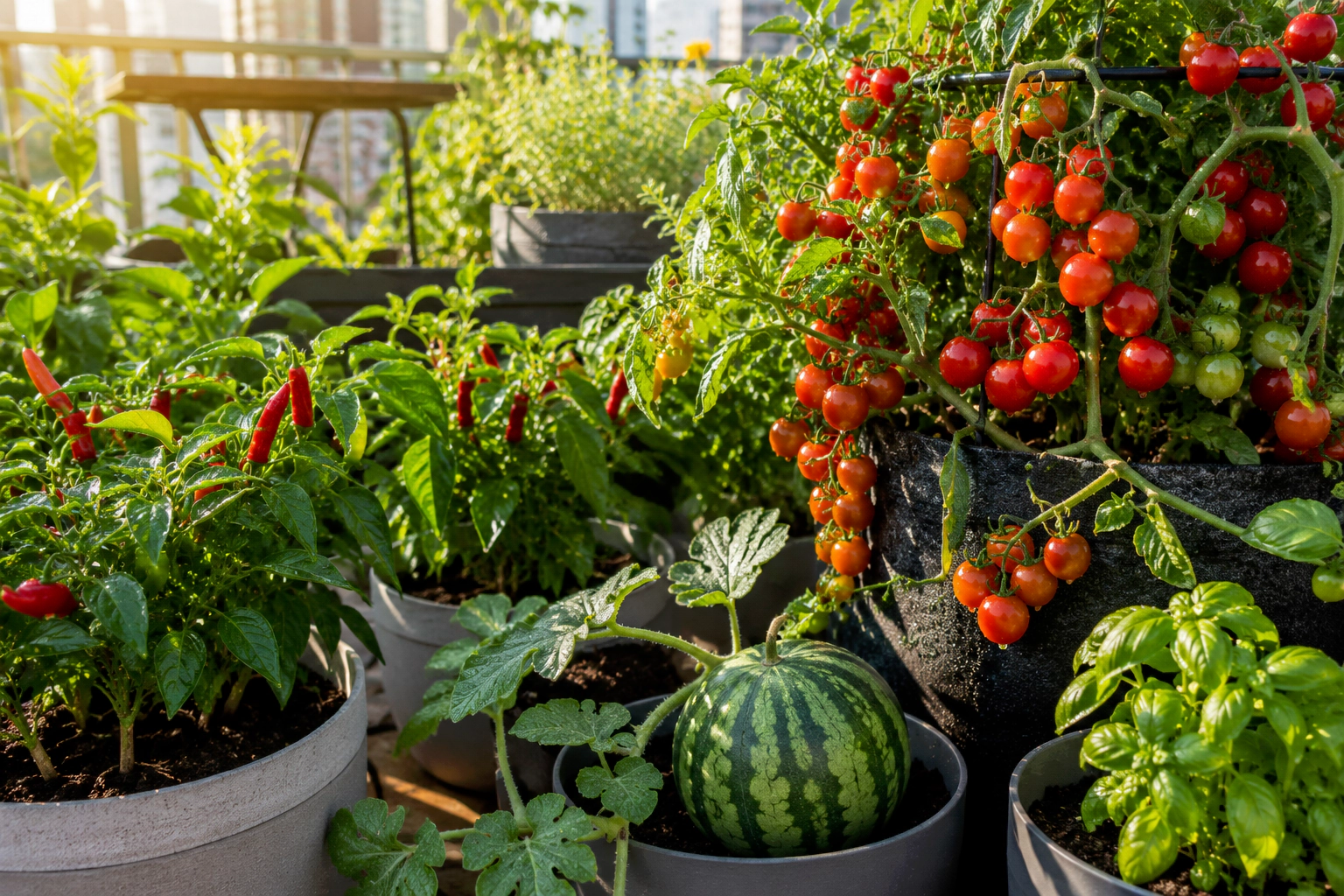
There is a common myth circulating among urban dwellers that you need an expansive, multi-acre backyard to grow a significant amount of fresh, organic food.
Think you need a massive backyard to harvest pounds of fresh food? Think again. When growing in standard patio pots, balconies, or windowsills, space is your only limitation—not your yield. By implementing advanced vertical management and canopy control, you can out-grow traditional ground gardeners pound-for-pound.
In this professional guide, we will master the 3 simple pruning and staking techniques designed specifically to triple your crop yield in limited container spaces, transforming your small patio into a high-output vegetable paradise.
To give you an immediate bird’s-eye view of how these space-saving techniques work across different heavy-producing crops, review this quick reference matrix:
| The Technique | Target Crops | Primary Benefit | Execution Frequency |
| 1. Indeterminate Pruning | Tomatoes, Cucumbers | Directs energy to fruit; prevents massive, unruly foliage | Weekly during growing season |
| 2. Single-Stem Staking | Peppers, Tomatoes, Eggplants | Maximizes vertical space; prevents fruit-damaging ground contact | Continuous as the plant grows |
| 3. High-Yield Topping | Bush Chilis, Basil, Herbs | Forces bushy growth; triples branching and flowering sites | Once in early growth phase |
When you grow vining crops like tomatoes or cucumbers in a pot, the plant naturally wants to branch out wildly in all directions. In a confined container, this uncontrolled vegetative growth is a disaster. It wastes precious root energy on leaves rather than fruit.
In a traditional backyard garden, plants are allowed to sprawl across the dirt. On a small balcony or patio, letting a plant grow horizontally wastes valuable square footage. Furthermore, fruit resting on concrete patio floors is highly susceptible to pests and rot.
While vining tomatoes need to be pruned into a single stem, bushy crops like chilis, bell peppers, and culinary herbs require the exact opposite approach to maximize yield. They need to be forced to branch out.
To understand why container manipulation is so powerful, let’s look at the data comparing unmanaged plants versus vertically optimized containers:
| Crop (Per Standard Pot) | Unmanaged Yield | Vertically Optimized Yield | Space Required |
| Cherry Tomatoes | 2–3 lbs (Wild, bushy, prone to rot) | 8–12 lbs (Pruned single-stem) | 1.5 Sq. Ft. |
| Snacking Chilis | 15–20 peppers (Tall and leggy) | 50+ peppers (Topped & staked) | 1.0 Sq. Ft. |
| Genovese Basil | 1 single harvest (Grows straight up to seed) | Continuous weekly harvests (Topped regularly) | 0.5 Sq. Ft. |
Tripling your garden yield has nothing to do with luck or expensive gadgets. It is pure plant science applied to small-space limitations. By masterfully executing indeterminate pruning, training your crops vertically to claim the air space, and tactically topping your peppers and herbs, you bypass the need for a sprawling backyard entirely.
With these 3 simple techniques in your gardening toolkit, a handful of high-quality patio pots can out-produce an unmanaged traditional garden plot effortlessly. Stop letting a small space hold you back—start optimizing vertically and enjoy the continuous bounty of homegrown, nutrient-dense food.
A: Yes, over-pruning can shock a plant or cause “sunscald” on the fruit if too many shade leaves are removed. The golden rule of container gardening is never remove more than 20% to 25% of a plant’s total foliage at one single time. Always focus your pruning on the bottom leaves that don’t get sun and the aggressive 45-degree suckers.
A: Always prune your plants in the early morning on a dry, sunny day. When you snap or cut a branch, it leaves an open wound on the plant. Morning sun dries and heals this wound quickly, sealing out fungal spores and bacteria. Avoid pruning in the evening or during rainy weather, as damp wounds invite disease.
A: Because heavy pruning and staking force the plant to produce fruit rapidly, container plants consume nutrients fast. Once your plants begin flowering, switch from a high-nitrogen fertilizer (which only grows leaves) to an organic fertilizer high in Potassium and Phosphorus (such as liquid seaweed or fish emulsion) once every two weeks to sustain heavy fruiting.
A: Absolutely. In fact, fabric grow bags are highly recommended for high-yield crops because they provide superior root aeration. To stake a plant in a fabric bag, simply drive your bamboo stake directly through the soil mix all the way to the bottom of the bag; the weight of the soil will hold the stake firmly in place.
⚡ Ready to watch these exact pruning cuts performed in real-time? Don’t risk cutting the wrong branch! Enroll in our $29.9 Complete Container Masterclass today. Get instant, lifetime access to high-definition video walkthroughs hosted on Bunny.net, showing you exactly where, when, and how to prune for an explosive harvest!