
Stop Guessing. Start Harvesting.
Stop Guessing. Start Harvesting.
A production-focused guide to organic slug control for container plants, covering scouting thresholds, environmental engineering, barrier systems, OMRI-listed baits, and the documentation your certifier will ask for.
Walk a container pad at first light and the damage tells you what the scouting report missed. Scalloped hosta foliage. Chewed heuchera crowns. Silvered trails across echinacea leaves and shredded marigold petals on plants that were staged for Friday’s shipment. By the time the crew finds the feeding, the loss is already booked — not just in plant material, but in bench space, freight allocation, and the customer relationship you spent three seasons building.
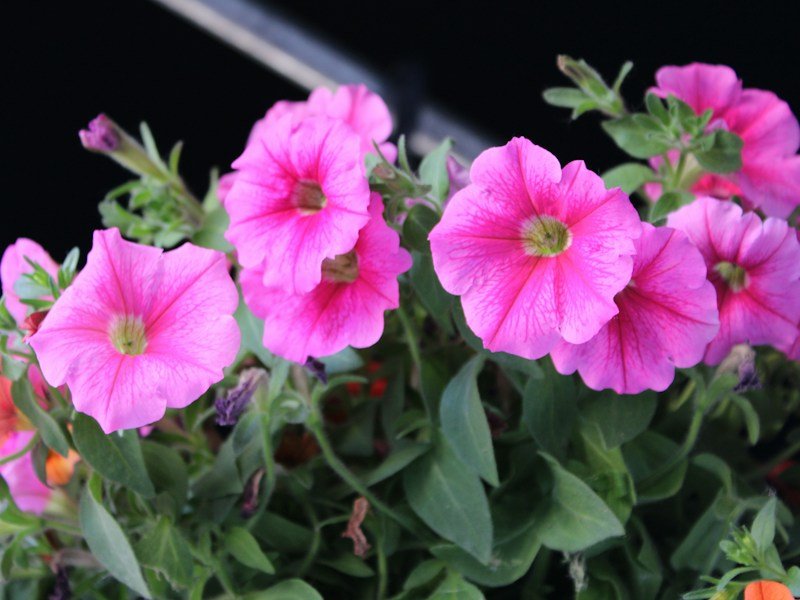
Organic slug control for container plants is a production discipline, not a garden remedy. Container systems concentrate slugs in ways field production never does. Drainage holes give them shelter. Media stays uniformly moist. Canopies close overhead and hold humidity at the soil line. Pot-to-pot spacing gives them a short, safe commute between food sources. Compared with a field block, a container pad offers constant moisture, zero cultivation disturbance, and an uninterrupted supply of tender new growth. That is why a program built for a field crop — one bait pass and a mowed border — routinely underperforms inside a poly house. Potted Organic Onion Growing Guide: A Commercial Grower's Playbook
This guide is written for commercial growers, propagators, and landscape contractors who need measurable control and documentation that satisfies an organic certifier. We will cover how to define the problem in economic terms, how to build a five-step program you can audit, what the real numbers look like from working nurseries, and where most operations lose the season before they ever open a bait bag.
Organic slug control for container plants is an integrated program of cultural, physical, biological, and OMRI-listed input practices that holds slug and snail populations below an economically damaging threshold in container-grown nursery stock, plugs, and greenhouse crops without relying on synthetic molluscicides such as metaldehyde or methiocarb.
In practice, it is less about one product than about stacking controls that interrupt the slug’s basic requirements: moisture, cover, and an uninterrupted food supply. The species you are managing matter. In most North American container operations the pressure comes from the gray garden slug (Deroceras reticulatum), the marsh slug (Deroceras laeve), introduced Arion species, and — in older, shaded yards — the spotted garden slug (Limax maximus). All are hermaphroditic, all lay egg clusters in damp media and under pot rims, and all feed primarily at night when the surface film of water is favorable. Control programs that ignore the egg stage and the shelter stage will always chase the population instead of suppressing it.
For a US operation, organic compliance runs through the USDA National Organic Program (NOP) and your accredited certifying agent. A product marketed as “natural” or “organic-based” is not automatically approved. Copper compounds, for example, are restricted. Metaldehyde is prohibited outright. Inputs must appear on the National List or be reviewed and accepted by your certifier, and the practical shorthand most buyers use is a current OMRI listing — but even then, the listing must match the formulation and rate you intend to apply.
Before the first application of any new product, send the label, the Safety Data Sheet, and the current OMRI certificate to your certifier and get written confirmation. Keep that confirmation in the spray record binder. During an inspection, the question is never “is this product organic?” — it is “can you show me why you believed it was, on the date you applied it, at the rate you used?” Companion Planting for Container Lettuce: Maximizing Small-Space Yields
A culled one-gallon hosta does not cost you $4.50 in lost revenue. It costs the input cost, the bench space it occupied for fourteen weeks, the labor already invested in it, and the risk that the order it was grown for ships short. Commercial programs should set a threshold in damage terms, not in slug counts alone. A workable internal standard for most container operations is two or more actively feeding slugs per ten sampled pot rims on a warm, moist evening — that is a signal to act within 48 hours. Below that, cultural and barrier controls should be holding the line. Above it, you have an input decision to make and a hotspot to map.
You cannot manage what you only notice at shipping. Set a scouting protocol and run it on a fixed schedule.
Two weeks of baseline data is enough to justify or kill an input purchase. It also gives you the number you will use to prove the program worked at the end of the season.
Environmental engineering is the highest-return, lowest-input part of organic slug control for container plants, and it is the part most operations skip because it requires capital rather than a purchase order.
Barriers work, but only in the specific conditions they were designed for. Misapplied barriers are the most common source of grower frustration.
Iron phosphate baits are the backbone of most US organic container programs. They disrupt calcium metabolism in the slug’s gut; feeding stops quickly and mortality follows in roughly three to six days. They are slow, they are rain-sensitive in presentation, and their performance drops in cold or very dry conditions — which is why placement and timing matter more than rate alone. Marigolds as Companion Plants in Pots: A B2B Guide for Commercial Growers
Turn the program into a written SOP with named responsibilities. Log every scouting count, every application, every product lot, and every OMRI certificate. Review the SOP with your certifier before the season starts, not after an inspection notice arrives.
Then scale block by block. Prove the program in one bay or one house for a full cycle, measure the change in cull rate, and only then roll it across the pad. Track cost per 1,000 containers against cull cost per 1,000 containers — that ratio is the number your management team will actually respond to, and it is the number that justifies next year’s barrier budget.
| Method | Best Fit in a Container Program | Approx. Cost per 1,000 Containers per Season | Labor Intensity | Reapplication Interval | Organic Status |
|---|---|---|---|---|---|
| Night scouting and trap boards | Baseline for every program; sets application triggers | $15–$40 | Medium | Weekly during peak season | No input required |
| Irrigation and media management | All houses; highest long-term return | $0–$600 amortized retrofit | Low after installation | Seasonal review | Compliant practice |
| Pot risers, benches, gravel floors | Ground-set containers and holding yards | $40–$180 | Medium (one-time) | 3–5 seasons | Compliant practice |
| Copper flashing and bench barriers | Benches, table edges, propagation tables | $25–$90 | Low | Inspect and clean monthly | Compliant practice |
| Wool pellet or grit collars | Premium two-gallon and larger specimen plants | $60–$150 | High | 4–8 weeks | Confirm OMRI listing |
| Iron phosphate bait | Whole-pad knockdown and maintenance | $35–$110 | Low to medium | 7–14 days under pressure | OMRI-listed formulations |
| Sodium ferric EDTA bait | Fast knockdown before shipping windows | $50–$140 | Low | 5–10 days | Verify current OMRI listing |
| Perimeter habitat management and beetle banks | All outdoor pads and yard edges | $10–$50 | Low | Annual refurbishment | Compliant practice |
| Decollate snails | Restricted; brown garden snail only, permitted states | Not applicable | Not applicable | Not applicable | APHIS permit and state restrictions |
A Oregon grower producing one- and two-gallon hosta, heuchera, and echinacea ran a 9,000-plant hosta crop that lost 22 percent of salable units to slug feeding in a single wet spring. The operation had been running one iron phosphate pass in April and nothing else. We helped build a baseline: night counts in three houses showed the population concentrated in the two houses with overhead irrigation and ground-set pots.
The first season’s changes were modest — timed evening scouting, pot risers in the worst house, a drip retrofit in one house, and iron phosphate applied every ten days from bud break through June instead of once. Cull rate fell from 22 percent to 4.1 percent. In the second season, adding a three-foot mowed perimeter and moving the cull pile 150 feet downwind took it to 2.6 percent. Total program cost across the two houses ran about $1,850 for the season; the avoided cull value was roughly $11,400. The owner’s summary was blunt: the cheapest fix was the irrigation retrofit, and it was the one he had put off for three years. Watch This Before You Start a Patio Vegetable Garden This Spring
A propagator running ebb-and-flow benches was finding Limax maximus damage in black-eyed Susan and verbena liners at roughly 9 percent of units, with damage appearing within ten days of transplant. The slugs were arriving on incoming trays and colonizing the saturated capillary matting under the benches.
The fix was receiving-side as much as growing-side: an inspection and holding bay for incoming trays, copper flashing on table legs, removal of the floor-level capillary matting, a hard cutoff on overhead watering after 11 a.m., and an iron phosphate band along the house perimeter. Damage dropped to 1.5 percent within one cycle. The largest single contributor was the irrigation timing change, which cost nothing but a schedule revision.
A landscape contractor with an attached retail yard was writing off $9,000 to $12,000 a season in leafy annuals and shade perennials, mostly in the shaded holding area where pots sat directly on soil. A 30-minute closing crew hand-pick, pot risers on the front two benches, a gravel pad under the shade structure, and a weekly iron phosphate pass cut shrink by roughly $8,200 in the first season. The labor cost was 3.5 hours per week. This is the smallest-scale version of the program, and it still paid back inside one season.
When you evaluate a supplier for organic slug control for container plants, request the following before you place a season order:
A supplier who cannot answer the first two items quickly is not a supplier for a certified organic operation, regardless of how the product is marketed. Regenerative Practices You Can Use in a Small Backyard Garden
