Stop Guessing. Start Harvesting.
Stop Guessing. Start Harvesting.
A procurement-focused guide to upcycled containers for growing vegetables: how to spec root-zone volume, verify food-grade chain of custody, engineer drainage, and calculate real ROI against new HDPE vessels.
If you priced a 500-unit run of new injection-molded HDPE grow pots in the past eighteen months, you already understand why upcycled containers for growing vegetables have moved out of the hobby-gardener aisle and into serious commercial procurement. Between 2021 and 2024, resin volatility, ocean freight surcharges, and colorant shortages pushed landed costs on new growing containers up roughly 22 to 31 percent depending on volume, wall thickness, and resin grade. Growers running rooftop farms, restaurant supply programs, school district food services, and regional nurseries answered the same way: they started buying volume that already existed in the secondary market.
The economics are difficult to argue with once you see them on a purchase order. A reconditioned 275-gallon IBC tote with a documented food-grade history typically lands between $95 and $185 in most US metros, compared to $340 to $520 for a comparable new rotationally molded unit of similar volume. A used open-head 55-gallon drum runs $18 to $45 before modification. Across a 400-unit deployment, that spread is frequently the difference between a project that clears its capital hurdle in one growing season and one that limps along for three. Sustainable Patio Vegetable Garden: A B2B Guide to Commercial-Grade Urban Agriculture
Price is only the entry point, though. Buyers who treat upcycled containers as a single commodity SKU tend to run into the same wall within two seasons: unknown prior contents, thin walls that crack through freeze-thaw cycles, UV degradation that turns HDPE brittle, and drainage that cannot keep pace with a drip-fertigation schedule. This guide is written for the people who sign the purchase order and own the yield number. It defines the category, walks through five ordered deployment steps, shares real program economics, and lays out the documentation you need to survive a food-safety audit.
Upcycled containers for growing vegetables are vessels originally manufactured for a different purpose – bulk food transport, industrial storage, beverage handling, or retail distribution – that have been cleaned, inspected, and often modified for use as plant-growing media. The category deliberately excludes scrap material that gets melted down and re-formed into new resin or steel. Upcycling preserves the original form factor and extends the vessel’s service life in a new application, which is why the embodied carbon and the unit cost both stay low.
In commercial horticulture, the term covers four material families:
Two attributes separate a legitimate commercial-grade upcycled container from a garage-sale find. The first is documented prior contents. The second is a resin or alloy grade that tolerates continuous moisture, fertilizer salts, and direct UV exposure. A tote that hauled food-grade glycerin is a viable growing vessel. A tote that hauled agricultural surfactant is not, no matter how many times it has been pressure washed or how good the price looks.
Suppliers in this space generally fall into three tiers: industrial packaging brokers who sell totes and drums as-is by the truckload; reconditioners who wash, test, and modify vessels into turnkey grow containers; and vertically integrated growers who build their own conversions and resell surplus capacity. Knowing which tier you are buying from determines how much of the quality control burden lands on your operations team.
The single most common mistake in commercial container programs is buying containers first and figuring out crops second. Root-zone volume drives yield ceiling, irrigation frequency, and media cost, so it has to be settled before a single tote is ordered. As a working rule set for field production:
Write the crop plan first, then convert it into a container schedule with volume, quantity, and spacing. That schedule becomes your request for quote and your basis for comparing suppliers apples to apples. Zero-Waste Gardening: Creative Ways to Recycle in Your Backyard
This is the step that separates professional buyers from everyone else. Before you accept a load, require the following from the seller in writing:
Walk the load yourself if you can. Reject any vessel with a persistent chemical odor, visible staining below the fill line, residual hazmat placards, or a missing bung and gasket. Odor is the most reliable field test you have, because HDPE is porous at the molecular level and will hold volatile compounds long after a visual inspection comes back clean.
Containers behave nothing like field soil. Media in a 30-gallon drum can swing from field capacity to permanent wilting point in under 36 hours during a July heat event, and salt accumulation at the root zone is far more aggressive because there is nowhere for excess fertilizer to leach laterally. Build the system accordingly:
A 275-gallon tote filled with saturated media weighs between 1,800 and 2,200 pounds. That number dictates everything about placement. Rooftop installations generally need to stay under 60 pounds per square foot of live load, which means spreading totes across load-bearing beams or spreading the weight on laminated timber mats. Ground-level installations need to account for frost heave and wind uplift, particularly in coastal and plains markets.
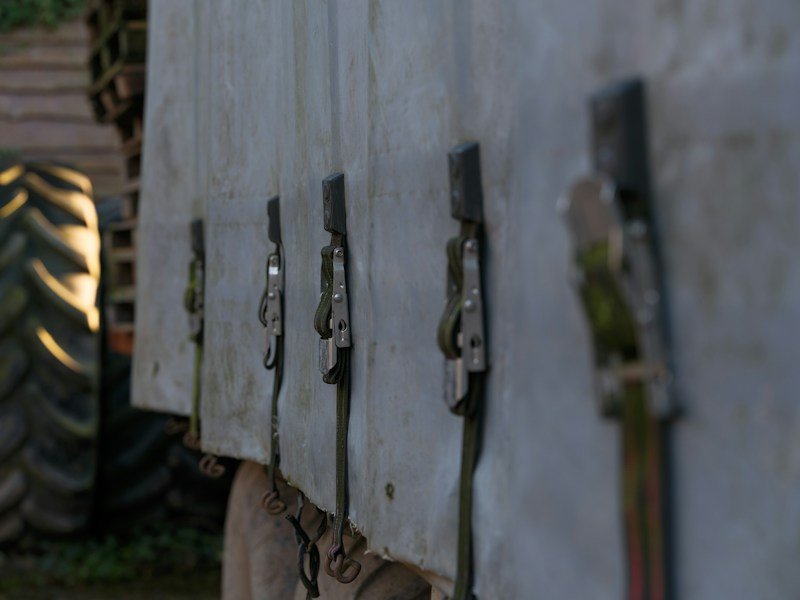
Three practical countermeasures we see work consistently: strap or cable every container row to a shared anchor line rated for 90 mph gusts; paint exterior HDPE surfaces with a light-colored elastomeric coating to cut UV degradation and reduce media temperature by 8 to 12 degrees Fahrenheit; and add a 20 to 30 percent perlite fraction or a closed-cell foam wrap at the base to survive freeze-thaw without cracking the wall. If you are running a northern program, drain and cover containers before the first hard freeze rather than letting them fill with ice.
Upcycled containers are capital assets with a defined service life, and treating them that way protects both yield and audit standing. Assign every vessel a discrete asset ID at intake. Between crop cycles, steam media-contact surfaces at 180 degrees Fahrenheit for 30 minutes or apply a peracetic acid or hydrogen peroxide-based sanitizer at label rate, then rinse and dry fully before refilling.
Inspect on a fixed schedule – every 12 months for HDPE, every 24 months for stainless and galvanized steel. Look for microcracking, stress whitening around fittings, cage corrosion on IBC units, and weld pitting on metal vessels. Plan a three-to-five-year rotation for high-intensity HDPE containers and eight to fifteen years for metal. Track replacement cost per container per year in your budget, because it is a real line item and it should be visible to whoever approves the capital plan. Potted Vegetable Disease Fixing Course: A Commercial Grower's Guide to Healthy Crops
A 22,000-square-foot rooftop operation converted 48 reconditioned 275-gallon IBC totes into 96 horizontal growing troughs for tomatoes, peppers, and eggplant. Delivered cost averaged $128 per tote from a regional industrial packaging broker, plus $22 per unit for cutting, edge deburring, bulkhead fittings, and a light exterior coating – roughly $150 per tote, or $75 per finished trough. Comparable new rotational-molded units quoted at $310 each.
Total container spend landed near $7,200 versus a projected $29,760 for new. The program harvested 18 to 22 pounds of tomatoes per trough in the first full season, with a second-season bump to 24 to 27 pounds once the media matured and the trellis layout was tightened. Container payback came in under one season on fruit sales alone. The lesson the grower shared: the cage on IBC totes had to be cut off before horizontal conversion, and reusing the cage as a support frame for trellised cucumbers turned an otherwise wasted component into $40 of free infrastructure per unit.
A high-volume catering operation with three commissary kitchens cut 24 used food-grade 55-gallon drums in half to create 48 planters for basil, mint, rosemary, and Thai basil. Drums were sourced from a local pickling plant at $26 each, cleaned with a triple rinse and a food-grade caustic wash, and fitted with two half-inch bulkhead drains. Total program cost including media, drip lines, and labor came to about $3,400.
The operation had been buying fresh herbs at $9 to $14 per pound, roughly $11,000 annually across the three kitchens. The container program produced an estimated 620 pounds of usable herb in year one, cutting purchased volume by just over half and delivering a documented $4,800 annual reduction in food cost with a 9-month payback. Their operations note: halved drums dried out faster than expected on the south-facing wall, and adding a one-inch mulch layer plus a second daily irrigation cycle solved it.
A retail nursery built a secondary product line by contracting directly with a food-grade pickling and beverage processor for 1,200 used barrels per year at $8 to $12 each when purchased by the truckload. After steam cleaning, pressure testing, and adding a drainage kit, the barrels retailed as grow containers at $54 to $79, with gross margins in the 45 to 60 percent range. The contract is annual and capacity-guaranteed, which matters – the processor’s barrels are a byproduct of their production schedule, not a catalog item, and availability swings with their seasonal volumes.
A county food security program deployed 60 galvanized stock tanks between 50 and 300 gallons to work around contaminated urban soils. The 8-foot round tanks with 24-inch media depth produced carrots, onions, and lettuce across a 14-month cycle with no soil-borne disease pressure. The program did flag one issue worth repeating: galvanized zinc can leach into acidic media, so they moved to a pH-buffered blend held between 6.2 and 6.8 and added a food-grade liner to the two highest-value tanks. They also documented heavy metals panel results for every tank used on edible crops, which their funders now require as standard practice.
Container choice is only half the procurement decision. The other half is whether your documentation package holds up when a buyer, auditor, or funder asks how you know the vessel is safe. Cheap Container Gardening Ideas for Commercial Buyers: A B2B Sourcing and Cost-Control Guide
Food contact. For HDPE and polypropylene vessels, request confirmation that the base resin complies with 21 CFR 177.1520 and that any added antioxidants or stabilizers comply with 21 CFR 178.2010. Note that food-grade history and current food-contact certification are different claims. A reconditioner who sells into produce programs should be able to provide both.
Produce Safety Rule. Under FSMA, containers and equipment that contact produce must be inspected, maintained, and cleaned to prevent biological contamination. Your standard operating procedure should define the cleaning frequency, the sanitizer chemistry and concentration, and the record retention period. Auditors ask for the log, not the intention.
Organic certification. The USDA National Organic Program prohibits the use of containers treated with prohibited synthetic substances, which rules out CCA-treated lumber, pentachlorophenol-treated wood, and certain painted or coated surfaces on repurposed vessels. Confirm that any stain, coating, or liner you apply is on the NOP allowed list before you put it on 200 containers.
Commercial terms. Negotiate inspection rights before shipment, a documented wash specification, a defined failure rate allowance of 3 to 5 percent for as-is loads, and a delivery schedule that reflects the supplier’s production cycle rather than your planting calendar. Buyers who lock in annual volume contracts with a single reconditioner consistently report better pricing and more predictable quality than those who spot-buy from brokers.
The table below reflects typical US pricing in mid-2025 for small-to-mid volume commercial orders with delivery included in the first 250 miles. Use it as a screening tool, then confirm actuals with your regional suppliers.
| Container Type | Typical Volume | Source Material | Unit Cost (USD) | Service Life | Best Crop Fit | Primary Risk |
|---|---|---|---|---|---|---|
| Reconditioned IBC tote (upright or halved) | 275-330 gal | Food-grade HDPE in galvanized cage | $95-$185 | 6-10 years | Tomatoes, peppers, cucumbers, eggplant | Unverified prior contents; cage corrosion |
| Open-head 55-gal drum (whole or halved) | 30-55 gal | Food-grade HDPE or steel | $18-$45 | 4-8 years (HDPE) | Basil, mint, peppers, determinate tomatoes | Thin walls; UV embrittlement |
| Olive or brine barrel | 55-60 gal | Food-grade HDPE or oak | $25-$70 | 3-6 years | Herbs, potatoes, root crops | Retained salt; requires triple rinse |
| Galvanized stock tank | 50-300 gal | 20-22 gauge galvanized steel | $85-$260 | 10-15 years | Greens, carrots, onions, lettuce | Zinc leaching in acidic media |
| Bakery or produce bin | 12-35 gal | Food-grade PP/HDPE | $6-$18 | 3-5 years | Microgreens, lettuce, radish | Shallow depth; rapid desiccation |
| Stainless dairy or brewing vessel | 30-200 gal | 304 or 316 stainless steel | $70-$400 | 15-25 years | High-value herbs, propagation, nursery stock | Weld cracking; high upfront cost |
| Pallet collar with geotextile liner | 20-35 gal | Reclaimed plastic or untreated wood | $10-$28 | 2-4 years | Salad greens, herbs, strawberries | Untreated wood only; rot and pest harborage |
Four failure patterns show up repeatedly across commercial operations, and all four are avoidable:
The buyers who get the most out of upcycled containers for growing vegetables treat the category as engineered infrastructure, not a bargain bin. They write the crop plan first, verify documentation second, and hold suppliers to a specification. Do that, and a 40 to 70 percent reduction in container cost per square foot of production becomes a durable margin advantage rather than a one-season fluke. Complete Balcony Fruit Tree Tutorial: A B2B Playbook for Garden Retailers and Suppliers