Stop Guessing. Start Harvesting.
Stop Guessing. Start Harvesting.
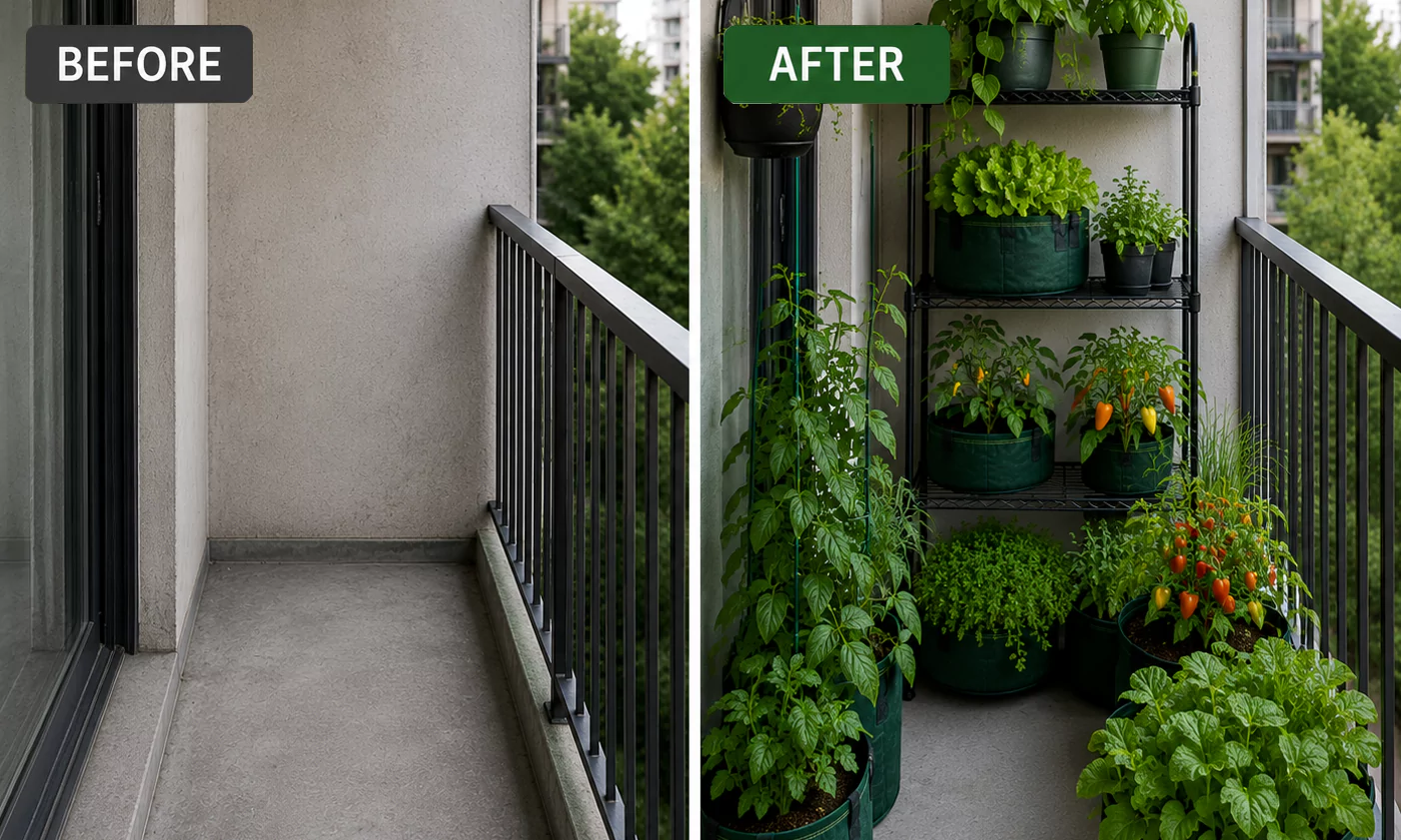
Do you dream of picking fresh, organic ingredients right outside your door but worry your apartment balcony is simply too small?
Many beginners assume that growing food requires a sprawling backyard or rows of deep garden beds. In reality, size is rarely the limiting factor—selection is. When you are working with limited square footage, success comes down to choosing compact, high-yielding crops designed to thrive in confined root zones. By selecting the right varieties, even a tiny five-by-five balcony can become a highly productive edible landscape.
This guide highlights the absolute best vegetables for small balconies so you can maximize your space and secure a continuous, fresh harvest.
The best vegetables for small balconies include loose-leaf lettuce, cherry tomatoes, radishes, bush beans, and dwarf sweet peppers. These crops are ideal because they have compact root systems, offer high yields per square foot, grow quickly, and naturally adapt to container environments without requiring extensive garden plots.
Before heading to the garden center, it helps to look at why small-space attempts often fall short. Growing on an elevated balcony means managing a distinct micro-environment that handles wind, light, and water differently than an open yard.
The five most common reasons small balcony gardens struggle include:
Focus on these five high-performing varieties to get the highest yield from your limited balcony space.
Leafy greens are the undisputed champions of small-space gardening. Varieties like red sail, oakleaf, and arugula grow shallow roots and do not require deep containers. By practicing the “cut-and-come-again” harvesting method—snipping only the mature outer leaves—a single window box can supply your kitchen with fresh salad greens for months.
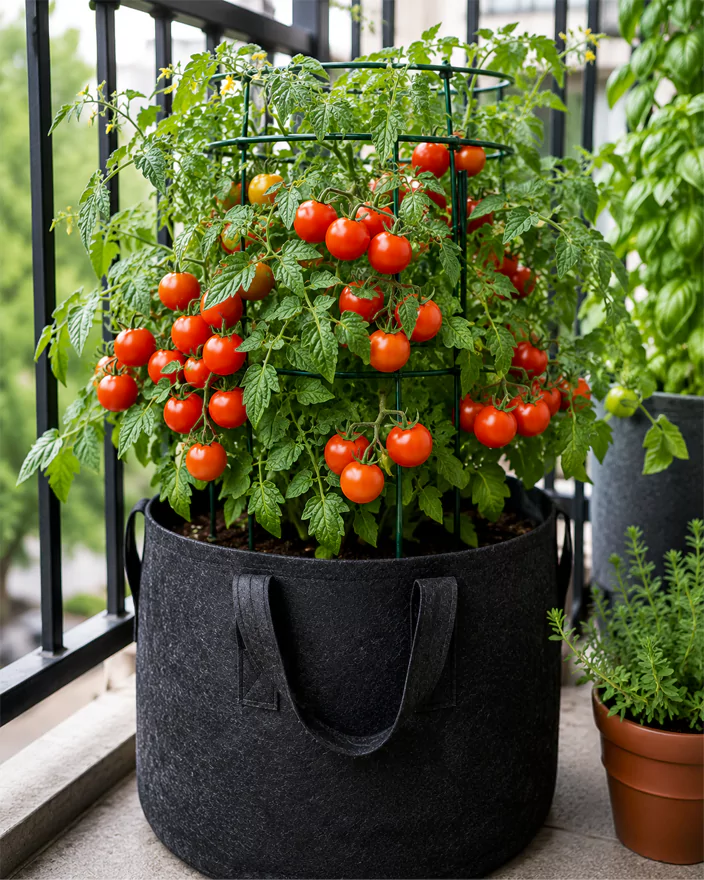
While standard field tomatoes grow into massive bushes, determinate “patio” or dwarf cherry tomato varieties stay naturally compact, usually capping out at two feet tall. Despite their small stature, they produce heavy clusters of sweet, bite-sized fruit throughout the summer.
Standard pole beans require tall, heavy structures to climb, but bush bean varieties grow into neat, self-supporting mounds. They fit perfectly into medium-sized pots and yield heavy flushes of crisp pods within a short growing window, making them highly efficient for small areas.
Peppers are naturally well-suited to container life because their root systems remain relatively manageable. Ornamental chili peppers and dwarf sweet bell varieties add high visual appeal to your balcony aesthetics while producing dozens of peppers per plant. They love the concentrated heat that concrete balconies naturally retain.
If you want fast results in minimal space, radishes are the perfect choice. They require very shallow soil, meaning you can grow them in long, narrow planters along your balcony railing. Best of all, they go from seed to harvest in less than 30 days, allowing you to replant the same container multiple times a season.
Keep these operational parameters in mind to ensure your small-space garden stays healthy and productive:
Maximizing a small space requires smart, efficient tools that keep clutter to a minimum while supporting plant health.
| Tool | Why It Helps |
| Vertical Plant Stands | Lifts pots off the floor, allowing you to grow upward and triple your plant count per square foot. |
| Railing Planters | Utilizes perimeter space that would otherwise go to waste, keeping floor space clear. |
| Fabric Grow Bags | Provides excellent root aeration, lightweight portability, and folds flat for winter storage. |
| Long-Spout Watering Can | Allows you to water dense, multi-tiered arrangements precisely without spilling on the floor. |
Elena, a graphic designer living in a downtown studio apartment, wanted to grow fresh food but only had a narrow, shaded 3×10 balcony.
Yes, but you need to select shallow-rooted varieties. Globe radishes, spring onions, and short, stubby carrot varieties (like Parisian market carrots) thrive in containers. Avoid long, traditional carrot varieties that require deep, open soil beds to develop properly.
Spend a clear day checking your balcony every two hours to track direct sunlight exposure. If you get 6+ hours, you can grow fruiting plants like tomatoes and peppers. If you get 3 to 5 hours, focus on root crops and leafy greens. For more setup tips, review our How To Start A Balcony Vegetable Garden For Beginners roadmap.
Fabric grow bags are excellent for small spaces. They are incredibly lightweight, prevent plants from becoming root-bound, and provide superior drainage. When the growing season ends, they can be emptied, washed, folded flat, and stored inside a closet, saving valuable space.
Yellow leaves are usually a sign of either overwatering or nutrient deficiency. Because containers drain frequently, essential nutrients wash out over time. Ensure your pots have good drainage, let the soil dry slightly between waterings, and use a gentle organic liquid fertilizer every two weeks.
Loose-leaf lettuce and mint are highly resilient and low-maintenance. They tolerate partial shade, grow quickly, and adapt easily to a variety of container sizes. Just ensure you monitor their water levels, as small pots dry out faster than the ground, a topic covered in our Balcony Gardening Mistakes guide.
Don’t let a small layout hold you back. Download our free blueprint to maximize your square footage and pick the perfect crops for your space.
Download our free resource today and receive:
[ info@yardveggie.com ]
👉 [ DOWNLOAD YOUR FREE STARTER KIT NOW ]
If you want to bypass the guesswork and discover exactly how to plan, plant, and maintain a high-production urban garden, take a look at our structured video series. Our comprehensive Balcony Harvest Masterclass offers an interactive, visual system built specifically for small-footprint living.
Skip the trial-and-error with high-definition, practical tutorials covering: