Stop Guessing. Start Harvesting.
Stop Guessing. Start Harvesting.
Growing your own food without chemicals isn't just a trend—it's a practical way to ensure your family eats fresh, safe produce. Learn the real benefits, step-by-step methods, and see how it compares to store-bought options.
Imagine stepping into your backyard on a warm summer morning, picking a ripe tomato still warm from the sun, and handing it to your kid for a snack. That’s the kind of simple joy that chemical-free backyard food growing brings. I’ve been doing this for years, and I can tell you—it changes everything. Not just about how your food tastes, but how your family feels. When you grow your own vegetables, fruits, and herbs without synthetic pesticides or fertilizers, you’re taking control of what goes onto your family’s plate. And honestly, that peace of mind is priceless.
In this article, I’ll walk you through the real, tangible benefits of chemical-free backyard food growing for your family. We’ll cover what it actually means, how to get started in five straightforward steps, some real-life examples from folks like you and me, and a clear comparison to store-bought produce. By the end, you’ll have everything you need to start your own backyard garden—no chemicals required.

Chemical-free backyard food growing is exactly what it sounds like: cultivating fruits, vegetables, and herbs in your own yard without using synthetic pesticides, herbicides, or chemical fertilizers. Instead, you rely on natural methods like composting, companion planting, and beneficial insects to keep your garden healthy. It’s sometimes called organic gardening, but the term ‘chemical-free’ is more specific—it means zero synthetic inputs. This approach is about working with nature, not against it. You build healthy soil, encourage biodiversity, and grow food that’s as clean as it gets. For families, this means no worrying about pesticide residues on your lettuce or unknown chemicals in your soil. It’s a straightforward way to ensure your food is safe, fresh, and nutrient-dense.
Starting a chemical-free garden might sound overwhelming, but it’s simpler than you think. Here are five steps that have worked for me and countless others:
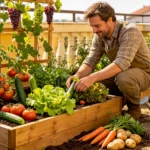
Let me share a story that really drives home the benefits. My neighbor, Sarah, a mom of three in suburban Ohio, decided to start a chemical-free garden two years ago. She was tired of spending $100 a week on organic produce at the grocery store. She built two raised beds, filled them with compost, and planted tomatoes, cucumbers, and green beans. Within three months, she was harvesting enough to feed her family of five. She told me her grocery bill dropped by 40% during the summer months. But the bigger win? Her kids, who used to refuse vegetables, started eating snap peas straight from the garden. Sarah’s experience isn’t unique. A 2022 study from the University of California found that home gardeners save an average of $600 per year on produce, and those who grow organically report higher satisfaction with taste and nutrition. Another friend, Mark in Portland, grows kale, chard, and carrots in containers on his patio. He says the biggest benefit is knowing exactly what’s on his food—nothing. No mystery chemicals. Just pure, fresh produce that he and his wife eat daily.
[TABLE_SECTION]
[FAQ_SECTION]
Chemical-free backyard food growing is more than a hobby—it’s a lifestyle shift that puts your family’s health first. You get fresher, safer food, save money, and connect with nature in a way that store-bought produce can’t match. Whether you have a sprawling yard or just a few pots on a balcony, you can start small and grow from there. I encourage you to pick one vegetable this season, plant it without chemicals, and see the difference. Share your experiences in the comments below—I’d love to hear how it goes for your family.
Urban Permaculture: Applying Large Farm Principles to a Small Yard
| Aspect | Chemical-Free Backyard Growing | Store-Bought (Conventional) | Store-Bought (Organic) |
|---|---|---|---|
| Pesticide Residue | None | High (up to 70% of produce has residues per USDA) | Low (but not zero) |
| Freshness | Picked minutes before eating | Often 1-2 weeks old | Similar to conventional |
| Nutritional Value | Higher due to peak ripeness | Lower due to long storage | Slightly higher than conventional |
| Cost per Pound | $0.50-$1.50 (seeds/water/compost) | $1.50-$3.00 | $3.00-$5.00 |
| Environmental Impact | Low (no transport, no chemicals) | High (transport, packaging, chemicals) | Medium (transport, less chemicals) |
| Taste | Superior, full flavor | Often bland | Better than conventional |
| Control Over Growing | Complete | None | None |
How to Safely Over-Winter Your Patio Lemon and Fig Trees