Stop Guessing. Start Harvesting.
Stop Guessing. Start Harvesting.
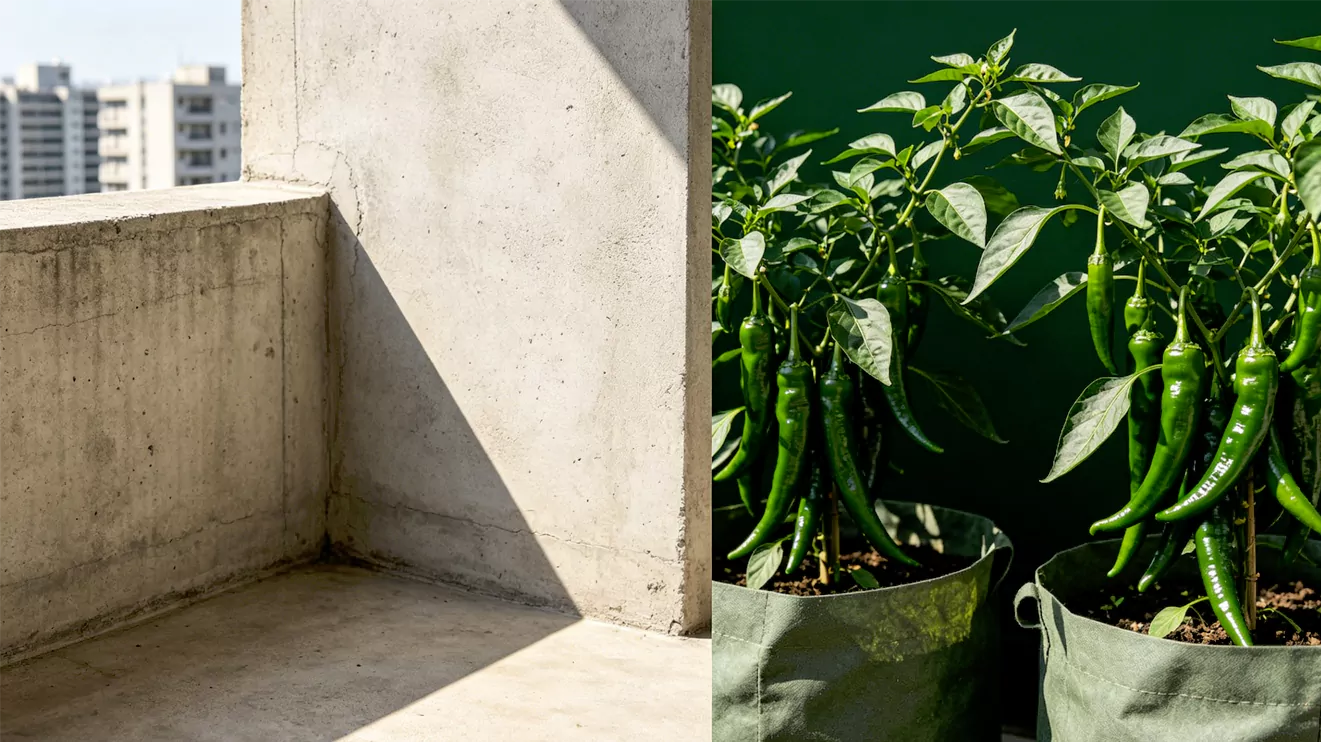
Do you want to harvest a continuous supply of crisp, sweet bell peppers or fiery hot chilis but assume you lack the expansive garden space needed to grow them?
Peppers are actually among the most successful and rewarding crops you can ever plant in containers. Because peppers originate from tropical climates, their root networks love the elevated soil temperatures that occur naturally inside potted environments. Growing peppers in containers allows you to maximize limited patio or balcony space, move the plants easily to follow the tracking sun, and perfectly control the rich, well-draining soil mix they need to thrive.
This complete guide will break down the top high-yield sweet and spicy pepper varieties specifically bred to produce a massive harvest inside a compact pot footprint.
The best peppers to grow in pots are compact, determinate “bush” varieties that maintain a manageable canopy height of 12 to 24 inches. Top high-yield choices include King of the North or Cajun Belle for sweet blocky peppers, and Jalapeño, Shishito, or Thai Bird’s Eye for spicy varieties. These options adapt flawlessly to the limited root profiles of standard 3-to-5-gallon containers.
While pepper plants are well-suited for container ecosystems, grabbing a random seed packet meant for open-field agriculture can lead to poor development.
The five most common layout and spacing mistakes made when growing potted peppers include:
To double your harvest per square foot, focus your apartment or patio garden on these highly productive, compact pepper categories.
Traditional bell pepper plants often struggle in small spaces because they produce large, heavy fruits on delicate stems. For containers, choose these specific dwarf alternatives:
If you love heat, chilis are a perfect match for intensive container layouts like our Advanced Geometric Spacing Layouts and Tier Design configurations:
Protect your container investments and keep your fruiting crops thriving by steering clear of these common operational traps:
Maximizing your container pepper yields requires specialized, lightweight tools that protect root health and support heavy fruit loads.
| Tool | Why It Helps |
| 3-to-5 Gallon Fabric Grow Bags | Provides exceptional air-pruning to ensure a dense, highly branched network of feeder roots. |
| Organic Bone Meal Fertilizer | Delivers an intense shot of organic phosphorus and calcium to trigger abundant flowering and stop blossom rot. |
| Short Bamboo Support Stakes | Prevents top-heavy, fruit-laden pepper stems from snapping during intense summer thunderstorms. |
| Terracotta Self-Watering Spikes | Delivers a slow, continuous stream of hydration straight to the root zone to stop split skins. |
Marcus, an urban marketing manager with a small 4×6 concrete high-rise balcony, wanted to grow his own tapas-style frying peppers but lacked ground space.
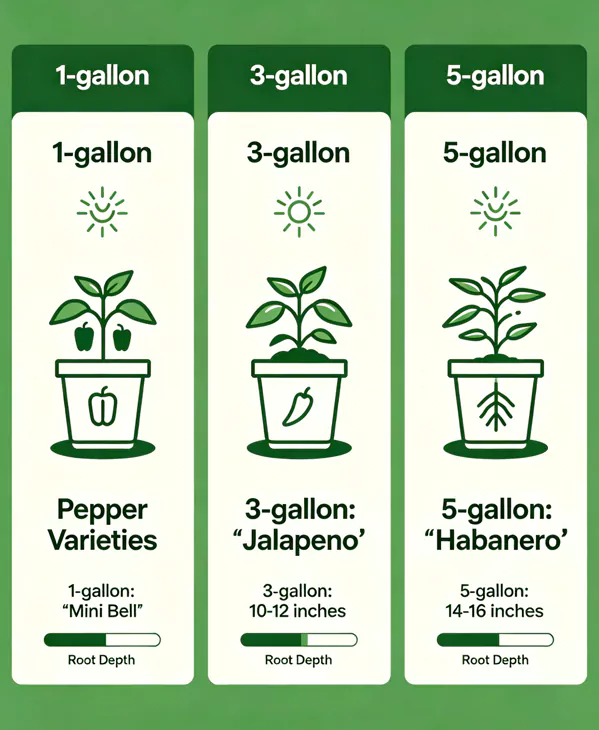
For maximum fruit production, a 3-to-5-gallon container is the absolute sweet spot for a single pepper plant. Small hot chilis (like Thai Bird’s Eye) can produce excellent yields inside a 3-gallon pot, while larger sweet bell pepper varieties perform best with the extra root space of a 5-gallon container, as explored in our foundational Container Gardening Guide.
Yes. While dwarf and bush pepper varieties maintain a short stature, they become incredibly top-heavy once they are loaded down with clusters of dense fruit. Insert a simple 2-or-3-foot bamboo stake into the center of your pot at planting time, and tie the main stem loosely with soft garden twine to protect it from wind damage.
Blossom drop is typically caused by extreme temperature fluctuations or environmental stress. If night temperatures fall below 55°F (13°C) or daytime highs soar above 90°F (32°C), the plant will drop its flowers to preserve energy. Erratic watering or over-fertilizing with high-nitrogen foods can also cause this issue, a trap explored in our Best Vegetables For Small Balconies guide.
Yes, peppers are actually tender perennials. When autumn temperatures begin to drop close to freezing, you can prune the plant back significantly, bring the container indoors into a warm windowsill or under a grow light, and water it sparingly. This allows the plant to over-winter indoors and gives you a massive head start on harvests the following spring.
Peppers are heavy-feeding crops that exhaust container nutrients quickly. Mix a balanced, slow-release organic granular fertilizer into your soil medium at planting time. Once the plant begins to show its very first flower buds, transition to feeding it with a water-soluble organic liquid fertilizer rich in phosphorus and potassium every 10 to 14 days.
Stop guessing and start harvesting baskets of fresh chilis. Download our free container pepper layout blueprint and grow a massive crop in any small space.
Download our free resource today and receive:
[ Info@Yardveggie.com ]
👉 [ DOWNLOAD YOUR FREE PEPPER SUCCESS KIT NOW ]
If you want to skip the frustrating trial-and-error cycle and discover the exact visual engineering systems used to build a beautiful, high-yielding container homestead, take a look at our structured video series. Our comprehensive Balcony Harvest Masterclass offers an interactive, step-by-step roadmap built specifically for small-footprint urban living.
Bypass the guesswork with high-definition, practical tutorials covering:
[ Learn More About The Masterclass → ]