Stop Guessing. Start Harvesting.
Stop Guessing. Start Harvesting.
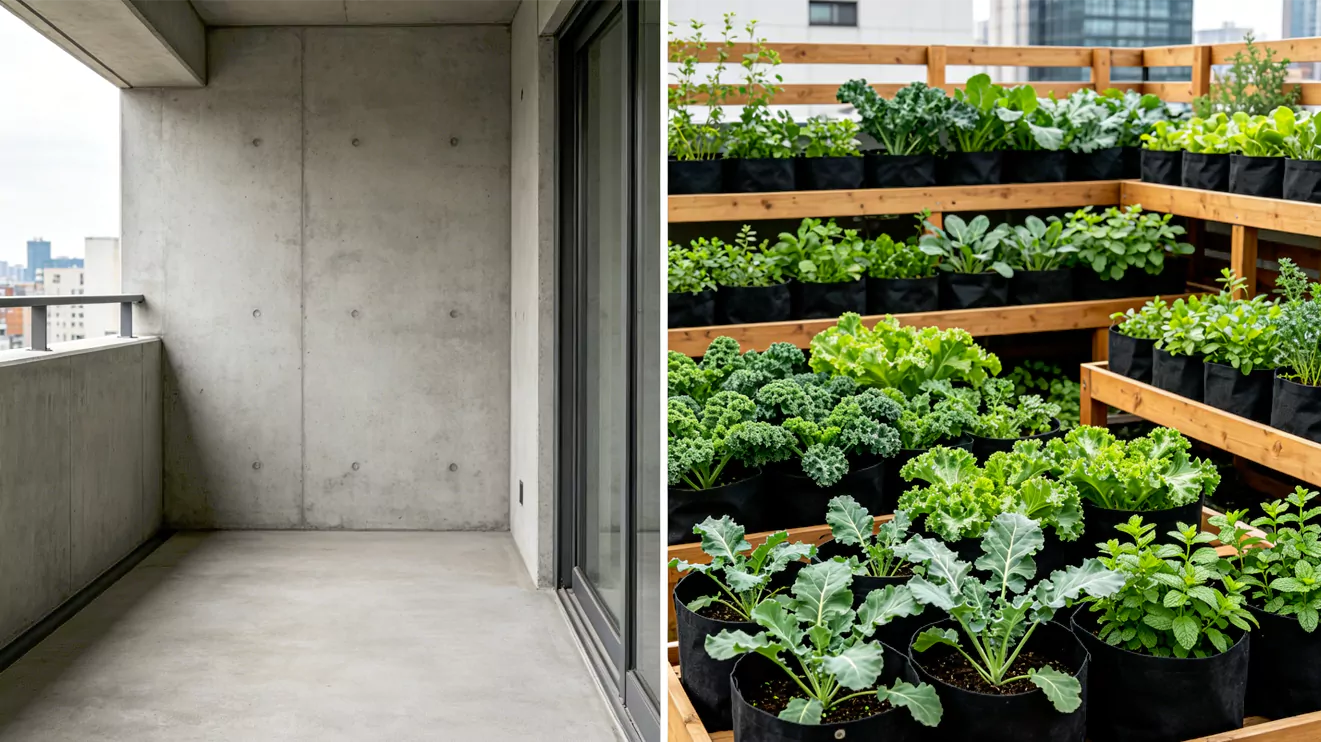
Do you look out at your apartment balcony and see nothing but an underutilized concrete slab, wishing it could be a lush, productive paradise of fresh, organic food?
Many urban residents believe that growing a substantial food garden requires a sprawling backyard or an expensive allotment plot. In reality, some of the most successful, high-yielding vegetable gardens are cultivated entirely on elevated balconies. Growing your own food in a small space gives you absolute control over the soil quality, isolates your crops from ground-dwelling pests, and allows you to steps out your backdoor to harvest fresh ingredients for dinner.
This guide will walk you through the essential steps to transform your empty balcony into a thriving edible ecosystem on your very first try.
To start a balcony vegetable garden, map your direct sunlight hours (minimum of 4–6 hours for basic crops), choose lightweight fabric grow bags with built-in drainage, fill them with a premium commercial potting mix rather than yard dirt, and begin with easy, high-return starter crops like loose-leaf lettuce, bush peppers, and cherry tomatoes.
While balcony gardening is highly rewarding, an elevated space presents distinct environmental factors that do not exist in a traditional backyard plot.
The five most common reasons a new balcony garden faces challenges include:
Follow this structural checklist to design, plant, and maintain your brand-new small-space balcony garden safely and efficiently.
Before buying seeds or pots, track your light. Spend a Saturday checking your balcony every two hours to record exactly when direct sunlight hits the floor. If your space receives 6+ hours of direct light, you can grow heavy fruiting crops like tomatoes and chilis. If it receives 4 hours or less, pivot your strategy toward shade-tolerant leafy greens and root crops, as outlined in our Best Vegetables For Small Balconies selection guide.
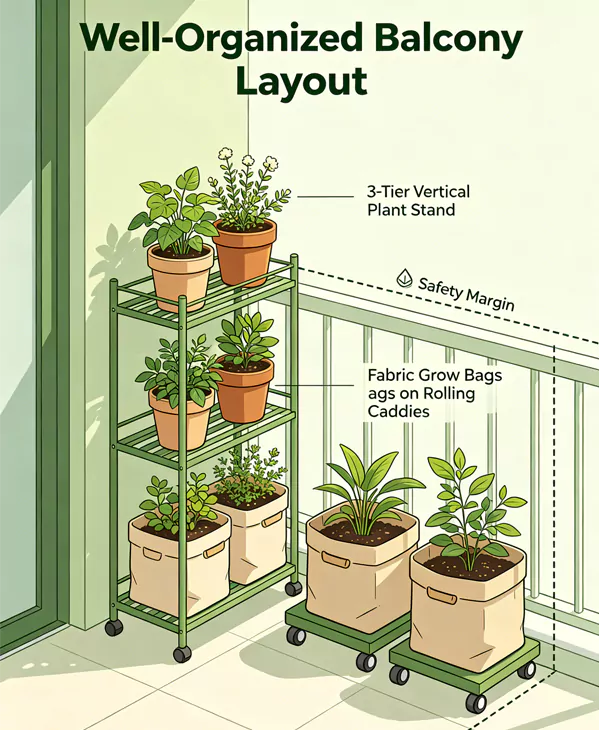
Weight and drainage are critical safety parameters on an apartment balcony. Avoid solid ceramic, heavy stone, or terracotta pots if you plan to scale up your garden. Instead, opt for modern fabric grow bags. They are incredibly lightweight, fold away flat for winter storage, and feature breathable walls that automatically prevent root binding while ensuring flawless water drainage.
Never fill your pots with regular garden dirt or bagged topsoil. Ground soil turns into a hard, brick-like block inside a container, locking out oxygen and killing roots. Always purchase high-quality commercial potting mix or container soil. These mixtures are blended with peat moss, coco coir, and perlite, ensuring a loose, fluffy structure that lets roots breathe and absorb water easily.
Set yourself up for immediate success by selecting forgiving, fast-growing plants. Avoid slow, space-hogging varieties like standard cabbage or large pumpkins. Instead, choose continuous-harvest “cut-and-come-again” greens (spinach, Swiss chard) or dwarf fruiting varieties (patio container chilis, determinate cherry tomatoes) that produce massive yields in small spaces.
Potted plants on sunny, breezy balconies dry out much faster than ground-level gardens. Get into the daily habit of checking your pots using the two-inch finger test, a core technique explored in our How Often Should You Water Container Vegetables? guide. When the top soil layer feels completely dry, water slowly at the base until it drains out the bottom holes into a protective saucer tray.
Protect your apartment property and your plants by avoiding these common small-space operational pitfalls:
Using specialized, small-space accessories keeps your balcony homestead organized, safe, clean, and highly productive.
| Tool | Why It Helps |
| 5-Gallon Fabric Grow Bags | Provides the perfect volume for single tomato or pepper plants while keeping weight low. |
| Deep Plastic Pot Saucers | Catches structural drainage runoff to keep your balcony clean and respect shared building spaces. |
| Organic Liquid Kelp Fertilizer | Delivers an immediate shot of micro-nutrients to replenish what leaches out during watering. |
| Tiered Vertical Ladder Stand | Lifts containers upward to double your available growing footprint, as detailed in our Advanced Geometric Spacing Layouts and Tier Design breakdown. |
Elena, a marketing manager living in a 12th-floor urban condo with a compact 4×8 foot north-west facing balcony, wanted to grow fresh food but worried her space was too windy and shady.
Loose-leaf lettuce, spinach, radishes, bush green beans, and culinary herbs (basil, chives, parsley, mint) are the absolute easiest options for beginners. They have shallow root systems, grow incredibly fast, and are highly forgiving of minor watering mistakes.
Because balconies are elevated and isolated from the open ground, you will naturally deal with fewer pests like rabbits or slugs. However, birds and flying insects can still visit. Protect young seedlings by covering your containers with lightweight insect netting or a simple mesh pop-up tent during early spring growth.
Yes, wet soil, water reservoirs, and heavy stone or ceramic containers accumulate physical weight quickly. To keep your setup completely safe, always prioritize lightweight fabric or resin grow bags, fill them with an airy commercial potting mix rather than topsoil, and position your largest, heaviest pots flat on the floor directly against the structural building wall.
Absolutely. A standard 5-gallon bucket is the ideal size for growing deep-rooted, heavy-fruiting crops like peppers, eggplants, and tomatoes. Just make sure you drill ample drainage holes in the bottom before adding soil, a process mapped out step-by-step in our How To Grow Tomatoes In 5 Gallon Buckets guide.
They don’t need highly specialized chemical formulas, but they do require more frequent feeding than ground plants. Because container roots cannot reach deep into the earth to find trace minerals, mix a high-quality slow-release organic granular fertilizer into your potting medium at planting time, and follow up with a mild water-soluble liquid fertilizer every 10 to 14 days, a management style covered in our comprehensive Container Gardening Guide.
Stop guessing and start growing. Download our free balcony gardening companion kit and configure your small-space container garden like a seasoned pro.
Download our free resource today and receive:
[ Info@Yardveggie.com ]
👉 [ DOWNLOAD YOUR FREE STARTER KIT NOW ]
If you want to skip the frustrating trial-and-error phase and discover the exact visual layouts used to maximize food production in tight urban spaces, take a look at our structured video series. Our comprehensive Balcony Harvest Masterclass offers an interactive, step-by-step roadmap designed specifically for small-footprint living.
Avoid costly errors with high-definition, practical tutorials covering:
[ Learn More About The Masterclass → ]