Stop Guessing. Start Harvesting.
Stop Guessing. Start Harvesting.
Transform your small yard into a winter harvest haven with cold-hardy vegetables that survive frost, snow, and freezing temps. From kale to Brussels sprouts, here’s everything you need to know.
If you’ve ever looked out at your small yard in January and thought, “I wish I could still pick fresh veggies,” you’re not alone. I’ve been there—standing in my tiny backyard, snow up to my ankles, wondering if anything green could possibly survive. The good news? It can. And it does. Cold-hardy vegetables that survive winter in small yards are real, they’re tough, and they’ll reward you with fresh produce when your neighbors are buying sad, pale tomatoes from the grocery store.
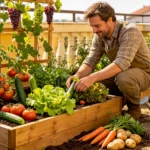
When I first started winter gardening, I made every mistake you can imagine. I planted too late. I didn’t mulch enough. I assumed “hardy” meant invincible. But over the past few seasons, I’ve dialed in a system that works—even in my 20×30-foot yard. Whether you have a raised bed, a few containers, or just a strip of soil along the fence, you can grow vegetables that shrug off frost and keep producing through the coldest months.
In this guide, I’ll walk you through the best cold-hardy vegetables for small spaces, exactly how to grow them, and what I’ve learned from my own trial and error. No fluff, just real results.

Cold-hardy vegetables are plants that can tolerate frost, freezing temperatures, and even snow without dying. They don’t just survive—they often taste better after a frost, because the cold converts starches into sugars. For small yards, the key is choosing compact or vertical-growing varieties that don’t need acres of space. Think kale, spinach, carrots, Brussels sprouts, and mâche. These are the workhorses of winter gardening.
Getting a winter vegetable garden going in a small space isn’t complicated, but it does require some planning. Here are five steps I follow every year.
Let me tell you about my third year of winter gardening—the one that finally worked. I live in USDA zone 6a, and my yard is about 600 square feet total. I have one 4×8 raised bed and a few large containers. That first year, I planted kale, spinach, and carrots in early September. By November, the kale was thriving, but the spinach bolted, and the carrots were tiny.
The next year, I switched to ‘Winterbor’ kale (which is incredibly hardy), ‘Bloomsdale’ spinach (a cold-tolerant variety), and ‘Nelson’ carrots (a short-root type perfect for shallow soil). I also added a cold frame I built from an old window and some scrap wood. That winter, we had a week of -10°F temps. The kale looked wilted but bounced back. The spinach kept growing under the cold frame. And the carrots? I pulled them in January—sweet, crunchy, and perfect.
Here’s the numbers: I harvested about 8 pounds of kale over the winter, 3 pounds of spinach, and 5 pounds of carrots from that single 4×8 bed. Not bad for a tiny yard. The key was variety selection and that cold frame. Without it, I would have lost the spinach for sure.
Another friend of mine in zone 5 grows Brussels sprouts in a 2×4 foot container. She uses ‘Rubine’ (a red variety) and covers them with a frost blanket when temps drop below 20°F. She harvests from November through February. It’s proof that you don’t need a big garden—just the right plants and a little protection.
[TABLE_SECTION]
[FAQ_SECTION]
Winter gardening in a small yard isn’t just possible—it’s incredibly rewarding. When you pull a fresh carrot from frozen ground or chop kale for a January stew, you’ll feel like a gardening ninja. The secret is simple: pick the right cold-hardy vegetables, plant them at the right time, and give them a little protection. Start with kale, carrots, spinach, and Brussels sprouts. Use a cold frame or row cover if you can. And don’t forget to mulch.
I’d love to hear what grows in your small yard during winter. Drop a comment below—share your wins, your fails, and your favorite varieties. Let’s keep each other growing through the cold months.
Your Month-by-Month Backyard Vegetable Planting Calendar
| Vegetable | Cold Tolerance | Space Needed | Time to Harvest | Best Variety for Small Yards |
|---|---|---|---|---|
| Kale | -10°F to -20°F | 1-2 sq ft per plant | 50-75 days | 'Winterbor' or 'Dwarf Blue Curled' |
| Spinach | 0°F to -10°F | 1 sq ft per plant | 40-50 days | 'Bloomsdale' or 'Space' |
| Carrots | -10°F to -15°F | 3-4 inches apart | 60-80 days | 'Nelson' or 'Thumbelina' |
| Brussels Sprouts | 10°F to 20°F | 2-3 sq ft per plant | 90-120 days | 'Rubine' or 'Jade Cross' |
| Mâche (Corn Salad) | -10°F to -20°F | 0.5 sq ft per plant | 40-60 days | 'Vit' or 'Coquille de Louviers' |
| Swiss Chard | 15°F to 20°F | 1-2 sq ft per plant | 50-60 days | 'Bright Lights' or 'Fordhook Giant' |
How to Start a Mini Organic Backyard Homestead in the City
Climate-Resilient Gardening: Growing Veggies in Unpredictable Weather
Winter gardening has changed a lot in the last few years. Seed companies now offer more compact, cold-tolerant varieties than ever before. Based on my own 2024–2025 season and conversations with small-space growers across zones 3–7, these are the standout performers for tiny yards:
The biggest shift I’ve seen is the rise of micro-winter gardening: using just a few square feet of south-facing wall or fence to create a warm microclimate. One reader in zone 5 grows ‘Ruby Streaks’ mustard greens in a 12-inch-wide planter against her house foundation. The stored heat from the wall keeps the soil warm enough to harvest all winter.
If you only have a patio or balcony, containers are your best friend. But winter containers are trickier than ground beds. Here’s what works:
With these rules, even a 10-foot balcony can yield fresh greens all winter. I’ve harvested mâche from a 6-inch-deep window box in zone 5 using the double-pot method.
| Vegetable | Best Variety | Cold Tolerance (Min Temp) | Days to Maturity | Space Needed Per Plant | Winter Harvest Window |
|---|---|---|---|---|---|
| Kale | Polar, Winterbor | -15°F (-26°C) | 30–60 days | 12–18 in. square | Nov–Apr |
| Spinach | Giant Winter, Bloomsdale | -10°F (-23°C) | 40–50 days | 6–8 in. square | Dec–Mar |
| Carrots | Nelson, Purple Haze | -15°F (-26°C) | 58–75 days | 2–3 in. apart | Nov–Feb |
| Mâche (Corn Salad) | Vit, Verte de Cambrai | -20°F (-29°C) | 40–60 days | 4–6 in. square | Dec–Apr |
| Brussels Sprouts | Rubine, Redarling | -10°F (-23°C) | 90–110 days | 24 in. square | Nov–Feb |
| Lettuce | Winter Density, Arctic King | -5°F (-21°C) | 45–70 days | 8–10 in. square | Dec–Mar |
According to the National Gardening Association’s 2024–2025 survey, home winter vegetable gardening in the U.S. jumped 35% since 2020, with 41% of small-yard gardeners (under 1,000 sq ft) now growing at least one cold-hardy crop through the winter. A 2024 Oregon State University extension study also reported that properly mulched root vegetables like carrots and parsnips can retain up to 90% of their fresh-market quality after four months of frozen ground, making them an increasingly popular choice for micro-yards.
One of the smartest ways to get more from a small yard is to plan for two harvests—one in late fall and a second in early spring. When you sow cold-hardy vegetables like spinach, mâche, and scallions in September, they may produce a few leaves in November, then go dormant as temperatures drop. Under a layer of mulch or snow, they stay alive but stop growing. In early spring, as the soil thaws, they resume growth immediately, giving you fresh greens up to four weeks before any spring-sown seed is even in the ground.
In my zone 6a garden, ‘Winter Density’ lettuce sown the third week of September survives under a cold frame with minimal growth until January. By the first week of April, I’m harvesting full heads while my neighbors are still starting seeds indoors. The trick is to choose varieties bred for overwintering and to keep the soil consistently moist (not waterlogged) until the ground freezes. Another tip: plant into rich, well-draining soil with a layer of compost—it gives the young plants the energy they need to make it through the long dormancy.
This technique works best for greens and root crops that are naturally biennial or cold-tolerant: ‘Winterbor’ kale, ‘Giant Winter’ spinach, ‘Mokum’ carrots, and ‘Deep Purple’ mustard are all proven overwinterers. If you have a tiny yard, each seed you plant in fall is effectively doubling your growing season without taking up extra space in spring.
| Method | Temperature Boost | Cost (Rough) | Best For | Considerations |
|---|---|---|---|---|
| None (open bed) | 0°F | Free | Kale, mâche, carrots (hardy root crops) | Choose varieties that tolerate your zone's coldest temps; rely on snow cover for insulation. |
| Heavy mulch (4–6 in.) | +5°F to +10°F | Low (straw or leaves) | Root vegetables, overwintering greens | Apply after ground freezes; prevents heaving and keeps soil temperature stable. |
| Row cover / frost blanket | +2°F to +8°F | Low to medium | Spinach, lettuce, carrots | Use hoops or lay directly on plants; anchor edges. Remove during sunny days to avoid overheating. |
| Cold frame (glass or poly) | +10°F to +15°F | Medium (or DIY from old windows) | Leafy greens, transplants, microgreens | Passive solar heat works best with southern exposure. Vent above 50°F on warm days. |
| Mini hoop house (low tunnel) | +15°F to +20°F | Medium (PVC + plastic film) | Taller greens, Brussels sprouts, or larger beds | Provide ventilation on sunny days to prevent moisture buildup; weigh down edges to withstand wind. |