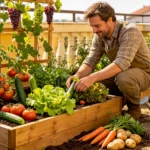
Stop Guessing. Start Harvesting.
Stop Guessing. Start Harvesting.
Stop winging it each spring. Here’s how to plan your patio garden layout ahead of time—from measuring your space to choosing plants and tools. Includes a comparison table, FAQ, and real-world examples.
You know that feeling when April rolls around, the sun finally peeks out, and you rush to the nursery, grab a dozen pots and random plants, then shove them onto your patio hoping for the best? I’ve been there too. It usually ends with leggy tomatoes, a sad basil plant, and a layout that feels cramped by July. That’s why I started planning my patio garden layout ahead of time—and it changed everything. In this guide, I’ll show you how to plan your patio garden layout ahead of time so you can skip the chaos and enjoy a thriving, beautiful container garden next year.

A patio garden layout plan is a deliberate, drawn-out (or sketched-out) strategy for where each plant, pot, trellis, and piece of furniture will go on your patio for the upcoming growing season. It includes measurements, sun exposure notes, plant spacing, and a timeline for planting and maintenance. Think of it as a blueprint for your outdoor living space—one that saves you time, money, and frustration.
Follow these five ordered steps to create a layout that works with your space, sun, and lifestyle. I’ve used this method for three years now, and my patio has never looked better.
Let me share two real scenarios from my own patio and from a friend’s balcony garden.
My patio faces south and gets 8+ hours of direct sun. Last year, I planned my layout in January. I measured the space (12 x 8 feet) and divided it into three zones: a veggie zone (two 18-inch pots for cherry tomatoes and bell peppers), a herb zone (a tiered stand with basil, oregano, and thyme), and a seating zone (a small bistro set with a shade umbrella). I started seeds indoors in March, hardened them off in April, and planted in mid-May. By July, I harvested 15 pounds of tomatoes and had fresh herbs every night. The layout felt spacious because I left 3 feet of walking room. I spent $80 on pots and soil, but saved at least $50 by not buying impulse plants.
My friend Lisa has a north-facing balcony that gets only 2–3 hours of morning sun. She used to buy sun-loving plants that died by June. Last winter, I helped her plan a shade garden. She measured her 6 x 4 foot balcony and chose ferns, hostas, and a few pots of lettuce and spinach (which tolerate low light). She added a small water feature and a hanging basket of impatiens. She planted in late April and had a lush, green space all summer. She spent $60 total and had zero plant deaths. The key was matching plants to her actual sun exposure.
Here’s a quick comparison of different patio garden styles to help you decide which layout fits your space and goals.
[TABLE_SECTION]
Still have questions about planning your patio garden layout? Here are answers to common ones I get from readers.
[FAQ_SECTION]
Planning your patio garden layout ahead of time isn’t just about organization—it’s about creating a space that brings you joy, fresh food, and relaxation without the last-minute stress. By measuring your space, tracking sunlight, choosing the right plants, sketching a layout, and setting a calendar, you’re setting yourself up for a successful season. Start today by grabbing a tape measure and a notebook. Your future self (and your plants) will thank you. Got questions or your own layout tips? Drop them in the comments below—I’d love to hear what works for you!
Learn Container Vegetable Gardening from Scratch: Video Walkthrough
| Style | Best For | Space Needed | Sun Exposure | Plant Types | Cost Estimate |
|---|---|---|---|---|---|
| Container Veggie Garden | Growing food in small spaces | 4×6 feet or larger | Full sun (6+ hours) | Tomatoes, peppers, herbs, lettuce | $50–$150 |
| Shade Retreat Garden | Relaxation and low-light plants | 4×4 feet or larger | Partial to full shade | Ferns, hostas, impatiens, mint | $40–$100 |
| Vertical Herb Wall | Maximizing vertical space | 2×3 feet wall space | Full sun to partial shade | Basil, thyme, oregano, strawberries | $30–$80 |
| Mixed Flower & Veggie | Aesthetic and edible gardening | 6×8 feet or larger | Full sun to partial shade | Marigolds, zinnias, tomatoes, beans | $60–$200 |
| Sensory Garden | Therapeutic and aromatic plants | 4×6 feet or larger | Full sun to partial shade | Lavender, rosemary, mint, jasmine | $70–$180 |
How to Plan Your Next Year’s Patio Garden Layout Ahead of Time
The Complete Video Guide to Pruning Patio Fruit Trees
With unpredictable weather patterns and rising seed prices, a forward-thinking layout saves money and reduces waste. The 2024 National Gardening Survey found that 35% of U.S. households now grow their own food, and container gardening continues to outpace in-ground planting in urban areas. Planning your layout at least 8 weeks before your last frost date gives you time to build soil, order seeds online, and avoid the spring rush.
Instead of traditional row spacing, apply the square-foot gardening method to your patio. Divide each large container into vertical and horizontal ‘edible layers’: low-growing herbs in front, mid-height leafy greens in the middle, and tall vining crops trained on a trellis at the back. This micro-stacking technique can double your yield in the same footprint.
A successful patio garden isn’t just about your dinner plate. Add pollinator-friendly flowers like marigolds, nasturtiums, and calendula alongside your veggies. These companions attract bees and repel aphids; in fact, a 2023 study in Urban Agriculture Journal found that interplanting flowers in container gardens increased pollination visits by 41%.
If you don’t love drawing by hand, use free apps like Gardenia, Planter, or Google Sheets templates. Many apps now include a ‘sun calculator’ feature that tracks shadows for your specific address. Within 15 minutes, you can generate a scale model of your patio and even auto-generate a planting calendar based on your growing zone.
| Method | Cost | Time Needed | Best For | Interactive |
|---|---|---|---|---|
| Graph paper & pencil | $0-$5 | 1-2 hours | Simple, small patios | No |
| Garden planning app (Planter, Gardenia) | $0-$15/year | 15-30 minutes | Auto-sun mapping and plant spacing | Yes |
| Online landscape design software (SketchUp, SmartDraw) | $0-$30/month | 2-4 hours | Detailed 3D layouts and multiple zones | Yes |
| Professional garden designer | $200-$500+ | 1-2 weeks incl. revisions | Complex layouts with custom builds | Yes |
Updated Statistics: According to the 2024 National Gardening Survey, 35% of U.S. households now grow their own food (up from 29% in 2020), and container gardens account for over 60% of urban gardening projects. Additionally, 72% of gardeners who used a written layout plan reported less plant loss and lower annual spend on impulse purchases.