Stop Guessing. Start Harvesting.
Stop Guessing. Start Harvesting.
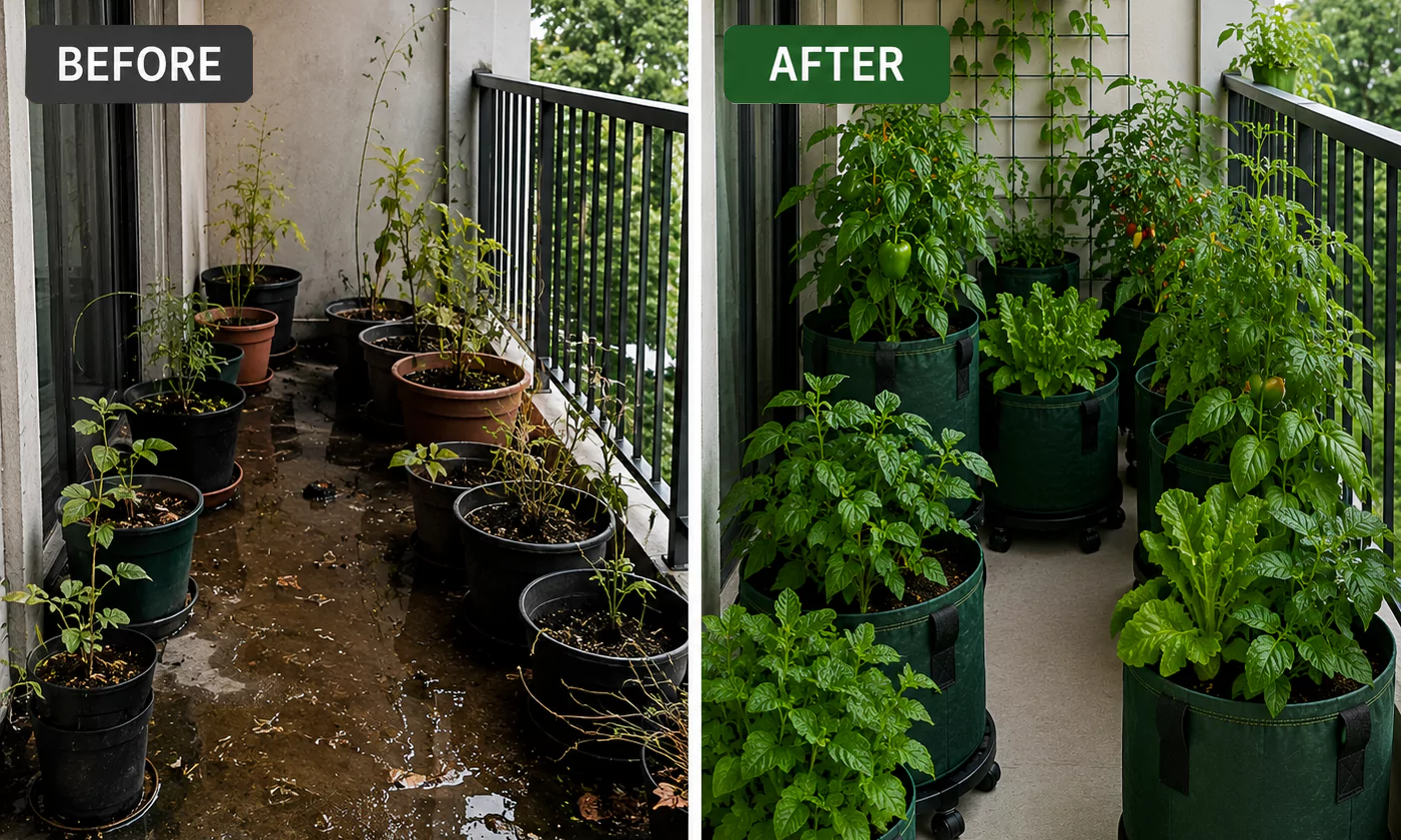
Do you look at your apartment balcony and picture a lush, green escape filled with homegrown food, only to watch your plants slowly wither and turn yellow?
You are not alone. Many beginners start their urban farming journey with immense enthusiasm, only to get discouraged when their pots fail to produce. The truth is, growing vegetables on an elevated concrete structure is entirely different from growing them in a traditional backyard plot. Balconies have distinct environmental microclimates that require a specific approach to light, water, and space management.
By understanding the most common balcony gardening mistakes, you can save your time, money, and plants, turning your small space into a highly productive green oasis.
The most destructive balcony gardening mistakes include using heavy garden soil instead of lightweight potting mix, ignoring daily sunlight parameters, neglecting proper container drainage, overwatering due to a fixed calendar schedule, and overcrowding multiple plants into a single pot. Correcting these five errors instantly increases your urban gardening success rate.
A balcony acts as an elevated island. Because your plants are completely isolated from the natural ground ecosystem, they rely entirely on you to create a sustainable environment.
The core reasons these micro-gardens face challenges include:
Review this comprehensive breakdown to diagnose your current setup and prevent these common structural and operational errors.
Scooping up dirt from a backyard or a nearby park is the fastest way to stunt your balcony garden. Natural ground soil contains high amounts of clay, which compacts tightly inside a container. This creates a dense, brick-like environment that suffocates roots and traps stagnant water. Always use a dedicated, lightweight Container Gardening Guide potting mix formulated with peat moss, coco coir, and perlite to ensure proper aeration.
Guessing how much light your balcony receives often leads to placing sun-loving crops (like tomatoes or peppers) in areas blocked by structural overhangs or adjacent buildings. Spend a weekend tracking your light hours. If your space receives less than 4 hours of direct sun, pivot away from fruiting vegetables and focus strictly on shade-tolerant leafy greens and herbs, as outlined in our Best Vegetables For Small Balconies breakdown.
Every pot on your balcony must have open drainage holes at the bottom. Without them, excess water settles at the base of the container, rotting the roots and killing the plant from the bottom up. Additionally, failing to place saucers or trays beneath your pots can result in dirty water runoff staining your balcony floor or dripping onto your downstairs neighbors’ patios.
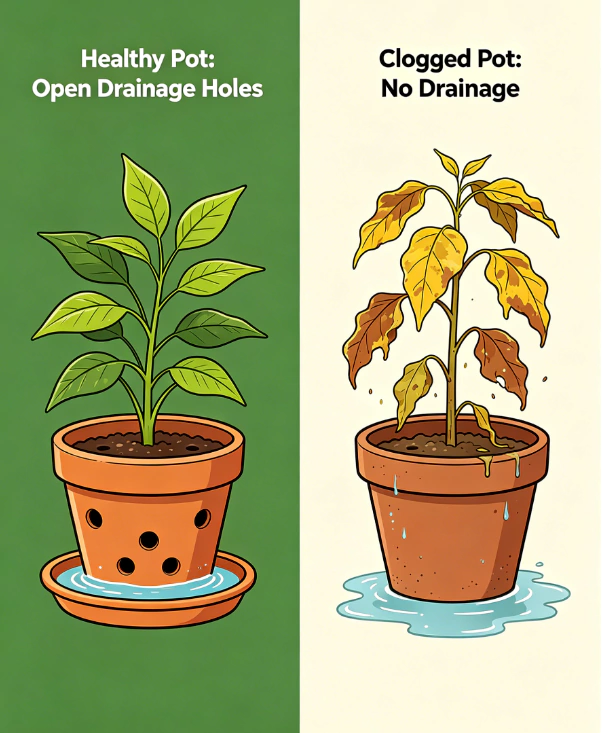
Watering your garden strictly on a fixed routine (such as every Tuesday and Friday) regardless of weather conditions is a major misstep. Cloudiness, humidity, rain, and temperature shifts change how fast a pot dries out. Instead, perform the “finger test” daily. Insert your index finger two inches deep into the soil. If it feels dry, water thoroughly until it drains out the bottom. If it feels damp, leave it alone.
It is tempting to pack seeds closely together to create a dense, immediate look. However, overcrowded plants must constantly fight for a limited amount of water, soil nutrients, and root space. This competition results in weak, spindly stalks and low yields. Give each major crop its own designated container to ensure proper growth and air circulation.
Utilizing a few smart, targeted accessories can automate your routine and eliminate the guesswork that causes beginner gardens to struggle.
| Tool | Why It Helps |
| Fabric Grow Bags | Naturally air-prunes roots to prevent binding and allows superior drainage. |
| Soil Moisture Meter | Provides an instant reading of moisture levels deep in the pot, preventing overwatering. |
| Potting Saucers & Trays | Catches drainage runoff to keep your balcony clean and respect shared building spaces. |
| Drip Tray Elevators (Pot Feet) | Lifts containers slightly off the concrete floor to prevent heat transfer and improve airflow. |
Chloe, a graphic designer living in a 6th-floor urban apartment, attempted to start a container garden on her small west-facing balcony. Within three weeks, her spinach leaves turned bright yellow and her tomato plants stopped growing entirely.
Yellow leaves are most commonly caused by overwatering or poor drainage, which suffocates the root system. If the soil feels constantly muddy, reduce your watering frequency. If the soil is fine but the leaves remain pale, the plant may have exhausted the nutrients in its pot and require a gentle application of organic liquid fertilizer.
High winds accelerate evaporation, causing container soil to dry out much faster than ground soil. Wind can also physically damage tall, top-heavy plants. To counter this, position delicate crops near the balcony wall for shelter, use heavy terracotta pots for ballast, or transition to low-profile vertical planters.
Yes. If you have a plastic, resin, or lightweight ceramic pot without holes, you can use a standard power drill to carefully create 3 to 4 half-inch holes in the base. Alternatively, use the decorative pot as an outer cover (cachepot) and place your plant inside a slightly smaller, well-draining plastic liner pot that sits inside it.
Even though you are growing on a balcony, your baseline climate is governed by regional temperature shifts. Always use reference tools like the USDA Zone Map to determine your local frost dates. Keep in mind that high balconies can experience slightly cooler temperatures and higher wind speeds than ground-level gardens in the same zone.
Do not try to force sun-loving plants like peppers or tomatoes to grow in deep shade. Instead, adjust your crop selection to match your environment. Focus on leafy greens (kale, Swiss chard, leaf lettuce) and robust herbs (mint, parsley, chives) which naturally thrive in indirect or partial light conditions, as detailed in our How To Start A Balcony Vegetable Garden For Beginners guide.
Stop guessing why your plants are struggling. Download our comprehensive troubleshooting guide to diagnose and fix container issues before it’s too late.
Download our free resource today and receive:
[ Info@yardveggie ]
👉 [ DOWNLOAD YOUR FREE TROUBLESHOOTING KIT NOW ]
If you want to skip the frustrating trial-and-error cycle entirely and build a beautiful, high-yielding balcony garden on your very first try, take a look at our structured video series. Our comprehensive Balcony Harvest Masterclass offers an interactive, step-by-step visual roadmap designed specifically for small-footprint urban living.
Avoid costly errors with high-definition, practical tutorials covering: