Stop Guessing. Start Harvesting.
Stop Guessing. Start Harvesting.
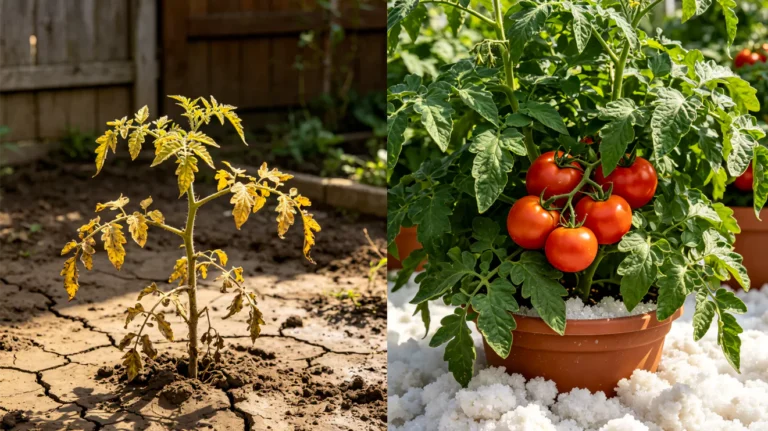
Nothing ruins the joy of balcony gardening quite like returning from a weekend trip to find your prized tomato plants crispy and dying from dehydration. Many apartment gardeners assume automatic irrigation is only for massive backyards, resorting to unreliable watering globes or begging neighbors for help. Setting up a DIY automatic balcony irrigation setup is surprisingly cheap, completely renter-friendly, and guarantees your plants get the exact moisture they need, even when you’re miles away.
Quick Answer: To build a reliable DIY automatic balcony irrigation setup, you need a battery-operated water timer attached to your faucet or a water reservoir, connected to 1/4-inch blank distribution tubing. Route this tubing along the base of your pots and insert adjustable drip emitters directly into the soil of each container. Program your timer to run for 10 to 15 minutes early every morning, ensuring consistent soil moisture while preventing messy runoff onto the balcony below.
I learned the hard way that buying the cheapest tubing on Amazon leads to blowouts and water leaks. Investing in the right quality components up front will save you from a very awkward conversation with your downstairs neighbor. Here is exactly what you need.
| Item | Why It Matters | Estimated Cost |
| Battery-Powered Water Timer | Acts as the brain of the operation. Buy one with a brass thread, not plastic, so it doesn’t strip and leak under constant city water pressure. | $30 – $45 |
| 1/4-Inch Distribution Tubing (50 ft) | Flexible enough to hide behind pots, but sturdy enough to withstand UV rays. Black tubing prevents algae growth inside the lines. | $10 – $15 |
| Adjustable Drip Emitters | Different plants need different amounts of water. Adjustable heads let you give your thirsty cucumbers 2 GPH (gallons per hour) and your herbs just 0.5 GPH on the same line. | $15 (for a 50-pack) |
| Barbed Tee Connectors | Essential for splitting the main water line so you can route tubing to multiple pots positioned in different corners of your balcony. | $8 |
| Smart WiFi Pump (Optional) | If you don’t have an outdoor spigot, a smart pump drawing from a 5-gallon bucket inside your apartment is your lifesaver. | $40 – $60 |
Before cutting a single tube, figure out where your water is coming from. If you are lucky enough to have an outdoor spigot on your balcony, attach your battery-operated water timer directly to it. However, balcony water pressure can be extremely high. You must install a 25 PSI pressure regulator right after the timer. Without it, the pressure will blow the tiny drip emitters straight out of the tubing, creating a geyser that sprays your sliding glass door. If you don’t have a spigot (like my first apartment), use a 5-gallon bucket hidden in a corner with a USB-rechargeable smart pump. Fill the bucket once a week, drop the intake hose in, and let the pump push the water to your containers. I started with a cheap solar pump, but it failed on cloudy days, almost killing my peppers. Stick to a plug-in or heavy-duty battery pump.
Measure the distance from your water source to the furthest plant on your balcony. Unroll your 1/4-inch tubing and lay it flat in the sun for 15 minutes; cold tubing retains its coil shape and is incredibly frustrating to work with. Run the main line along the baseboards or behind the planters so it stays out of sight and doesn’t become a tripping hazard. Grab a pair of sharp scissors and cut the tubing straight across at each point where a pot is located. Clean cuts are vital. If you cut at an angle, the barbed connectors won’t sit flush, and you will get a slow drip leak that ruins your decking over time.
This is where patience pays off. At every cut you just made, insert a barbed “Tee” connector to split the line. Push the tubing over the barb until it clicks into place. Here is a massive time-saver: keep a thermos of hot water next to you. Dip the end of the tubing into the hot water for 5 seconds to soften the plastic, then push it onto the connector. It will slide on effortlessly and shrink-wrap itself as it cools, forming a watertight seal. Once the Tees are in place, cut a short 6-inch piece of tubing for each pot, attach it to the Tee, and push an adjustable drip emitter into the end.
Note: Connecting these tiny T-joints and balancing the flow rate without causing leaks requires a specific twisting motion and pressure test. If you’re a visual learner, reading about it can be confusing. That’s why I show you the exact hand movements, how to check for micro-leaks, and how to lock the lines down perfectly in Chapter 4 of my Complete Balcony Gardening Video Course.
Place one emitter into each pot. Push the plastic stake deep into the soil near the base of the plant, but keep it about 2 inches away from the main stem. If the emitter drips directly against the stem, it causes a fungal disease called collar rot. For larger 15-gallon pots, like those holding indeterminate tomatoes, use two emitters spaced evenly on opposite sides of the root ball. This ensures the entire soil mass gets hydrated. What didn’t work for me was just letting the tube rest on top of the soil without a stake. High winds whipped through my balcony, blew the tubes out of the pots, and pumped 3 gallons of water straight onto my patio furniture.
Set your timer to run early in the morning, ideally around 6:00 AM. Watering at dawn allows the roots to soak up moisture before the midday heat hits, and gives the foliage time to dry if any splashing occurs. Start with a baseline of 10 minutes every 24 hours. Now, turn the system on manually and watch every single emitter. Turn the colored caps on the emitters to adjust the flow. Tighten them for drought-tolerant plants like rosemary, and loosen them to a steady stream for thirsty plants like cucumbers. Check the drainage holes at the bottom of your pots. If water pours out after 5 minutes, turn your timer duration down. You want the soil completely saturated without excessive runoff.Balcony Gardening for Beginners: The Ultimate Container Guide
Yes, absolutely. You can use a smart indoor watering pump that drops directly into a 5-gallon bucket or a large plastic tote. You simply fill the reservoir once a week, and the battery-operated pump pushes the water through the tubing to your plants on a set schedule.Balcony Vegetables Garden Video Tutorial: Step-by-Step Guide
It depends on your pot size and emitter flow rate, but a good starting point is 10 to 15 minutes a day. Potted plants dry out much faster than ground soil, so shorter, more frequent watering sessions (daily) are better than a massive weekly soaking.
Not if installed correctly. The key to preventing floods is using a pressure regulator to stop blowouts, softening the tubes in hot water before connecting them to ensure tight seals, and keeping the watering duration short enough to prevent water from overflowing the pots’ saucers.
The easiest method is using adjustable drip emitters. They have a small cap on top that you can twist. You can tighten it down so it drips once per second for a small pepper plant, or open it up to a steady stream for a large, thirsty tomato plant sharing the same main water line.
Not at all! The video course is designed entirely for beginners. I don’t use any complex plumbing jargon. I literally zoom the camera in to show you exactly how to hold the tubing, how to push the connectors together, and how to mount the timer so that anyone can build this system in under an hour.