Stop Guessing. Start Harvesting.
Stop Guessing. Start Harvesting.
Hey there, urban gardeners! Ready to harvest fresh, sun-ripened veggies right outside your door, but feeling a bit stuck because you only have a tiny apartment patio?
Don’t sweat it. Setting up an edible garden on an elevated balcony actually gives you a massive natural advantage: it completely insulates your plants from ground-level pests like moles, rabbits, or nasty soil bugs. By picking the right compact plant varieties and following a solid video tutorial plan, you can turn a couple of square feet of concrete into a serious vertical food oasis.
This guide is your master blueprint and video script to getting your balcony garden up and running like a pro.
The absolute easiest way to start is by watching a structured balcony vegetables video tutorial that focuses on compact, high-yield plants. Your best bets are determinate cherry tomatoes, snacking peppers, bush cucumbers, and loose-leaf greens. Plant them in breathable fabric grow bags filled with a lightweight, soil-less potting mix, and you’re good to go!
Before you head to the local garden center and buy everything in sight, you’ve got to check out how your balcony handles the elements. Successful small-space gardens focus on three things:
Different veggies need different amounts of fuel from the sun. Fruiting plants like tomatoes and peppers are total sun-worshippers—they need 6 to 8+ hours of direct sunlight to produce sweet fruits. If your balcony faces north or gets blocked by other buildings, skip the tomatoes and focus on shade-tolerant leafy greens (like spinach and lettuce) or herbs, which thrive on just 4 hours of indirect light.
Elevated balconies can get super windy, which snaps fragile branches and dries out your soil twice as fast as a regular backyard bed. To fix this, anchor your vertical shelves directly to your balcony railing using heavy-duty zip ties, and stick to wide, heavy-bottomed pots that won’t blow over during a summer storm.
Never shovel raw dirt from a backyard or park into balcony containers. Not only is natural yard dirt full of heavy clays that pack down like concrete and suffocate your roots, but it’s also incredibly heavy. Wet yard soil can quickly exceed your balcony’s structural weight limits. Always use a premium, fluffy potting mix made of peat moss, coco coir, and perlite, as recommended in our Best Soil For Container Vegetables guide.
To map out your containers like a seasoned pro using the design rules from our Advanced Geometric Spacing Layouts and Tier Design guide, organize your crops using this quick分层 layout:
| Veggie Type | Best Compact Variety | Minimum Container Size | Daily Sun Needed | Best Vertical Tier Placement |
| Patio Tomatoes | Tiny Tim, Patio Choice | 5-Gallon Fabric Bag | 6–8+ Hours | Top Shelf (Gotta catch all that sun) |
| Snacking Peppers | Shishito, Jalapeño | 3-Gallon Pot | 6+ Hours | Top / Middle Shelf |
| Bush Cucumbers | Spacemaster | 5-Gallon Fabric Bag | 6+ Hours | Middle Shelf (Trellis it to the railing) |
| Leafy Greens | Spinach, Butterhead | Window Box Trough | 4–5 Hours | Bottom Shelf (Chillin’ in the shade) |
| Radishes | French Breakfast | 8″ Deep Pot | 5 Hours | Middle / Bottom Shelf |
Follow this step-by-step production framework to set up your containers smoothly and cleanly.
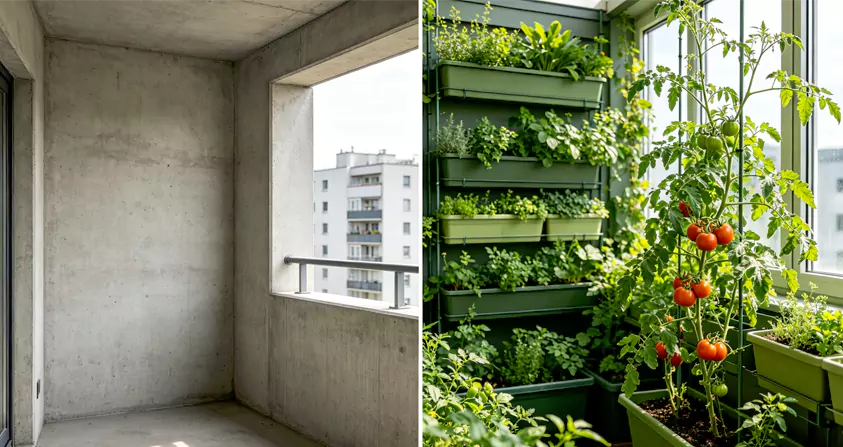
Assemble a sturdy, weather-resistant tiered plant stand or ladder rack. Stacking your containers vertically expands your planting space by up to 300% and lets you use the top spots for sun-loving plants while keeping shade-lovers happy down below.
Make sure every single pot has drainage holes so your roots don’t drown, an essential step from our How To Start A Balcony Vegetable Garden roadmap. Always place deep saucers under your pots to catch runoff. This keeps muddy water from dripping over the edge onto your downstairs neighbors—a massive mistake highlighted in our Balcony Gardening Mistakes warning list.
Fill your containers with a loose peat or coco-coir mix. If your mix is super dry, add water and mix it around with your hands before planting. Dry peat moss is actually hydrophobic (it repels water), so pre-moistening it ensures it hydrates your plants properly.
Because pots hold a limited amount of soil, frequent watering flushes out vital nutrients over time. Mix an organic, slow-release granular fertilizer into the soil at planting time to give your crops a steady supply of food for up to 8 weeks.
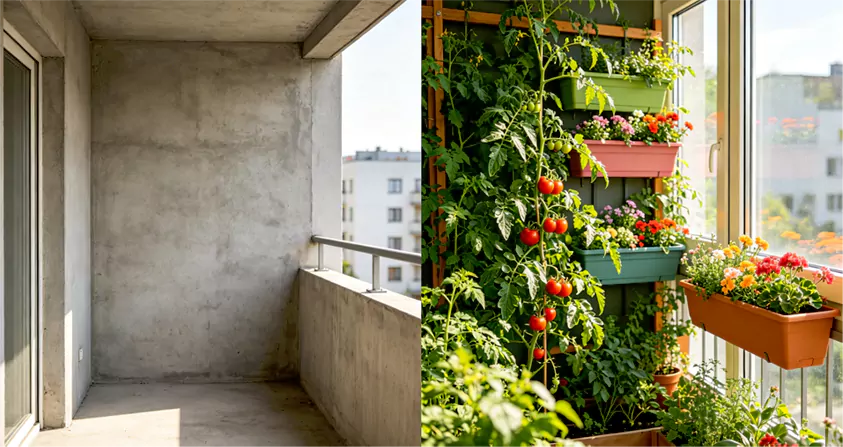
Marcus, an accountant living in a downtown high-rise, wanted to grow his own fresh salsa ingredients but only had a tiny, windy 4×5 concrete balcony.
Honestly, it’s not a great idea if you’re a beginner or low on space. Full-sized beefsteak varieties grow over 8 feet tall, need massive 7-to-10-gallon pots, and require intense trellising to handle the wind. Stick to determinate dwarf cherry tomatoes for a much easier, higher-yielding experience.
This is usually wind burn or thermal reflection shock. Elevated balconies face harsh wind currents, and concrete building walls absorb midday sun, baking your plants. Move sensitive crops closer to the building wall for a bit of wind shade, or set up a fabric privacy screen along your railing to diffuse the wind.
Because balconies are elevated and windy, container soil dries out up to twice as fast as regular ground beds, a routine we track in our How Often Should You Water Container Vegetables? reference guide. In mild spring weather, every 2 to 3 days is fine. But during peak summer heat waves, shallow containers and fabric grow bags might need a deep watering once or even twice a day.
If your balcony gets zero direct sunlight but is nice and bright with ambient light, focus entirely on shade-tolerant leafy greens and herbs. Baby spinach, arugula, Swiss chard, butterhead lettuce, radishes, and mint do amazing in partial shade and will actually wither if they get baked by intense summer sun.
Steer clear of lightweight, highly tapered plastic pots. Instead, go for wide-bottomed fabric grow bags or heavy-duty utility buckets. Tie your vertical plant stands directly to your balcony railing using heavy-duty nylon zip ties, and push sturdy bamboo stakes into your pots at planting time to support the main stems.
Stop guessing and start growing. Download our free balcony garden design blueprint and engineer your small-space urban container farm like an absolute pro.
Download your free resource today and get:
[ Info@Yardveggie.com ]
👉 [ DOWNLOAD YOUR FREE BALCONY VEGETABLE KIT NOW ]
If you want to skip the frustrating trial-and-error cycle and discover the exact visual layouts used to maximize food production in tight urban footprints, check out our structured video series. Our comprehensive Balcony Harvest Masterclass offers an interactive, step-by-step roadmap built specifically for small-footprint living.
Bypass the guesswork with high-definition, practical tutorials covering: