
Stop Guessing. Start Harvesting.
Stop Guessing. Start Harvesting.
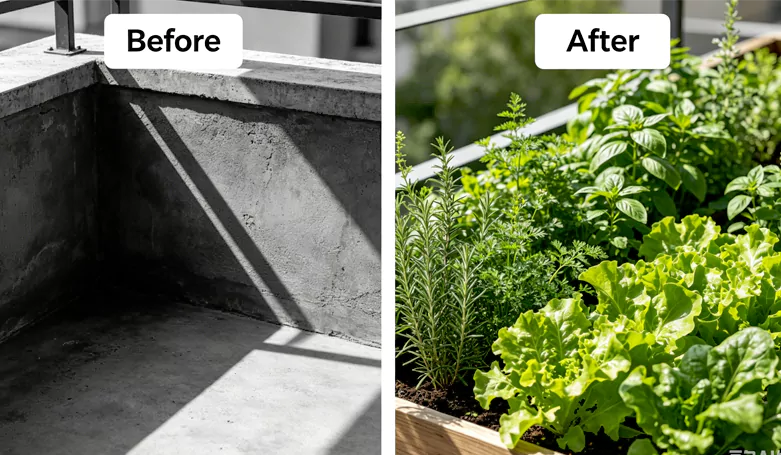
Do you want to harvest sweet, crisp vegetables right outside your apartment door but worry your small, elevated balcony isn’t suited for a real edible garden?
The truth is, almost any vegetable can thrive on a balcony if you choose the right compact variety and root volume. In fact, balcony vegetable gardening offers a major structural advantage: being elevated above the ground naturally protects your food from destructive subterranean pests like moles, rabbits, and root nematodes. By using lightweight containers and smart vertical spacing, you can turn a tiny concrete footprint into a highly productive urban homestead.
This guide will show you exactly what vegetables can be grown on a balcony and how to select them for massive seasonal yields.
The best vegetables to grow on a balcony include dwarf cherry tomatoes, compact sweet or hot peppers, bush cucumbers, loose-leaf lettuce, radishes, and bush beans. These varieties possess shallow or compact root profiles that adapt flawlessly to 1-to-5-gallon containers without sacrificing overall fruit production.
Before buying seed packets, you must match a vegetable’s biological needs with your unique balcony micro-climate. Keep these three layout parameters in mind:
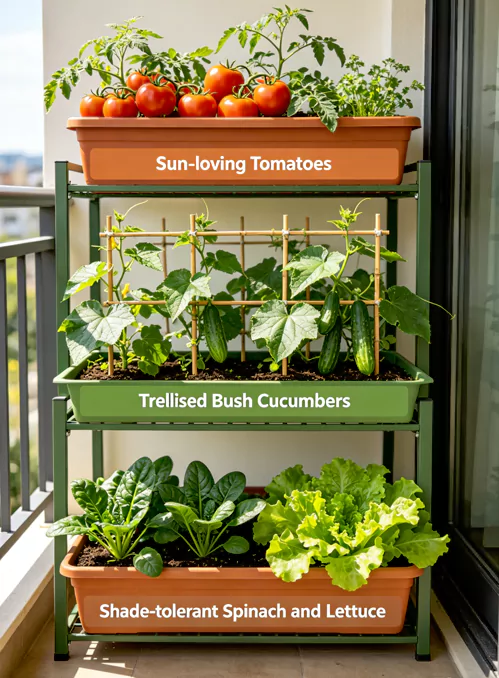
Fruiting crops like tomatoes and peppers require 6 to 8+ hours of direct sunlight to synthesize sugars and set fruit. If your balcony faces north or is heavily shaded by adjacent high-rises, skip fruiting crops and focus entirely on shade-tolerant leafy greens and root crops, which only need 4 to 5 hours of light.
Traditional backyard vegetables love to sprawl out horizontally. For a balcony vegetables garden, you must strictly select “Bush,” “Determinate,” or “Dwarf” cultivars. These varieties are genetically engineered to stay short and stocky, preventing them from taking over your limited floor space.
A plant’s top growth matches its root space. If you crowd a large taproot vegetable into a shallow bowl, it will stunt. Match your crop to the correct container depth to ensure smooth water and nutrient absorption.
To plan your layout efficiently using principles from our Advanced Geometric Spacing Layouts and Tier Design framework, use this structural reference chart:
| Vegetable Type | Top Recommended Varieties | Minimum Pot Size | Sunlight Needed | Best Tier Placement |
| Patio Tomatoes | Tiny Tim, Patio Choice, Micro Tom | 5-Gallon Bag | 6–8+ Hours | Top Shelf (Maximum Sun) |
| Compact Peppers | Shishito, Early Jalapeño, Bell Boy | 3-Gallon Pot | 6+ Hours | Top / Middle Shelf |
| Bush Cucumbers | Bush Champion, Spacemaster | 5-Gallon Bag | 6+ Hours | Middle Shelf (Trellised) |
| Leafy Greens | Spinach, Butterhead Lettuce, Kale | Window Box | 4–5 Hours | Bottom Shelf (Partial Shade) |
| Root Crops | French Breakfast Radish, Little Finger Carrot | 12″ Deep Pot | 5 Hours | Middle / Bottom Shelf |
| Bush Beans | Blue Lake Bush, Provider Bean | 3-Gallon Bag | 6 Hours | Middle Shelf |
Leafy greens are the most forgiving crops for urban beginners. Because you harvest their leaves rather than waiting for flowers and fruit, they produce incredibly fast.
If your balcony gets scorching afternoon sun, make the most of it with heat-loving crops:
Don’t assume you can’t grow root vegetables without a backyard plot.
Protect your small-space urban farm by steering clear of these common operational traps:
Marcus, an accountant living in a 4th-floor apartment with a shaded, north-facing balcony, wanted to grow his own food but thought his lack of direct sun made it impossible.
Yes, but you must choose a “determinate” slicing variety (like Bush Celebrity or Ace 55) and use a large, heavy-duty 5-to-7-gallon container. Avoid “indeterminate” vining varieties, as they can easily grow over 8 feet tall and will quickly overwhelm a small balcony unless you have a heavy structural trellis system anchored securely against the wind.
This is usually a symptom of wind burn or thermal reflection shock. Elevated balconies face intense wind currents, and concrete apartment walls absorb midday sun, radiating intense heat back onto your plants. To protect your crops, move sensitive varieties closer to the building wall, or mount a fabric privacy screen along your railing to diffuse harsh winds, a balance noted in our Best Vegetables For Small Balconies selection guide.
Because balcony vegetables grow in isolated containers, frequent watering rapidly flushes vital nutrients out of the bottom drainage holes. To fix this, mix an organic slow-release granular fertilizer into your potting soil at planting time. Follow up by feeding your plants a water-soluble organic liquid fertilizer every 10 to 14 days to maintain steady growth, a routine detailed in our How Often Should You Water Container Vegetables? reference tracker.
To prevent top-heavy fruiting plants from tipping over during sudden summer storms, completely avoid lightweight, tapered plastic pots. Transition to wide-bottomed fabric grow bags or heavy plastic buckets. Secure your vertical plant stands directly to your balcony railing using heavy-duty zip ties, and insert sturdy bamboo stakes into your pots at planting time to support the main plant stems.
Yes! Vines like sugar snap peas and pole beans are excellent choices for balconies because they grow straight up, saving valuable floor space. Simply place a 5-gallon container against your balcony wall or railing and install a lightweight mesh netting or bamboo teepee trellis for the tendrils to climb safely.
Stop guessing what to plant. Download our free balcony garden design blueprint and engineer your small-space urban homestead like a seasoned expert.
Download our free resource today and receive:
[ Info@Yardveggie.com ]
👉 [ DOWNLOAD YOUR FREE BALCONY VEGETABLE KIT NOW ]
If you want to skip the frustrating trial-and-error cycle and discover the exact visual layouts used to maximize food production in tight urban footprints, take a look at our structured video series. Our comprehensive Balcony Harvest Masterclass offers an interactive, step-by-step roadmap built specifically for small-footprint living.
Bypass the guesswork with high-definition, practical tutorials covering: