Stop Guessing. Start Harvesting.
Stop Guessing. Start Harvesting.
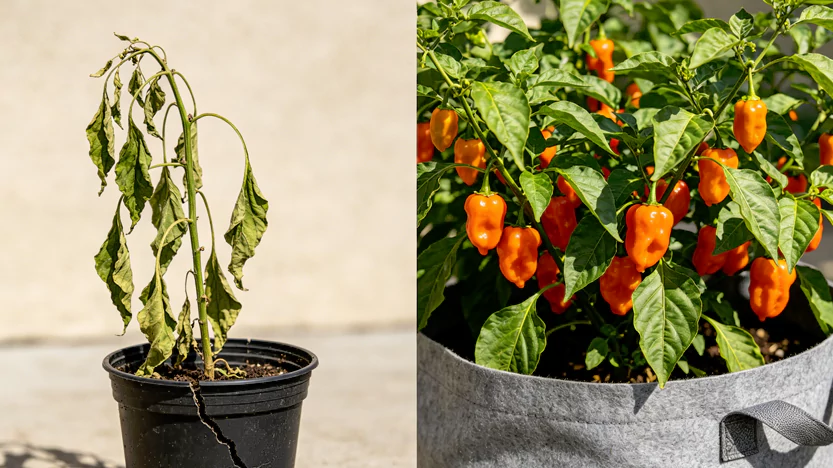
Do you want to cultivate a vibrant patio display of sweet bell peppers or fiery chilis but feel overwhelmed by the sheer variety of planters at your local garden center?
Choosing the right container is the single most important decision you will make for your plants. Because peppers originate from tropical regions, their roots thrive on consistent warmth, deep aeration, and sharp drainage. If you choose a pot that is too shallow, lacks drainage, or holds onto stagnant water, your pepper plants will drop their leaves, stunt their growth, and fall victim to root rot.
This complete guide will show you exactly how to evaluate container materials and select the absolute best pots for pepper plants based on your specific layout constraints.
The absolute best pots for pepper plants are breathable 3-to-5-gallon fabric grow bags or deep plastic self-watering sub-irrigated planters. Peppers require a minimum container depth of 10 to 12 inches and a diameter of 12 inches per plant to accommodate their dense, widespread fibrous feeder roots without risking soil compaction.
Peppers are resilient crops, but their root networks require specific mechanical conditions to yield heavy, crisp pods.
The five most common container selection errors made when growing potted peppers include:
To optimize your small-space garden layout using advanced structural rules like our Advanced Geometric Spacing Layouts and Tier Design, select your container material intentionally:
Fabric pots completely transform pepper root development through a natural process called “air-pruning.” When root tips hit the breathable mesh wall, they stop growing forward and instead branch backward into a massive web of micro-feeder roots. This dense network allows the pepper plant to drink water and absorb nutrients significantly faster, driving continuous seasonal flowering.
Standard utility buckets are an outstanding, affordable alternative for growing large pepper varieties. They provide the perfect root volume and structural height. However, you must drill at least four to five 1/2-inch holes across the base and two on the lower side walls to simulate the flawless water movement found in our How To Grow Tomatoes In 5 Gallon Buckets configuration blueprint.
Unglazed terracotta clay is highly porous, allowing air and water to pass through the walls. This is incredible for small, heat-loving chilis because it helps the soil breathe and prevents overwatering. The main parameter to monitor is how fast they dry out, a trait covered in our Best Peppers To Grow In Pots selection guide.
To align your pepper garden with our baseline Container Gardening Guide parameters, allocate pot volumes carefully based on your specific variety’s mature canopy footprint:
| Pepper Variety Category | Ideal Pot Size | Minimum Dimensions |
| Small Ornamental Chilis (Thai Bird’s Eye, Numex) | 2-to-3 Gallons | 10″ Wide / 10″ Deep |
| Medium Hot Peppers (Jalapeño, Serrano, Shishito) | 3-to-5 Gallons | 12″ Wide / 12″ Deep |
| Large Sweet Peppers (Bell Peppers, Poblano) | 5 Gallons | 12″ Wide / 14″ Deep |
Protect your small-space balcony yields by avoiding these common structural and positioning traps:
David, a systems analyst living in a third-floor apartment with a baking south-facing balcony, wanted to grow habaneros but kept losing his flowers before they could set fruit.
Fabric grow bags are superior for pepper root development and health. They prevent root binding through air-pruning and eliminate the risk of overwatering. However, plastic pots or buckets hold onto moisture slightly longer, making them a great option if you live in an ultra-arid climate and cannot water your containers daily.
Yes, absolutely. Even short, bushy pepper varieties become highly top-heavy once they are loaded down with clusters of heavy, moisture-dense fruit. Insert a sturdy 3-foot bamboo stake into your container at planting time, and secure the main stem with soft plant ties to protect the branches from snapping during high wind gusts.
No, do not put rocks, gravel, or broken pottery pieces at the bottom of your containers. This is an outdated gardening myth that actually harms drainage by creating a perched water table. This layer forces excess water to pool higher up in the container, saturating and rotting your pepper plant’s sensitive feeder roots. Use premium potting soil all the way down.
It is not recommended. Squeezing two pepper plants into one 5-gallon container forces their roots to compete aggressively for space, oxygen, and nutrients. This competition stunts both plants and slashes your overall fruit yield. Always stick to a strict ratio of one single pepper plant per 5-gallon container for optimal production.
Green moss or algae formation across the top surface of your potting mix indicates that the soil is staying constantly wet, experiencing poor air movement, or receiving too much surface moisture. It is a visual warning that you are overwatering. Let the top two inches of the soil profile dry out completely before adding more water.
Stop guessing which pot to buy. Download our free container comparison blueprint and configure your small-space homestead like a seasoned expert.
Download our free resource today and receive:
[ Info@Yardveggie.com ]
👉 [ DOWNLOAD YOUR FREE POT SELECTION KIT NOW ]
If you want to skip the frustrating trial-and-error cycle and discover the exact visual layouts used to maximize food production in tight urban footprints, take a look at our structured video series. Our comprehensive Balcony Harvest Masterclass offers an interactive, step-by-step roadmap built specifically for small-footprint living.
Bypass the guesswork with high-definition, practical tutorials covering: