
Stop Guessing. Start Harvesting.
Stop Guessing. Start Harvesting.
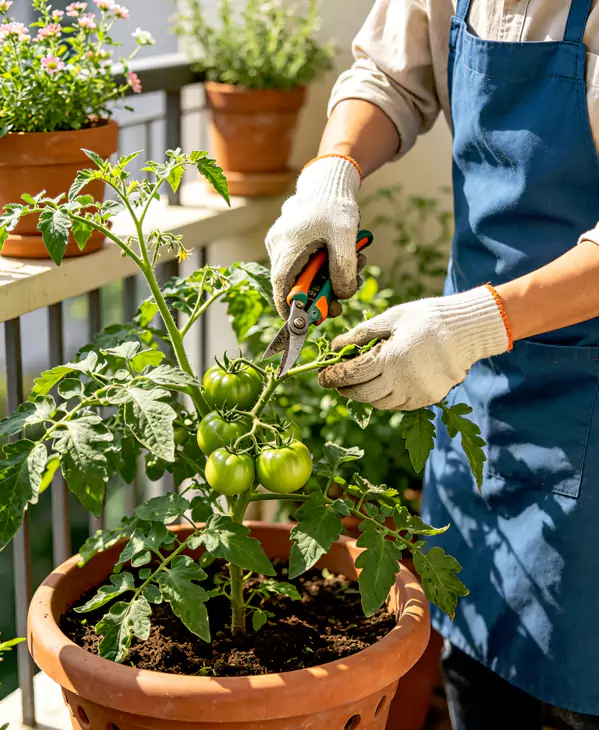
Do your tomato plants look huge and leafy but produce very few tomatoes?
Many beginner gardeners assume more branches mean more fruit. Unfortunately, the opposite is often true.
When tomato plants grow in containers, space, nutrients, water, and sunlight are limited. Too many unnecessary stems can reduce airflow, increase disease pressure, and divert energy away from fruit production.
The good news is that a few simple pruning techniques can dramatically improve tomato yields while keeping plants healthy and manageable.
Prune container tomatoes by removing suckers, lower leaves, and diseased growth while maintaining strong fruit-producing stems. Indeterminate tomato varieties benefit most from regular pruning. Proper pruning improves airflow, sunlight penetration, disease prevention, and fruit size, resulting in healthier plants and larger harvests.
Many gardeners unknowingly make their tomato plants work against themselves.
Common mistakes include:
| Problem | Result |
|---|---|
| Too Many Suckers | Smaller Tomatoes |
| Dense Foliage | Poor Airflow |
| Excess Leaves | Less Energy For Fruit |
| Limited Sunlight | Reduced Ripening |
| Poor Ventilation | Increased Disease Risk |
Proper pruning helps redirect the plant’s energy toward producing fruit instead of unnecessary vegetation.
Before pruning, you must know which type of tomato you’re growing.
| Type | Pruning Needed? | Examples |
|---|---|---|
| Determinate | Minimal | Roma, Bush Early Girl |
| Indeterminate | Regular Pruning | Sungold, Beefsteak, Cherokee Purple |
Determinate tomatoes naturally stop growing after reaching a certain size and generally require very little pruning.
Indeterminate tomatoes continue growing all season and benefit greatly from regular pruning.
Tomato suckers are small shoots that grow between the main stem and a branch.
If left alone, each sucker can become another large stem.
Main Stem
|
|
|\
| \
| \ ← Sucker
|
Removing unnecessary suckers helps the plant focus on fruit production.
| Benefit | Impact |
|---|---|
| Better Airflow | Lower Disease Risk |
| More Sunlight | Faster Ripening |
| Stronger Fruit Production | Larger Harvests |
| Easier Maintenance | Simpler Plant Care |
The lower portion of tomato plants is where many diseases begin.
Leaves that touch soil or containers are particularly vulnerable.
✅ Yellowing
✅ Diseased
✅ Touching the soil
✅ Blocking airflow
| Action | Result |
|---|---|
| Remove Lower Leaves | Better Airflow |
| Reduce Moisture Build-Up | Less Disease |
| Improve Light Penetration | Better Growth |
For maximum yields in containers, simplicity often wins.
Many experienced gardeners maintain:
This allows sunlight to reach more fruit clusters.
| Number Of Stems | Container Performance |
|---|---|
| 1 Stem | Excellent |
| 2 Stems | Excellent |
| 3-4 Stems | Moderate |
| 5+ Stems | Poor |
Smaller containers benefit most from single-stem training.
As tomatoes begin ripening, some surrounding leaves can be removed.
This helps:
However, never remove too many leaves at once.
Avoid removing more than:
20-25%of the plant’s foliage during a single pruning session.
Pruning is not a one-time task.
Indeterminate tomatoes can produce new suckers every week.
| Task | Frequency |
|---|---|
| Check Suckers | Weekly |
| Remove Yellow Leaves | Weekly |
| Inspect For Disease | Weekly |
| Tie To Support | Weekly |
| Harvest Ripe Fruit | Weekly |
A 5-minute inspection each week can dramatically improve production.
Over-pruning can reduce photosynthesis.
Plants become overcrowded quickly.
Can spread disease.
Increases infection risk.
May reduce yields significantly.
| Mistake | Potential Consequence |
|---|---|
| Over-Pruning | Lower Yield |
| No Pruning | Dense Growth |
| Dirty Tools | Disease Spread |
| Poor Timing | Plant Stress |
| Removing Fruiting Branches | Fewer Tomatoes |
Mike grew tomatoes in 5-gallon buckets on a small apartment balcony.
During his first season, he never pruned his plants.
Results:
The following season, he:
| Before | After |
|---|---|
| Small Fruit | Larger Fruit |
| Dense Growth | Open Structure |
| Disease Issues | Healthier Plants |
| Moderate Harvest | Nearly Double Yield |
The difference was noticeable throughout the season.
| USDA Zone | Pruning Notes |
|---|---|
| 3-5 | Maximize short season growth |
| 6-7 | Standard pruning schedule |
| 8-9 | Focus on airflow during humidity |
| 10-11 | Prevent excessive heat stress |
Gardeners in humid climates often benefit the most from regular pruning because improved airflow reduces disease pressure.
| Tool | Why It Helps |
|---|---|
| Hand Pruners | Clean Cuts |
| Garden Gloves | Hand Protection |
| Plant Clips | Support Training |
| Trellis System | Vertical Growth |
| Alcohol Spray | Tool Sanitation |
No. Many gardeners keep one or two strong stems and remove the rest.
Most indeterminate tomatoes benefit from weekly inspections and light pruning.
Yes. Proper pruning improves airflow, light penetration, and fruit development.
Only lightly. Excessive pruning can reduce harvests.
Morning is usually best because plants are dry and recover quickly.
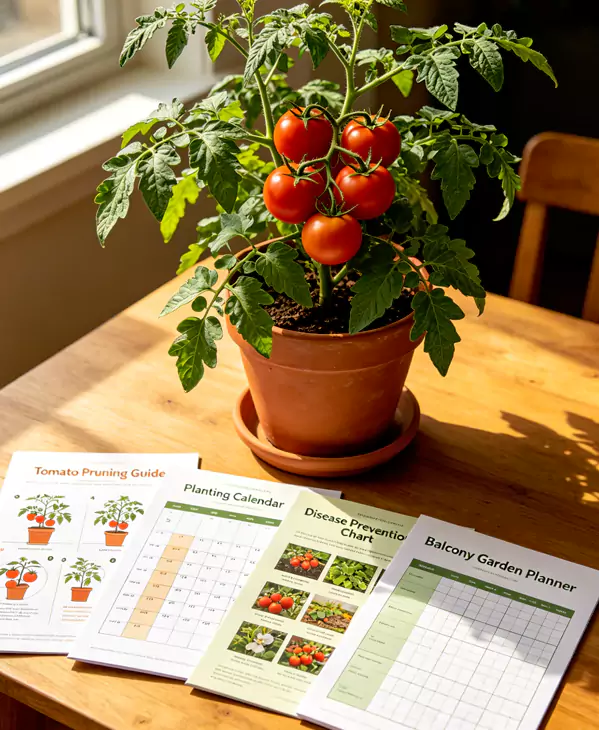
Download our free guide and receive:
✅ Tomato Pruning Cheat Sheet
✅ USDA Zone Planting Calendar
✅ Container Gardening Checklist
✅ Tomato Disease Prevention Guide
✅ Balcony Garden Layout Planner
Our Tomato Growing Masterclass teaches:
✅ High-yield container growing systems
✅ Tomato pruning techniques
✅ Fertilizing schedules
✅ Disease prevention methods
✅ Season-long harvesting strategies
Whether you grow on a balcony, patio, or small backyard, you’ll learn how to produce healthier plants and bigger harvests with confidence.
You may also enjoy:
YardVeggie helps urban gardeners grow more food in limited spaces through practical container gardening systems, balcony growing strategies, and beginner-friendly video courses. Our mission is to help anyone harvest fresh food at home—no backyard required.