Stop Guessing. Start Harvesting.
Stop Guessing. Start Harvesting.
Best Containers For Growing Cucumbers
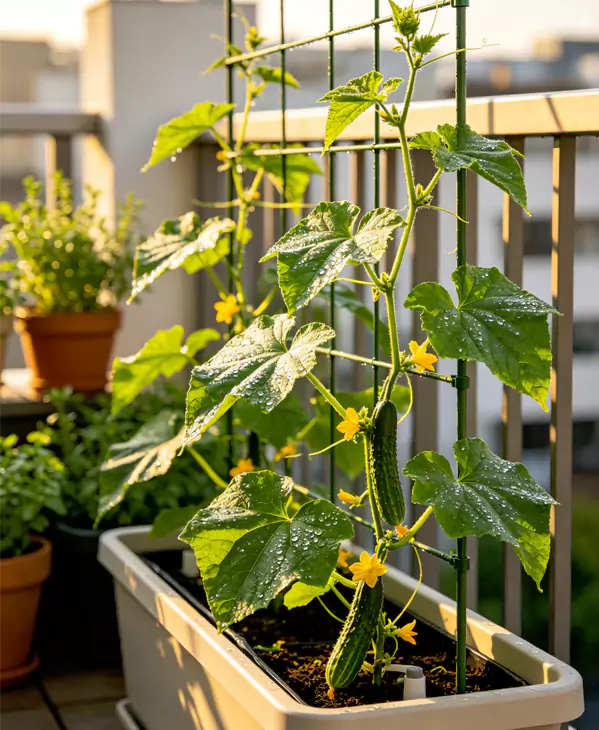
Do you want to harvest crisp, refreshing cucumbers right from your patio or balcony but worry that your space is too small for these expansive, trailing vines?
Cucumbers are famous for their rapid growth and sprawling habits, which leads many urban farmers to assume they can only thrive in massive backyard garden plots. However, selecting the right pot changes the game entirely. Because cucumbers possess a sensitive, highly branched root system, providing them with an optimized container environment lets them establish quickly, absorb nutrients efficiently, and reward you with an abundant, continuous seasonal harvest.
This complete guide will show you exactly how to pick and set up the best containers for growing cucumbers in limited footprints.
The best containers for growing cucumbers are breathable 5-to-10-gallon fabric grow bags or deep plastic self-watering sub-irrigated planters. Cucumbers require a minimum container depth of 12 inches and a diameter of 12 to 14 inches per plant to allow their roots to spread without becoming bound, congested, or waterlogged.
Cucumbers are fast-growing, heavy-drinking plants. Attempting to raise them in random leftover decorative pots without addressing their root system requirements usually leads to poor results.
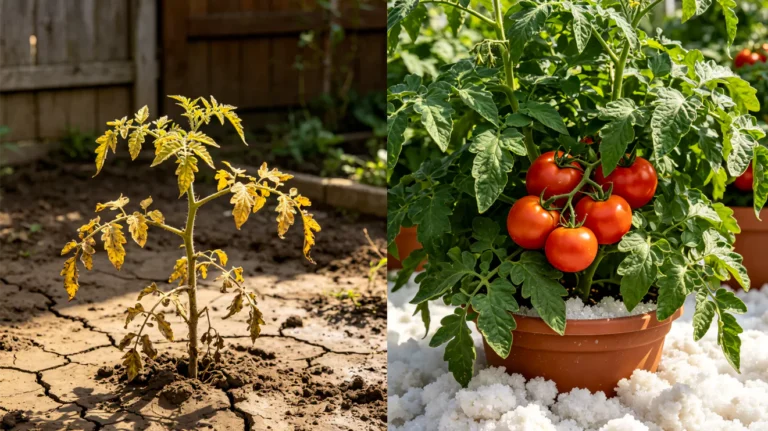
The five most common container layout and drainage mistakes made when growing cucumbers include:
To get tons of cucumbers from a compact space, match your plant varieties to these highly efficient, space-saving container types.
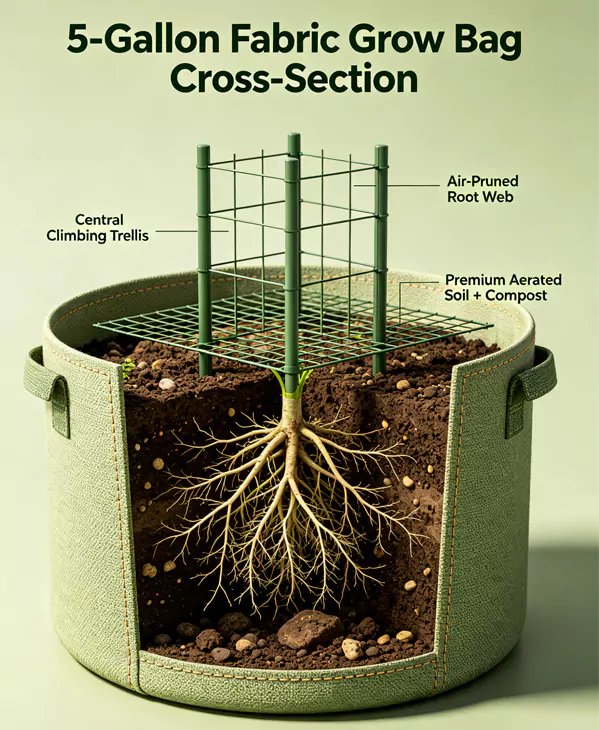
Fabric pots completely transform cucumber root structures through an evolutionary mechanism called “air-pruning.” In a plastic pot, roots hit the edge and circle endlessly. In a breathable fabric bag, the roots encounter air at the perimeter, stop growing forward, and branch backward into a highly dense web of feeder roots. This allows the plant to absorb water and fertilizers twice as fast, fueling rapid fruit production.
Cucumbers are over 95% water. If their soil swings wildly between bone-dry and muddy, your cucumbers will turn bitter, drop their flowers, or split open. Self-watering planters utilize a bottom water reservoir that allows the soil to wick moisture upward consistently through capillary action. This keeps the root zone damp but fully aerated, preventing hydration shock during blistering heat waves.
If you are on a tight budget, standard 5-gallon utility buckets are an excellent alternative. They provide the ideal depth and volume for a single compact cucumber vine. However, you must drill at least four to five 1/2-inch drainage holes across the base and two on the lower side walls to simulate the perfect water movement found in our comprehensive How To Grow Tomatoes In 5 Gallon Buckets blueprint.
To optimize your layout using advanced design rules like our Advanced Geometric Spacing Layouts and Tier Design strategies, select your pots based on your specific seed variety:Best Containers For Growing Cucumbers
| Cucumber Type | Minimum Pot Size | Growth Style & Support |
| Bush Varieties (e.g., Bush Champion) | 5-Gallon Pot (12″ Wide) | Compact, short vines. Needs minimal staking; ideal for small balconies. |
| Vining Varieties (e.g., Marketmore) | 7-to-10-Gallon Pot (14″ Wide) | Long, climbing vines. Requires a vertical trellis or climbing net system. |
| Pickling Varieties (e.g., Boston Pickling) | 5-Gallon Pot (12″ Wide) | Short, heavy-fruiting vines. Excellent for vertical space maximization. |
Protect your small-space urban farm by avoiding these common setup boundaries and management traps:
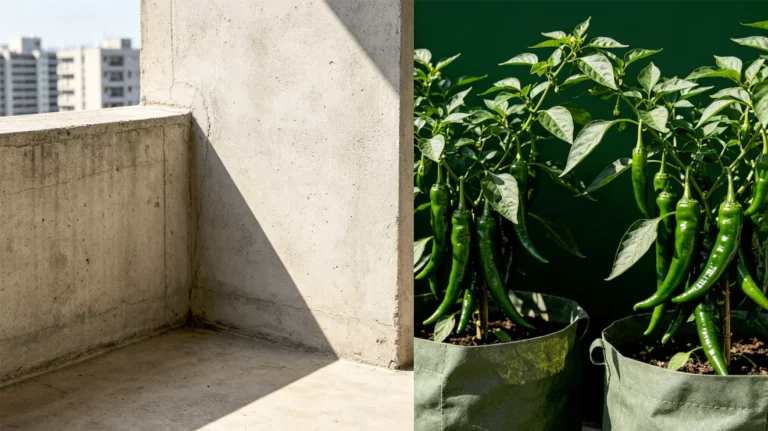
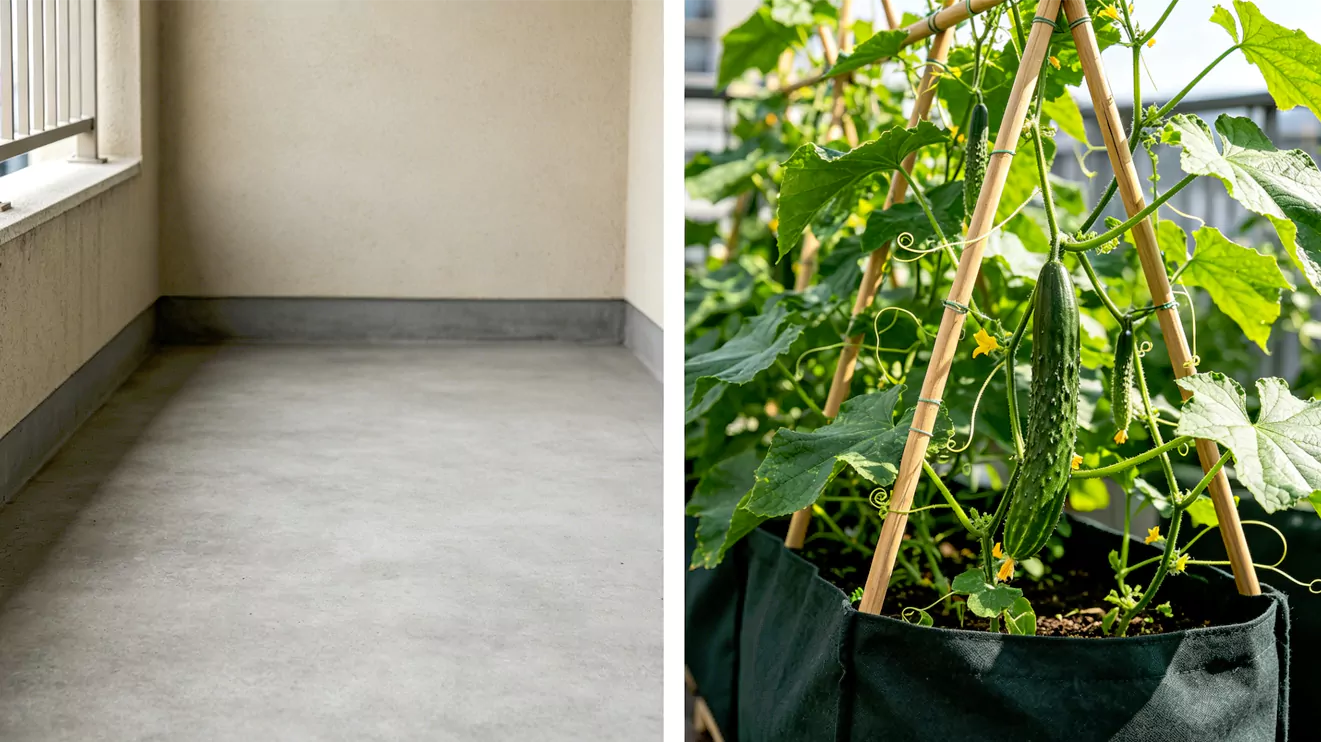
Chloe, a digital designer living in a high-rise downtown apartment with an 8×3 north-west facing balcony, wanted to grow fresh salad ingredients but was worried about high winds and limited space.
Yes, even “bush” cucumber varieties perform significantly better when given a short stake or cage to climb. For traditional vining varieties, a vertical trellis, A-frame ladder, or wall-mounted climbing net is absolutely mandatory. Training the vines upward keeps your fruit off the floor, prevents fungal leaf diseases, and frees up your valuable balcony floor space.
No. Adding a layer of gravel or rocks to the bottom of a container is an outdated gardening myth. Gravel creates an artificial restriction called a “perched water table,” which actually forces excess moisture to sit higher up in the pot, closer to your cucumber’s sensitive feeder roots. Use premium potting soil through the entire pot and rely on open drainage holes.
This issue is almost always caused by a lack of pollination. If beneficial insects or bees cannot access your high-rise balcony, the female blossoms will drop off without producing fruit. You can easily hand-pollinate your cucumbers by taking a small, soft paint brush or cotton swab and gently transferring the yellow pollen from the center of a male flower into a female flower (identifiable by the miniature fruit at its base).
Cucumbers grow incredibly fast and require heavy feeding. Mix a high-quality slow-release organic granular fertilizer into your potting soil at planting time. Once the vine develops its very first yellow flower buds, transition to watering it with a mild, water-soluble organic liquid fertilizer rich in potassium and phosphorus every 10 to 14 days, as outlined in our Best Vegetables For Small Balconies selection guide.
It is not recommended to grow cucumbers in the exact same container soil two years in a row. Cucumbers extract massive amounts of nutrients and can leave behind soil-borne fungal pathogens. Empty your old container soil into separate flower beds or outdoor compost piles, wash your fabric bags or pots thoroughly with mild soap, and fill them with fresh potting mix at the start of every spring.
Stop guessing and start harvesting baskets of fresh cucumbers. Download our free container companion blueprint and configure your small-space homestead like a pro.
Download our free resource today and receive:
[ Info@Yardveggie.com ]
👉 [ DOWNLOAD YOUR FREE CUCUMBER SUCCESS KIT NOW ]
If you want to skip the frustrating trial-and-error cycle and discover the exact visual systems used to maximize food production in tight urban footprints, take a look at our structured video series. Our comprehensive Balcony Harvest Masterclass offers an interactive, step-by-step roadmap built specifically for small-space urban living.
Bypass the guesswork with high-definition, practical tutorials covering:
[ Learn More About The Masterclass → ]