Stop Guessing. Start Harvesting.
Stop Guessing. Start Harvesting.
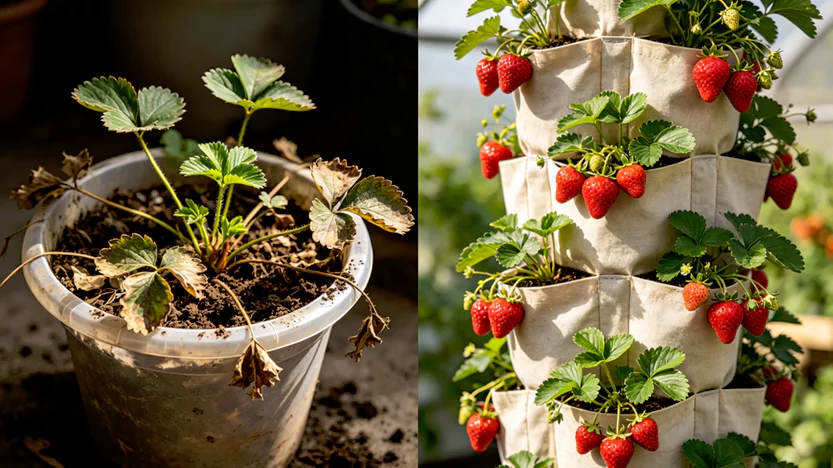
Do you dream of stepping out onto your apartment balcony to pluck bowls of sweet, plump, sun-ripened strawberries, but feel unsure about how many plants can actually fit into your pots?
Strawberries are an absolute joy to grow in small spaces, but their yield depends heavily on precise spatial configuration. Many beginner growers make the mistake of crowding too many roots into a single planter, resulting in tiny, sour berries and a tangled mess of runners. Because strawberries have a compact but highly fiber-branched root system, finding the exact spacing sweet spot allows each crown to receive adequate airflow, nutrients, and solar tracking energy.
This complete guide will show you exactly how many strawberry plants to place in various container sizes to double your seasonal berry harvest.
As a baseline rule, you should plant one strawberry plant per 1-gallon pot or per 8-inch container. For larger setups, you can safely space three to four strawberry plants in a 5-gallon fabric grow bag, or place one individual plant per pocket tier inside a vertical strawberry planting tower.
Strawberries behave quite differently from vertical vining crops like tomatoes. They are perennial low-stature plants that grow outward from a central “crown,” meaning improper spacing can quickly ruin your harvest.
The five most common spacing and crowding errors made with container strawberries include:
To maximize your layout using advanced design principles like our Advanced Geometric Spacing Layouts and Tier Design, use this quick-reference spatial allocation matrix:
| Container Type & Volume | Dimensions (Diameter / Depth) | Max Strawberry Plants |
| Standard 1-Gallon Pot | 7–8 inches / 8 inches deep | 1 Plant |
| Standard 3-Gallon Pot | 10–12 inches / 10 inches deep | 2 Plants (Staggered) |
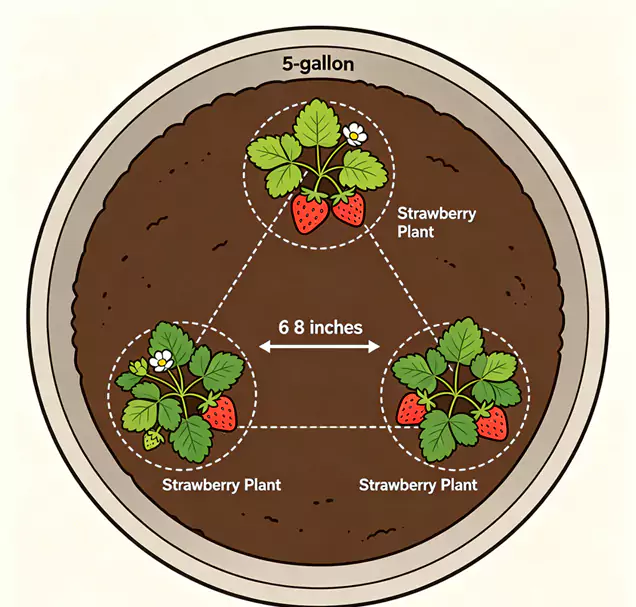
| Standard 5-Gallon Grow Bag | 12–14 inches / 12 inches deep | 3 to 4 Plants (Triangular) |
| 24-Inch Window Box Planter | 24″ Long / 6–8 inches deep | 3 Plants (Linear Staggered) |
| Vertical Tiered Pocket Tower | Standard multi-tier unit | 1 Plant per Pocket |
Follow this systematic checklist to ensure your strawberry roots have the perfect amount of structural space to yield heavy, sweet berries.
Strawberries love consistent moisture but will rot instantly if left in soggy, waterlogged soil. If using plastic utility pots, ensure you drill ample bottom holes, similar to the process mapped out in our How To Grow Tomatoes In 5 Gallon Buckets guide. For the best automated drainage, transition entirely to breathable fabric grow bags.
Strawberries prefer loose, organic soil with a slightly acidic pH (5.5 to 6.5). Never use heavy backyard ground dirt. Fill your pots with a premium commercial mix enhanced with perlite and coco coir, a baseline mix thoroughly detailed in our Best Soil For Container Vegetables reference guide.
When planting inside a 5-gallon grow bag or a wide rectangular window box, avoid planting in straight rows. Arrange your 3 or 4 strawberry starts in an equilateral triangular pattern, spacing each crown roughly 6 to 8 inches apart. This staggered geometry ensures that every leaf cluster receives maximum sunlight tracking without shading out its neighbor.
When placing your strawberry plant into the soil, pay close attention to the crown (the thick, central growing point where the leaves emerge). The top half of the crown must sit completely above the soil line, while the roots are fully buried. If you bury the crown too deeply, it will rot; if you plant it too high, the roots will dry out and die.
As your strawberries grow, they will throw out long, leafless horizontal stems called runners. In a confined container garden, these runners will quickly take over your limited space. Snip off all runners immediately with clean shears. This forces the plant to redirect 100% of its energy into building fat crowns and sweet berries instead of making clone plants.
Protect your small-space balcony yields by keeping these critical management boundaries in mind:
Lily, a graphic designer living in a downtown apartment with a tight 5×3 south-facing balcony, wanted to grow fresh strawberries for her morning smoothies.
Everbearing or Day-Neutral strawberry varieties (such as Albion, Seascape, or Alpine strawberries) are the absolute best choices for containers. Unlike June-bearing varieties that produce one single massive crop and then stop, everbearing types maintain a highly compact bush shape and yield flushes of sweet berries continuously from late spring all the way until the first autumn frost.
Yes! Vertical strawberry towers or tiered pocket planters are incredible space-saving tools. Because strawberries possess a shallow, cascading growth habit, they adapt flawlessly to vertical columns. The main parameter is ensuring you only place one single plant per pocket opening and rotate the tower 180 degrees every week so all sides receive equal sunlight tracking.
This issue is usually caused by a lack of pollination. If you live on a high-rise apartment floor where bees and natural pollinators are rare, your strawberry flowers will wither and drop off without setting fruit. You can easily hand-pollinate your strawberries by taking a soft makeup brush or cotton swab and gently swirling it inside the center of each open flower to move the yellow pollen around.
Strawberries are moderate feeders that exhaust container nutrients quickly due to frequent watering leaching. Mix an organic slow-release granular fertilizer rich in bone meal into your potting soil at planting time. Once the first spring blossoms appear, feed your plants with a water-soluble organic liquid fertilizer rich in potassium and phosphorus every 10 to 14 days, as outlined in our Best Vegetables For Small Balconies selection list.
Strawberries are hardy perennials that can live and produce fruit for 3 to 4 years. However, because container root systems are elevated and exposed to freezing winter winds, they require insulation. When winter arrives, move your pots flat onto the floor against your building wall, wrap the containers in burlap or bubble wrap, and mulch the top heavily with straw to protect the dormant crowns until spring.
Stop guessing and start harvesting baskets of fresh berries. Download our free container strawberry companion blueprint and manage your small-space homestead like a pro.
Download our free resource today and receive:
[ Info@Yardveggie.com ]
👉 [ DOWNLOAD YOUR FREE STRAWBERRY KIT NOW ]
If you want to skip the frustrating trial-and-error cycle and master the exact visual systems used to build a beautiful, high-yielding container farm, take a look at our structured video series. Our comprehensive Balcony Harvest Masterclass offers an interactive, step-by-step roadmap designed specifically for small-footprint urban living.
Bypass the guesswork with high-definition, practical tutorials covering:
[ Learn More About The Masterclass → ]